


.jpeg?trim=45,0,45,0&width=1200&height=800&crop=1200:800 "Jet fuel prices are down 40% in three months – but ticket prices haven’t dropped")
Jet fuel prices have eased significantly in recent months, yet companies have yet to pass their cost savings on to air travelers, according to a new report.
President Donald Trump’s war with Iran sent energy markets into turmoil earlier this year, with the closure of the Strait of Hormuz disrupting global oil supplies. Jet fuel was hit especially hard, with prices doubling in the weeks after fighting began in late February.
Airlines responded swiftly, raising fares eight times. By May, the average cost for a domestic round-trip ticket was nearly $100 higher than a year earlier.
Now, as the Trump administration signals it is working to end the war, fuel prices have fallen sharply, down 40 percent from their April peak, The Wall Street Journal reported. But ticket prices have remained stubbornly high, with little indication of relief ahead.
Buoyed by sustained travel demand and a tighter market — driven by the collapse of budget carrier Spirit Airlines — airlines have stuck with the inflated prices.
.jpeg)
“I’m actually very bullish that the industry will retain a much higher percent of the fare increases than would be typical historically,” Southwest Airlines CEO Bob Jordan told investors in May. “Obviously, you hate to see somebody go out of business, but with Spirit out of business, I think that helps that environment.”
Once a staple of the low-cost travel market, Spirit folded in May as rising fuel prices pushed the already struggling Florida-based carrier — fresh off two bankruptcy filings in as many years — over the edge. Trump had publicly mused about a taxpayer takeover, but it never materialized.
“For American, let’s face it—we competed with Spirit across the board,” American CEO Robert Isom said in May, according to the Journal. When Spirit began downsizing its fleet, “we saw across-the-board improvement in all those places that we compete directly.”
The loss of Spirit coincided with a broader pullback in capacity.
Airlines, facing higher fuel costs, have cut routes that no longer make economic sense. Earlier this year, U.S. carriers had planned to increase domestic schedules by nearly 5 percent year-over -year in the third quarter. Those plans have since been scaled back significantly.
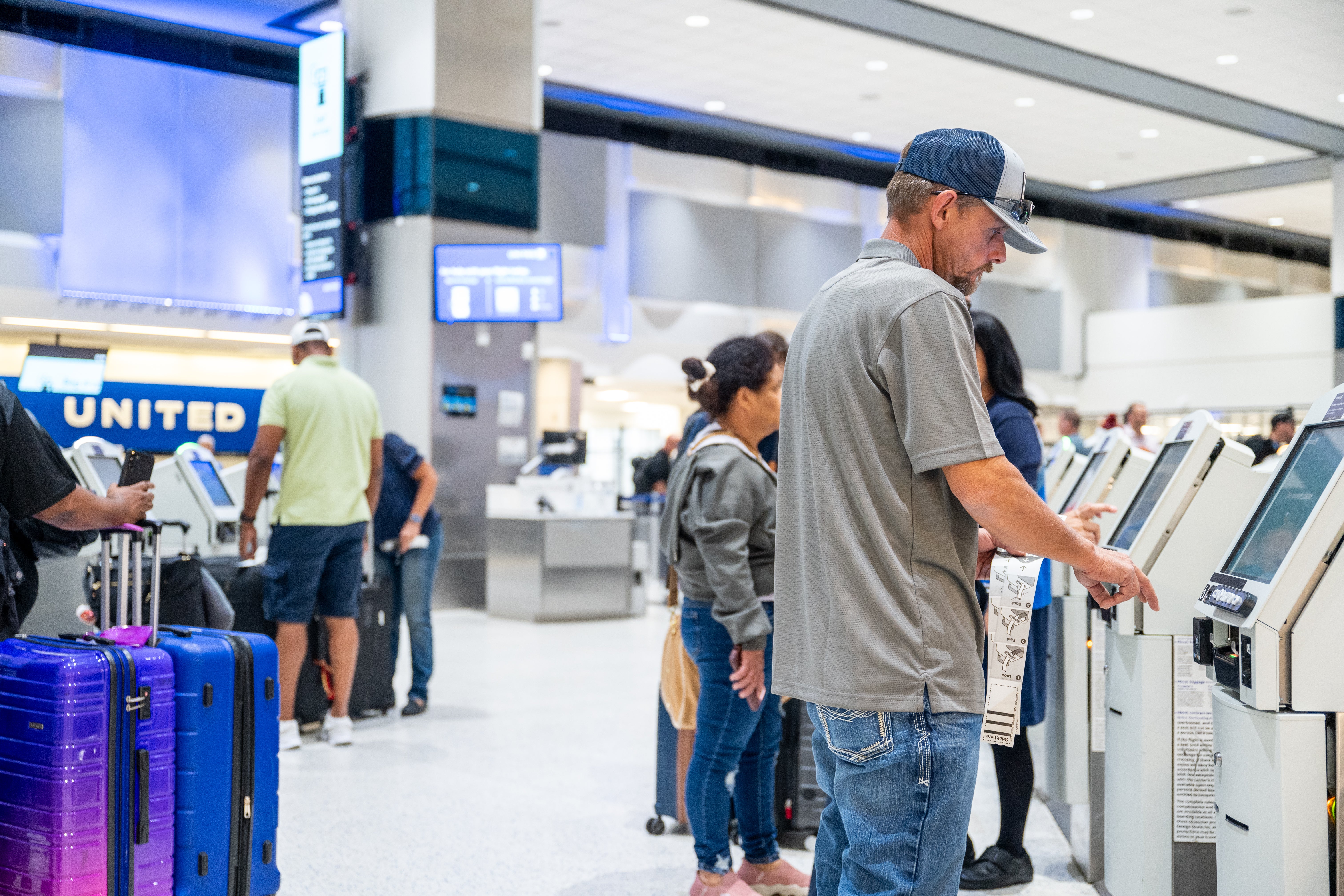
At the same time, demand has held up, with bookings remaining steady.
Data from Raymond James, an investment banking company, showed average domestic fares booked a week ahead of travel had increased 34.1 percent year-over-year in June.
“I have expected more of an elasticity effect,” Scott Kirby, the CEO of United Airlines, said in May. “But the demand environment is pretty strong.”
Airline executives say fare increases are a long-needed correction rather than an opportunistic cash grab. While consumer prices have broadly risen in recent years, the consumer price index for airfare fell 3.5 percent from 2019 to 2025.
And, even with some recent relief in fuel prices, airlines are still expected to see reduced profits this year, the Journal reported.
How long travelers will be willing to fork over higher prices remains an open question. In a May Ipsos survey, 56 percent of respondents said they were “extremely or very concerned” about rising airline costs.
“The real test is what happens after Labor Day, when leisure demand tapers and airlines adjust fall capacity for a lower-fuel environment,”Conor Cunningham, an analyst at Melius Research, wrote earlier this month. “If demand moderates even at the margin, or if supply is added back too quickly, the old addiction to fare sales and discounting could return.”



.jpeg?trim=45,0,45,0&width=1200&height=800&crop=1200:800&description=Jet+fuel+prices+are+down+40%25+in+three+months+%E2%80%93+but+ticket+prices+haven%E2%80%99t+dropped)