


New Delhi:
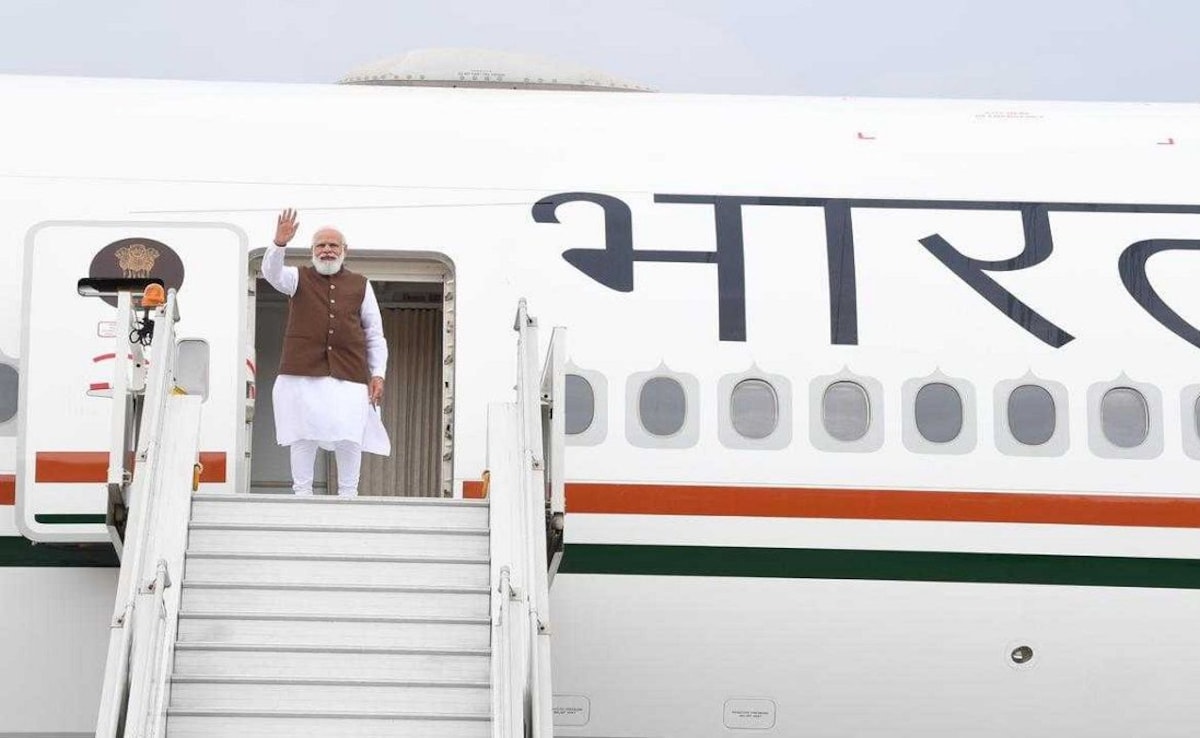
Prime Minister Narendra Modi began a five-nation tour starting in the United Arab Emirates Friday before heading to Europe – to the Netherlands, Norway, Sweden, and Italy – for a trip overshadowed by energy and supply-chain worries due to the Iran war.
Disruptions around Gulf shipping routes and the Strait of Hormuz continue to drive volatility in oil and gas markets, increasing pressure on energy-importing economies, including India. But the trip also reflects India’s wider effort to diversify economic and strategic partnerships — while positioning itself as a major manufacturing and technology hub.
UAE
PM Modi will visit the UAE on May 15 to meet UAE President Sheikh Mohamed bin Zayed Al Nahyan.
PM Modi has visited the UAE seven times since 2014 and Sheikh Mohamed has visited India five times. His last visit was in January, accompanied by the next generation of UAE leaders, marking the resilience of the bilateral relationship, which has only strengthened across generations.
Through the current turmoil, the UAE has remained one of India’s most reliable energy partners and continues to be so. With long-term supply agreements in place, India’s energy security has been bolstered. Enhancing energy cooperation will be a key agenda of the visit.
Sources said two important MoUs in the areas of LPG and Strategic Petroleum Reserves are likely to be concluded during this visit.
Bilateral merchandise trade crossed US$100 billion for the first time, reaching US$101.25 billion in FY 2025-26. During the UAE leader’s January 2026 visit, both sides committed to doubling bilateral trade to US$200 billion by 2032. The UAE is India’s seventh-largest investor, with cumulative FDI inflows of US$25.19 billion. A Local Currency Settlement (LCS) system between India and the UAE is in place, enabling bilateral trade and remittances to be settled in INR and AED, reducing dollar dependence and transaction costs.
Indians constitute the largest group of expatriates in the UAE. They form the backbone of the UAE economy and society. Their wellbeing is important to both countries. Despite the challenges to the global economy, the diaspora remains a consistent source of remittance to India, having a positive impact on forex reserves.
The Netherlands
The PM’s visit to the Netherlands is his second since 2017. The visit takes place in the post-India-EU FTA environment.
The Netherlands today engages India not as a market alone, but as a major power. The Dutch ecosystem of frontier technology paired with India’s scale of deployment defines a partnership of “innovation meets scale”, visible most strikingly in semiconductors, water, hydrogen, and maritime technology.
The Netherlands is India’s 11th-largest trading partner globally, third-largest export destination, and largest in Europe, with FY 2024-25 trade at USD 27.8 billion. It is India’s fourth-largest investor with cumulative FDI of USD 55.6 billion, and Indian ODI to the Netherlands stands at USD 28 billion, with over 300 companies present in India and the Netherlands. This partnership will get a boost with the India-EU FTA.
During the visit, Tata Electronics and ASML Netherlands shall sign an agreement to equip a semiconductor fabrication plant in Dholera, Gujarat.
The PM, along with the PM of the Netherlands, will visit the Afsluitdijk Dam as part of India-Netherlands collaboration in clean energy, water management, and sustainable fisheries. This is an effort towards diversification from fossil fuels and to ensure energy security.
Both sides are working to streamline migration and mobility. The PM’s community address will reach the 90,000-plus NRIs and over 200,000 Surinami Hindustanis, the largest Indian-origin community in mainland Europe. There is significant potential to attract inbound tourism from the Netherlands.
Sweden
The PM’s visit to Sweden comes after eight years. He last visited Sweden in April 2018 for the first India-Nordic Summit.
Sweden invests over 3 per cent of GDP in R&D and ranks consistently among the top performers in the European Innovation Scoreboard. It has taken one of Europe’s firmest positions on strategic de-risking from China, having removed Chinese vendors from telecom networks and tightened research-security norms, making India among its most consequential strategic diversification partners in Asia. Sweden today engages India as a major power, not just a market.
Bilateral trade in goods and services has reached USD 7.75 billion in 2025, with over 280 Swedish companies operating in India. The visit’s centrepiece business event includes engagement with the European Round Table of Industries, opening up Europe’s broader industrial leadership in the post-India-EU FTA era.
Saab is building its first Carl-Gustaf manufacturing plant outside Sweden at Jhajjar, India’s first 100 per cent FDI-driven defence manufacturing project, while Sweden’s status as host to one of Europe’s largest critical mineral deposits opens a natural India-Sweden axis on supply-chain sovereignty for EVs, semiconductors, and defence electronics.
A Statement of Intent has been signed for the Sweden-India Technology and AI Corridor (SITAC), covering 6G, AI, quantum computing, life sciences, and Digital India priorities, with over 80 Swedish companies having participated at the AI Impact Summit 2026, while LeadIT 3.0, co-launched by India and Sweden, now has 50 members across 18 countries. The Maharashtra-Candela MoU of March 2025 brings Rs 1,990 crore in Swedish electric-boat investment.
Norway
This will be the first standalone bilateral visit by an Indian PM to Norway in 43 years. The visit will include the third India-Nordic Summit in Oslo, building on Stockholm 2018 and Copenhagen 2022, and placing India in a tier of Nordic engagement that only the United States otherwise enjoys.
Norway and the wider Nordic region are increasingly engaging India as a major power, with Indian scale meeting Nordic frontier expertise. The visit institutionalises this strategic turn at the highest level.
The India-EFTA TEPA, in force from October 1, is India’s first FTA with developed European nations and commits USD 100 billion in investment and one million direct jobs over 15 years. Norway’s GPFG, the world’s largest sovereign wealth fund with a corpus touching USD 2 trillion, has invested close to USD 30 billion in Indian capital markets, while Norfund remains active in Indian renewables.
Indian shipyards now hold 11 per cent of the Norwegian Shipowners’ Association order book. Cochin Shipyard is building eco-friendly vessels for Norway, and the GRSE-Kongsberg Maritime MoU of June 2025 will deliver India’s first indigenous Polar Research Vessel. The inaugural India-Norway Maritime Security Dialogue was held in September 2025.
ISRO antennas at Svalbard are operational from 2026, the Himadri station has hosted over 400 scientists since 2008, and Norwegian tunnelling technology has powered the Char Dham railway project. Clean energy cooperation will aid diversification of India’s energy basket and reinforce energy security.
With over 45 per cent of Norway’s population above the age of 45, the demographic profile creates a structural opportunity for Indian talent.
Italy
The visit to Italy reaffirms a strategic partnership in motion. PM Modi will visit Italy from May 19 to 21 at the invitation of PM Giorgia Meloni. The visit comes after intense leader-level engagement and is anchored by the Joint Strategic Plan of Action 2025-29, which serves as the operational roadmap for the partnership.
Italy increasingly views India not just as a market, but as a major power and an indispensable partner for Europe. Italy’s championing of IMEEC as a founding member, with the Sparkle-Airtel Blue-Raman submarine cable to Genoa now activated, makes it the western anchor of the corridor. IMEEC ensures not just stability of supply chains but also gives a boost to India’s energy security.
Italy is India’s fourth-largest trading partner in the EU, with bilateral trade reaching USD 16.77 billion in 2025 and a target of 20 billion euros by 2029. Tata Motors’ 3.8 billion euro acquisition of the Iveco Group is the largest Indian investment in Italy to date, while Italy has opened a SIMEST office in Delhi with a 500 million euro funding line and SACE has added 200 million euros for SMEs. The post-India-EU FTA environment unlocks fresh scale for both sides.



