


In Delhi, the geography of protest has always been political. From the crowded lanes of Old Delhi to the grand avenues of Lutyens’ Delhi, demonstrators have sought to get as close to the seat of power as possible. For decades, the Boat Club offered them a spectacular stage, with the country’s most powerful institutions as a backdrop. Then, in 1993, that space was shut to rallies, and Jantar Mantar emerged as the capital’s designated address for dissent. Now, as protests are being redirected to venues on the city’s outskirts, Delhi’s protest map is changing once again – raising an old question: if a protest takes place far from the public eye, who will notice?
Delhi has a long history of protests and demonstrations. During British rule, such gatherings were generally discouraged or prohibited, but they continued nonetheless. In pre-Independence Delhi, one of the principal hubs of protest was Old Delhi, particularly a place known as Company Bagh, also referred to as Queen’s Garden.
It was here that protests took place during Mahatma Gandhi’s Salt Satyagraha in 1930. Although little remains of the original garden in Chandni Chowk today, a section known as Azad Park can still be found behind the electronics market.
The Chandni Chowk Town Hall was another major centre of political activity, hosting numerous public meetings before and after Independence. Prominent leaders, including Jawaharlal Nehru and Mahatma Gandhi, addressed gatherings there in the post-Independence era. The Red Fort, too, once served as a venue for protests.
Read | Jantar Mantar Tells Time. The Clock Just Stopped On Its Time As An Iconic Protest Site
From Old Delhi To Central Delhi
As the seat of power shifted towards Central Delhi, the focus of demonstrations gradually moved away from Shahjahanabad, the old walled city, towards the capital’s new political heart. With Parliament House, Rashtrapati Bhavan and the North and South Blocks emerging as the principal centres of power in independent India, political leaders increasingly sought to make their voices heard in their vicinity.
Ramlila Maidan, meanwhile, emerged as a major venue for protests and mass gatherings. In the 1970s, Jayaprakash Narayan addressed a massive rally there during the movement that became a turning point in Indian politics. Around the same period, Raj Narain chose the Boat Club for a hunger strike, which Charan Singh visited to address the gathering.
But protests were not confined to Ramlila Maidan and the Boat Club.
Old timers recall that, in the 1980s, demonstrators could reach the roundabout near Prime Minister Indira Gandhi’s residence on Safdarjung Road. Known as Golmethi Chowk, the junction connects Safdarjung Road, Tughlaq Road and Aurangzeb Road, now renamed Abdul Kalam Road. In effect, protesters could reach the very edge of the Prime Minister’s neighbourhood.
In April 1967, Delhi Police personnel themselves staged a protest outside the residence of the then Union Home Minister, Yashwantrao Chavan. The agitation was eventually brought to an end with the assistance of the Punjab Police and the Border Security Force (BSF).
The Boat Club
Following the JP movement’s massive gatherings at Ramlila Maidan, the Boat Club emerged as a favoured venue for large rallies and demonstrations. Its location along Rajpath – now Kartavya Path – gave it a strategic advantage: it lay directly in front of Rashtrapati Bhavan, with Parliament and the North and South Blocks nearby.
Among the major demonstrations held there was the 1987 Babri Masjid march, which proceeded from Jama Masjid to the Boat Club. It is regarded as one of the largest rallies organised by the Muslim community.
But perhaps the most consequential mobilisation at the Boat Club was the 1988 rally led by Mahendra Singh Tikait, the farmer leader of the Bharatiya Kisan Union. An estimated 5,00,000 farmers participated. The scale of the gathering was such that Rajpath remained closed for an entire week.
In 1990, the CPI(ML) held a rally that drew large numbers of people from Bihar. The following year, the Vishwa Hindu Parishad (VHP) organised a major gathering at the Boat Club, attended by religious leaders and senior BJP figures, including the current Prime Minister.
The Boat Club had become more than a rallying point. It was a stage from which mass movements could command the attention of the political establishment – and the country.
That era, however, was drawing to a close.
Read | Jantar Mantar No Longer A Protest Venue, Delhi Gets 3 New Designated Sites
Jantar Mantar Takes Centre Stage
After 1993, the Boat Club was closed to rallies, and Jantar Mantar emerged as Delhi’s principal designated site for protests and demonstrations.
Compared with the Boat Club, Jantar Mantar was a much smaller venue. But its limited space had an advantage: even a relatively small gathering could attract attention and make its presence felt. It lacked the sweeping political symbolism of the Boat Club, which had placed protesters right in front of the country’s most important institutions. Yet Jantar Mantar was not as far removed from the city centre as Ramlila Maidan, allowing it to retain a degree of visibility and accessibility. Ramlila Maidan, meanwhile, continued to host larger rallies.
Jantar Mantar itself has a much older history. Commissioned by Maharaja Sawai Jai Singh II of Jaipur, it was one of five astronomical observatories built in Delhi, Jaipur, Ujjain, Varanasi and Mathura. The Mathura observatory no longer exists. These structures were designed to help calculate planetary movements and measure time, using astronomical instruments and sundials.
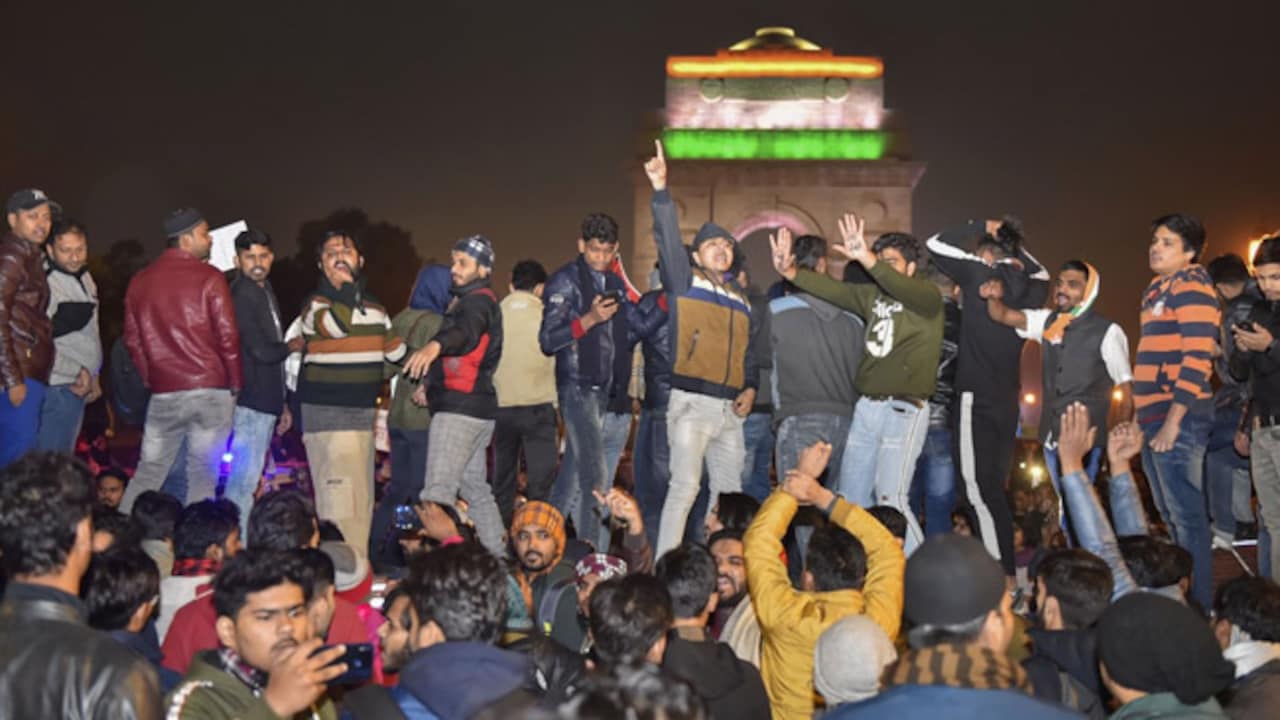
There is an irony in the site’s evolution. An observatory built to track the passage of time became a place where protesters sought to change the course of history. For some, those protests brought victories; for others, they marked political setbacks.
Over the past 33 years, Jantar Mantar has witnessed a succession of movements that have shaped public debate and politics.
From Jantar Mantar To The Outskirts
That could now change.
Following the recent protests, including demonstrations by Gen Z, the government has shifted the designated venues for rallies and protests. Demonstrations are now being directed to Ramlila Maidan, Burari Maidan in North Delhi and CBD Maidan in East Delhi.
The move could mark the end of Jantar Mantar’s three-decade run as the capital’s most recognisable address for dissent.
The change also revives an old debate about the geography of protest. A designated site may offer space and help manage crowds, but distance from the centres of power can also reduce a demonstration’s visibility.
For Delhi’s protesters, the question is whether dissent can still make itself heard when the stage is moved farther away.


