


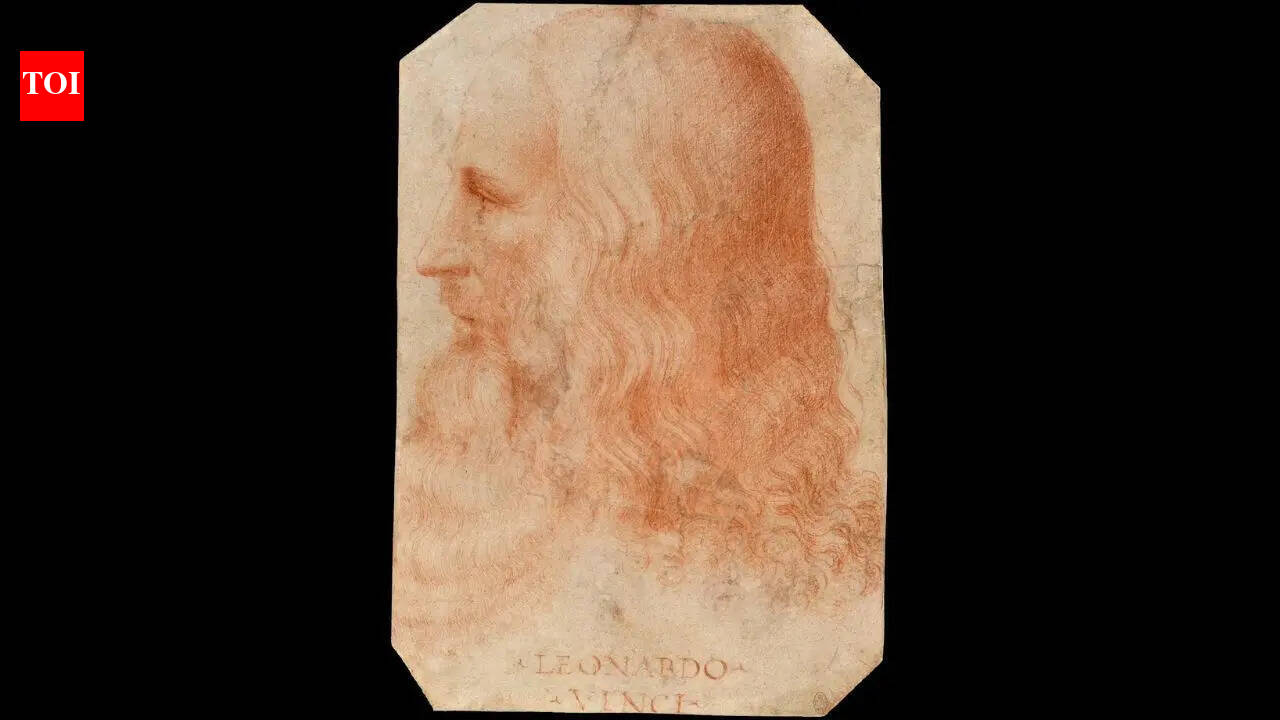
There are quotes that survive because they offer advice. Others survive because they make people stop and look at familiar things differently. This remark, attributed to Leonardo da Vinci, belongs to the second group.At first glance, it sounds like a technical instruction for painters. Someone unfamiliar with art might read it and assume Leonardo was simply discussing how to prepare a canvas. Yet the sentence feels larger than that. It reflects the way he looked at the world itself.Leonardo was not the sort of person who accepted appearances without investigation. He spent years observing water, clouds, plants, anatomy, architecture and light. Many of his notebooks are filled with observations that seem almost obsessive in their detail. He wanted to understand why things looked the way they did.That curiosity is visible in this quote.Rather than beginning with colour, brightness or beauty, he begins with darkness. It is a surprising choice. Most people notice light first. Leonardo asks us to notice what surrounds it.The more time spent with the quote, the less it feels like a lesson about painting alone. It starts to feel like an observation about perception itself.
Quote of the day by Leonardo da Vinci
“A painter should begin every canvas with a wash of black, because all things in nature are dark except where exposed by the light.”
Understand the meaning behind the quote by Leonardo da Vinci
The most direct meaning relates to the way artists create depth and realism.Leonardo is pointing out that objects are not naturally bright on every side. Light reaches only certain surfaces. The rest remains in partial shadow. A painter who understands this relationship can create a more convincing image.But the quote becomes more interesting when considered beyond technique.What Leonardo seems to be saying is that light only matters because darkness exists around it. If everything were equally illuminated, nothing would stand out. There would be no contrast, no focus and very little sense of form.The eye notices brightness because it appears against something darker.That simple observation sits at the heart of the quote.
Leonardo spent years studying how people see
One reason this statement carries weight is that it comes from someone who devoted extraordinary attention to observation.Leonardo was not interested only in painting attractive pictures. He wanted to understand vision itself.His notebooks reveal constant questions about light, reflection and perspective. He examined how shadows changed during the day. He studied the way distance altered appearance. He looked carefully at the boundaries where darkness gradually became light.To modern readers, this may seem obvious. For Leonardo, it was part of a larger investigation.Painting became a way of studying reality.The quote reflects that habit of looking closely at things others might overlook.
Darkness is not the opposite of beauty in the quote
Modern culture often treats darkness negatively.Darkness becomes associated with absence, uncertainty or something to be avoided. Light, meanwhile, is usually presented as positive.Leonardo’s quote does not follow that pattern.In his observation, darkness is not a problem waiting to be removed. It is part of what allows beauty to exist in the first place. Without shadow, there is no depth. Without contrast, there is no shape.A mountain illuminated by sunlight appears dramatic because valleys and slopes remain darker. A face becomes expressive because some features catch light while others recede.The quote treats darkness as essential rather than undesirable.That small shift changes how the entire statement feels.
Great artists often pay attention to overlooked details
Many artistic breakthroughs begin with noticing something ordinary.A reflection in water. A shadow on a wall. The way light enters a room at a particular hour.These are not dramatic discoveries. Most people see them every day without giving them much thought.Artists often do the opposite.They stay with the observation longer. They examine it from different angles. They become interested in details that others pass by.Leonardo was famous for exactly this habit.The quote reflects the mindset of someone who spent years looking carefully at simple things until they revealed something deeper.
The statement works beyond the world of painting
Part of the reason the quote continues to circulate is that readers often find meanings that extend beyond art.People naturally think through contrast.A person may not fully appreciate calm until they have experienced stress. Success often feels different after disappointment. Even ordinary moments gain significance when compared with more difficult ones.The structure of Leonardo’s observation fits that pattern.Light appears because shadow exists nearby.Many readers apply the same logic to experiences beyond painting. The quote never explicitly encourages this interpretation, yet it seems to invite it.That openness has helped keep the line alive for centuries.
Renaissance thinking connected art and observation
During Leonardo’s lifetime, art and scientific observation were often closely connected.Artists studied anatomy to paint the human body more accurately. They explored geometry to understand perspective. They observed nature because nature provided answers that books sometimes could not.Leonardo moved between these worlds more freely than most people of his era.Today, he is remembered as a painter, inventor and thinker all at once.The quote reflects that blend of interests.It sounds like artistic advice, but it emerges from observation rather than theory. Leonardo is describing what he believed nature actually looked like.That commitment to observation shaped much of his work.
Modern visual culture still depends on the same idea
Technology has changed dramatically since the Renaissance, but the relationship between light and shadow remains important.Photographers use contrast to guide attention. Filmmakers rely on lighting to create a mood. Designers think carefully about brightness and darkness when building visual experiences.Even people taking photographs on a phone often respond instinctively to these principles without knowing their history.A picture becomes more striking when contrast is present. Certain details stand out because others remain subdued.The language has changed. The tools have changed.The underlying idea remains surprisingly similar.
Why the quote still feels relevant
Many historical quotations remain trapped in the period that produced them. This one does not.Part of its appeal comes from the fact that it begins with something concrete. Anyone can understand the image of a dark canvas and a source of light.From there, the quote gradually opens into larger questions about attention and perception.What do people notice first? What remains hidden in the background? How does contrast shape understanding?Leonardo never answers these questions directly. He simply offers an observation and leaves readers to think about it.That may be why the quote continues to attract attention long after the world that produced it disappeared.A sentence about paint becomes a reflection on vision.A remark about shadow becomes a way of thinking about the things that make light visible.And perhaps that is what Leonardo did best. He looked at ordinary things closely enough that they stopped feeling ordinary.
Other famous quotes by Leonardo da Vinci
- “Learning never exhausts the mind.”
- “Simplicity is the ultimate sophistication.”
- “Art is never finished, only abandoned.”
- “The noblest pleasure is the joy of understanding.”
- “Time stays long enough for anyone who will use it.”



