


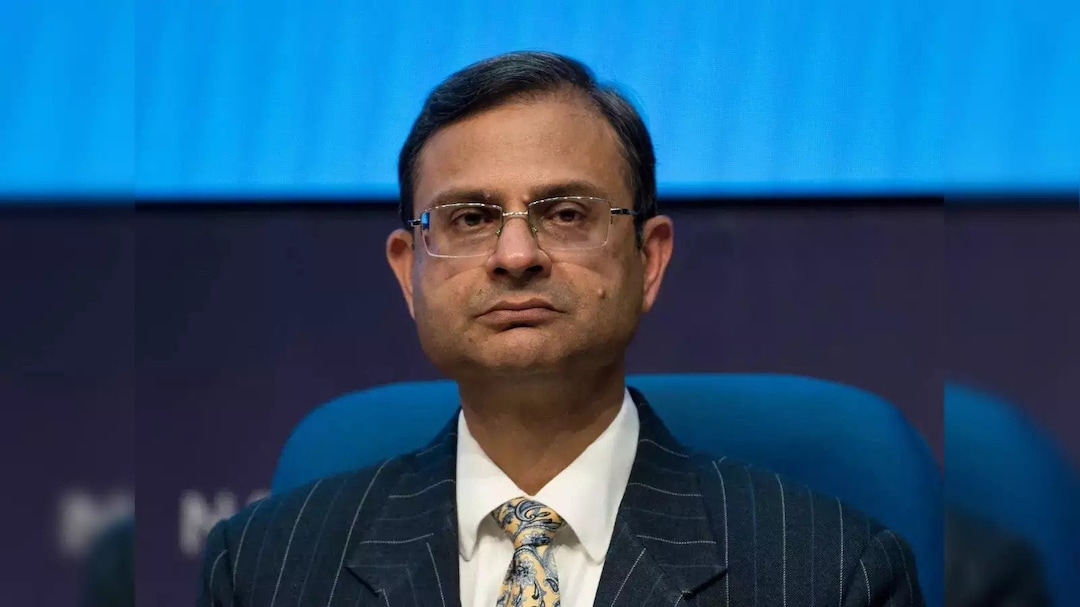
The Reserve Bank will keep on deepening financial markets, broadening participation, and further strengthening institutional frameworks, as India’s macroeconomic fundamentals remain strong, Governor Sanjay Malhotra said on Friday.
In a keynote address at the 25th FIMMDA-PDAI Annual Conference at Amsterdam, the RBI governor said the conference could not have been at a more opportune time, when the global financial system is navigating through a period of elevated uncertainty and challenges.
These have implications not just for the real sector but also for the financial markets, he said.
Malhotra said that geo-economic fragmentation caused by tariffs, trade restrictions, and industrial policies are reshaping not only global supply chains, they are also affecting the free movement of capital and leading to the fragmentation of financial flows.
ALSO READ: RBI Says 98.47% Of Rs 2000 Banknotes Returned
“Overlaying these challenges is the recent escalation of geopolitical tensions in West Asia. Energy prices have risen sharply amidst damage to energy infrastructure and disruptions in supply chains. It has already affected economic activity.
“If the crisis persists longer, it may also translate into second-order inflationary pressures,” he said.
Talking about India’s economic resilience amid global turbulence, the RBI governor said the domestic demand continues to be supported by strong consumption and public investment.
The government’s emphasis on capital expenditure has helped crowd in private investment and improve productive capacity.
“Resultantly, we have recorded an average growth of 8.2% during 2021-25. In 2025-26, the economy is estimated to have grown by 7.6%. Growth in 2026-27 is projected at 6.9 per cent,” he said.
He further said that corporate balance sheets have improved, supported by stronger earnings, and the fund mobilisation by Indian corporates through public markets has remained strong over the last two financial years.
Malhotra emphasised that Indian financial markets have matured considerably over the past few years, which is an outcome of conscious policy choices over the years.
He also noted that while considerable progress has been made in deepening and strengthening the financial markets, more needs to be done, and highlighted five areas of improvement.
“We will continue to deepen financial markets, broaden participation, and further strengthen institutional frameworks. We will continue to strive for efficiency, consumer protection, fairness, transparency, and ethical conduct. In this pursuit, we will continue to assess and meet the emerging market needs,” Malhotra said.
ALSO READ: Explained: What Do RBI’s New Auto-Debit Rules Mean For Your UPI, Card Payments?
RBI, he said, will also stand prepared to deploy appropriate policy measures, as warranted, to mitigate spillovers and ensure orderly market conditions.
The governor also emphasised that strengthening financial resilience is a collective and shared responsibility.
He also emphasised that strengthening financial resilience is a collective and shared responsibility.
Institutions such as trade repositories will have to improve data quality and availability to support risk assessment and effective policymaking, he added.
In his speech, Malhotra said high levels of public debt in several major economies is a concern.
“Their continued fiscal expansion has made it difficult for them to return to the path of fiscal consolidation that was expected post the pandemic-related stimulus,” he said.
On the other hand, Malhotra added that geopolitical pressures are compelling a significant rise in defence spending – a shift that could pose major challenges for fiscal sustainability.
Stretched valuations in certain asset classes, particularly equities including a few tech stocks, could also have implications across markets and geographies, he said.
Essential Business Intelligence,
Continuous LIVE TV,
Sharp Market Insights,
Practical Personal Finance Advice and
Latest Stories — On NDTV Profit.



