


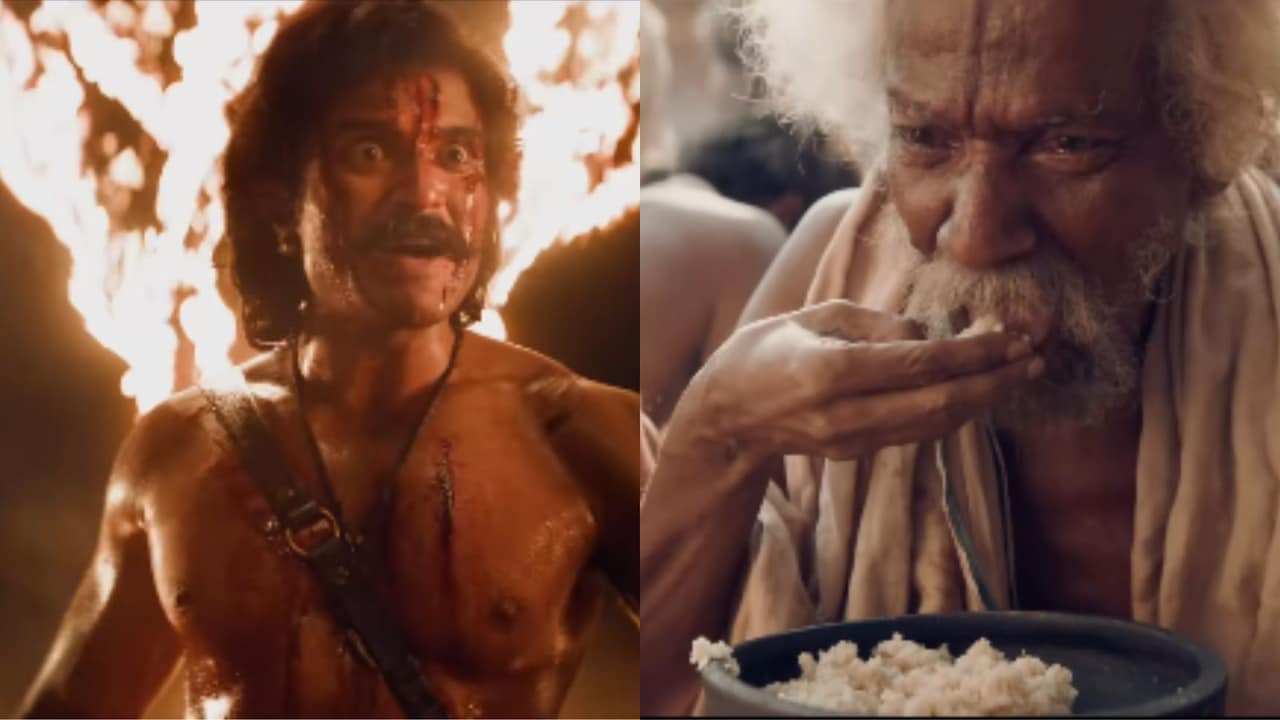
Vijay Deverakonda and Rashmika Mandanna are set to share screen space once again in Ranabaali, their first film together since their marriage. Unsurprisingly, anticipation is running high among fans. The makers recently unveiled the teaser, offering a glimpse into the film’s gritty and emotionally charged world.
So What Is Ranabaali About?
The film draws inspiration from one of the darkest chapters in India’s history: the devastating Madras Famine of 1876-78.
According to IMDb, Ranabaali follows “a rebellious warrior in 1870s South India during the Great Famine who confronts a British commissioner while protecting his region and people.”
Vijay Deverakonda plays the titular character, Ranabaali, while Rashmika Mandanna stars as Jayamma, his wife and companion in the struggle against colonial oppression.
While the film is set against a backdrop of famine and hardship, it also appears to be a story of resistance, survival, and courage.
The Great Famine That Shaped the Story
The world depicted in Ranabaali closely mirrors the Great Famine of 1876-78, one of the worst humanitarian disasters of the colonial era.
The famine affected vast parts of southern and western India, including the drought-prone Rayalaseema (a part of the Madras Presidency) region of present-day Andhra Pradesh.
By the mid-1870s, repeated droughts had already weakened agricultural production. When the monsoon failed in 1876, crops were destroyed, food supplies dwindled, and entire communities found themselves struggling to survive.
Farmers lost both their harvests and livelihoods as hunger spread rapidly across villages.
Why Historians Say Drought Was Not the Only Cause
Many historians argue that the catastrophe cannot be explained by drought alone.
A report by The Better India stated that India was then under British rule, and colonial policies often prioritised trade and revenue collection over local welfare. Even as famine tightened its grip on affected regions, grain continued to be exported from India to overseas markets.
British administrators largely believed that market forces should determine food distribution. They argued that extensive state intervention could interfere with trade and create dependence on relief measures. The colonial government’s response to the crisis has therefore remained a subject of significant historical debate.
The Controversial Relief Measures
Relief efforts during the famine were also widely criticised. Sir Richard Temple, who oversaw famine administration, introduced strict austerity measures in relief camps aimed at limiting government expenditure. Food rations were drastically reduced and, according to historical accounts reported by The Better India, were at times lower than those provided to prisoners in colonial jails.
The Human Cost Of The Famine
According to the BBC, the Madras Famine of 1876-78 claimed an estimated four to five million lives after Viceroy Lord Lytton adopted a largely hands-off approach influenced by policies previously used during famines in Ireland and Orissa. However, some historical accounts place the death toll at more than 10 million.
The consequences were devastating. Historical estimates suggest that nearly seven lakh people died in Rayalaseema alone, according to the same report by The Better India. Across India, the famine is believed to have caused more than 10 million deaths through starvation and disease, making it one of the deadliest famines in the country’s history.
According to the Ranabaali trailer, 8 million people died. The tragedy remains one of the most painful reminders of the human toll of colonial rule in India.
A Story Of Resistance And Survival
This turbulent period provides the historical backdrop for Ranabaali.
As famine deepened and taxes continued to be collected, some communities began to resist colonial authority. Reports from the period describe villagers seizing stored grain, challenging tax collection efforts, and organising local uprisings in a desperate bid to survive.
British officials often labelled such acts as criminal or rebellious. However, local folklore in Rayalaseema preserves a very different memory.
Many of those who challenged colonial rule are remembered not as outlaws, but as ordinary people who stood up for their communities during a time of extreme hardship.
The Real Inspiration Behind Ranabaali
Although their stories are largely absent from official colonial records, they continue to live on in regional folklore as symbols of resistance against famine, exploitation, and imperial rule.
Vijay Deverakonda’s character is believed to be inspired by one such figure who defied British rule during this tumultuous period. Through his journey, Ranabaali appears to explore not only the horrors of famine but also the resilience of people who refused to surrender in the face of overwhelming adversity.
At its core, the film is about more than hunger and suffering. It is a story of courage, dignity, and the fight for survival during one of the darkest periods in India’s history.
Arnold Vosloo plays Sir Theodore Hector, a British colonial official and the film’s primary antagonist. His character appears to be one of the principal adversaries Ranabaali must confront. The clash between the two sets up the central conflict of the film.
Directed by Rahul Sankrityan and produced by Mythri Movie Makers, Ranabaali is scheduled to release in theatres on October 16, 2026.


