


A fractured engine fan blade sent metal parts flying through a Ryanair aircraft shortly after takeoff from Greece last month, shattering a window and drawing a man’s head into the opening before fellow travelers pulled him back inside, U.S. investigators stated on Thursday.
The fragments thrown from the failing engine broke the window pane and inflicted more damage on several other sections of the fuselage, according to an investigative report released by the National Transportation Safety Board.
The emergency unfolded shortly after departure from the northern city of Thessaloniki on July 10.
The NTSB noted that it found bird remains inside the engine assembly, indicating the aircraft may have suffered a bird strike during its initial ascent.
The 61-year-old passenger who was almost forced out of the aircraft sustained friction burns along with injuries to his neck and shoulder before a neighboring traveler hauled him back inside the Boeing 737-800 cabin.
Flight crew members told investigators that they experienced heavy, persistent vibrations and detected mist or smoke filling the cabin environment shortly before emergency oxygen masks dropped from the overhead compartments.
One flight attendant subsequently observed passengers getting out of their seats to call for help after seeing that the passenger who was sitting in a row 11 window seat was partially lodged in the damaged window frame.
Surrounding passengers managed to pull him back fully into the cabin interior.
The passenger was moved to row 12, where a doctor traveling on the flight administered immediate care, according to the NTSB.
Other individuals retrieved a metal container provided by the cabin crew and attempted to cover the broken window opening until the aircraft returned to the airport.
Short video clips recorded on board and distributed by Radio Thessaloniki depicted passengers using oxygen masks following the sudden loss of cabin pressure.
A separate clip captured the broken window with an adjacent traveler wearing a mask, while further footage showed emergency medical responders entering the aisle after landing.
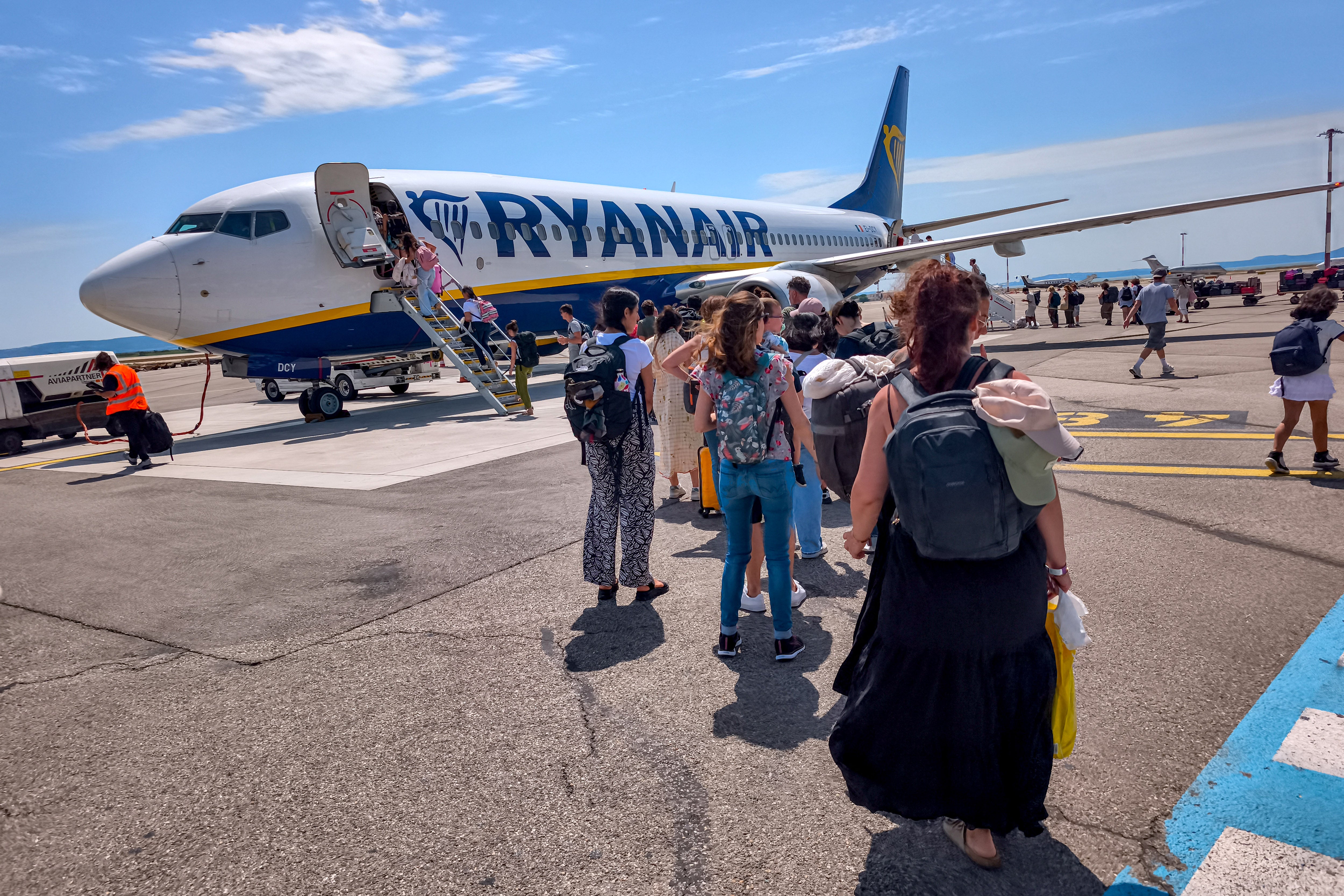
Following the event, Ryanair stated that the aircraft “returned to Thessaloniki shortly after takeoff when a passenger window dislodged in-flight.”
Under international air safety protocols, Greece’s Hellenic Air and Rail Safety Investigation Authority chose to delegate the inquiry to the NTSB, with Greek officials actively participating in the process.
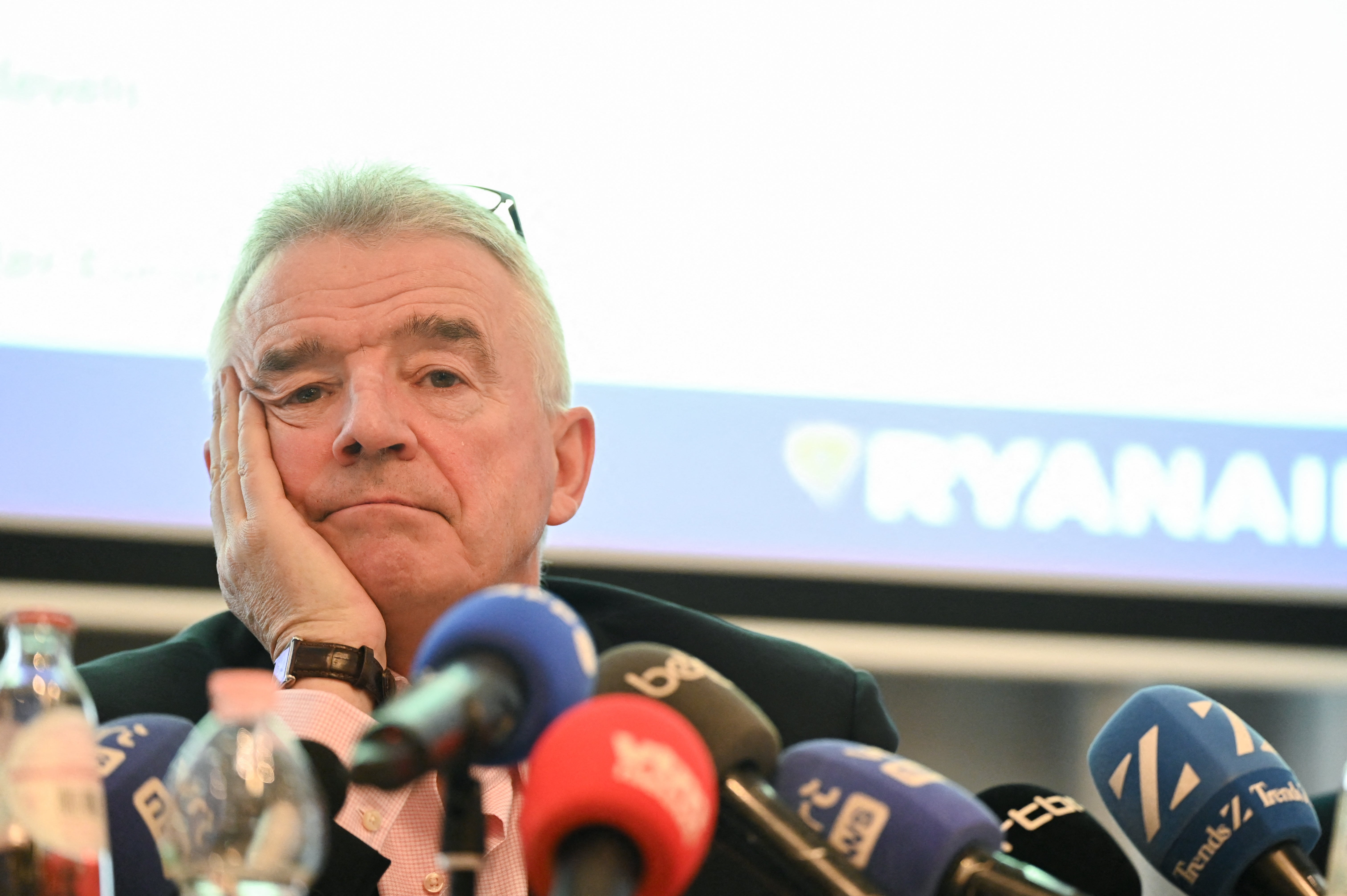
The NTSB publicly reprimanded Ryanair CEO Michael O’Leary after he claimed to investors last month that the probe was strictly centered on foreign object damage rather than maintenance records or the age of the plane. Federal investigators stated that no potential factors had been excluded and that O’Leary was not permitted to speak on behalf of the investigation.
Maintenance records indicate that the fan blades on the failed right-side engine underwent ultrasonic inspection procedures in May 2026 and November 2025 without registering defects.
However, the NTSB highlighted that flight crews had reported four suspected bird strikes involving the same engine over the previous 12 months, with remains retrieved in two of those occurrences.
Comment on the NTSB findings was sought via email from Ryanair, Boeing, and engine manufacturer CFM International.
The narrow-body jet, which accommodates up to 189 passengers, was delivered as a new aircraft to Ryanair in 2008, according to data from tracking service Flightradar24.
Flight records confirm the plane passed 15,000 feet (4,570 meters) about six minutes after departing, before immediately descending to roughly 6,000 feet (1,830 meters) “to burn fuel for 30 minutes” prior to landing back at Thessaloniki about an hour after takeoff.
The flight was operated under Malta Air, a subsidiary carrier of Ryanair, Europe’s largest low-cost airline.
The aircraft executed a normal landing and passengers returned to the terminal building, where one individual requested and received medical care on the ground, the airline stated at the time.


