


It happened while listening to Mausam and Escape, one of the finest, most breathless instrumental tracks from A.R. Rahman’s Academy Award-winning Slumdog Millionaire score. It had been years since I last put it on, but within seconds, the manic, electrifying strings of sitar maestro Asad Khan had me hooked all over again. True to form for someone who can’t enjoy anything without immediately checking what strangers think of it, I found myself scrolling through the YouTube comments section.
Amidst the usual fluff, a singular sentiment stood out, possessing the kind of quiet profundity that halts you mid-scroll: “I want to erase this tune from my mind, just so I can listen to it all over again anew.”
It was a peculiar, almost desperate wish, yet it struck an immediate, resonant chord. Who among us has not harboured that exact desire? To somehow wipe the cerebral slate clean, purely to inherit the intoxicating privilege of being blindsided by genius for the very first time.
As the combination of sitar and electric guitar reached the crescendo, my brain did something odd. It skipped the music entirely and went straight to sport. Because isn’t that the one thing we all secretly want from a great sporting moment, to feel it like it’s happening to us for the very first time?
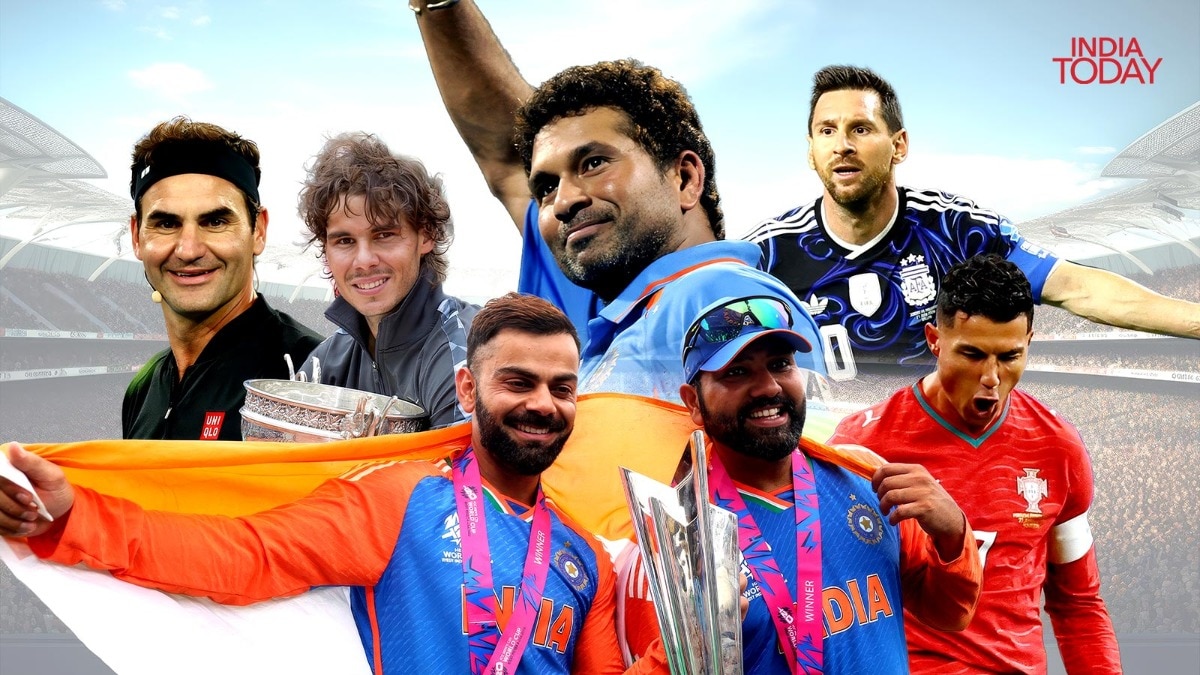
Think of Sachin Tendulkar in Sharjah, matching the apocalyptic energy of an actual sandstorm to drag India across the line. Think of Roger Federer and Rafael Nadal trading tennis strokes like mythic gods in the fading light of the 2008 Wimbledon final. Recall Lionel Messi’s breathtaking World Cup final performance against France, Virat Kohli’s impossibly calculated MCG masterclass against Pakistan, or the visceral, blood-and-guts drama of Steve Smith, swaying and surviving against a terrifyingly hostile spell from Jofra Archer at Lord’s.
Imagine if we possessed that magical, neurological reset button. What if we could strip away the hindsight, the statistics, and the burden of history, just to watch these titans afresh, completely unaware of what happens next?
That fantasy lasts exactly as long as it takes someone to disagree with you about it. The ball has barely returned to the centre circle, the noise has barely settled, before the moment stops being about what just happened and starts being about who it proves right and who it proves wrong. Greatness, in the modern sports landscape, has a remarkably short half-life before it is aggressively converted into ammunition.
AMMUNITION, NOT APPRECIATION
Take the night Lionel Messi scored that World Cup hat-trick against Algeria, enough to draw him level with Miroslav Klose as the tournament’s all-time top scorer. For a few hours, it felt like the purest thing in football: a man in the last act of his career still finding a gear nobody knew existed. Then came Wednesday, and Cristiano Ronaldo’s Portugal stumbled to a goalless draw with DR Congo, the great man himself finishing the night without a single shot on target.
On American television, Thierry Henry, normally generous towards both men, said simply that the team needed to score, not Ronaldo. Chris Sutton went further, suggesting on social media that Roberto Martinez was too frightened of Ronaldo to substitute him. Within minutes, the conversation had stopped being about Portugal’s toothless night and become, instead, about who was still the greater of the two ageing greats, as though one man’s flat performance was proof of the other’s superiority in a rivalry that never truly overlapped on a pitch.
When asked about the state of this debate, former India men’s football coach Igor Stimac offered a reality check that cuts straight to the psychological root of modern fandom.
“Some of this is turning toxic,” Stimac said.
“And it shouldn’t happen, because those two players have made football so special for all of us. Everyone who speaks about them should first stand up and acknowledge what they have done for football. Being publicly harsh on either of them is too much. It says more about the people making those comments than it does about Ronaldo or Messi. They should look at themselves in the mirror.”
Cricket has its quieter version of the same affliction. Spend 10 minutes on any forum and you’ll find someone deciding, with great confidence, whether Sachin Tendulkar’s genius outweighs Ricky Ponting’s ruthlessness as the defining batter of their shared era.
Rarely someone asks the more interesting question: what did each man’s batting actually feel like to witness? That doesn’t fit neatly into a graphic.
A WAR NEITHER MAN ASKED FOR
The Kohli and Rohit Sharma rivalry is uglier still, because it was manufactured inside what was meant to be one dressing room. Two men who rebuilt India’s batting together for over a decade became, somewhere along the way, proxies in a tribal argument that had almost nothing to do with either of them. Every elegant Rohit boundary or calculated Kohli chase gets weaponised by fan pages and television graphics flashing strike rates at each other, as if a number from one innings could settle anything.
Press conferences have turned into traps for this exact reason, a question dressed up as analysis but really just bait, an invitation for one player to take a swing at the other’s legacy. Neither man has ever seemed remotely interested in taking it. It’s largely a fight we built for them and then handed them the blame for not settling cleanly.
THREE KINGS, NO PEACE
If one example should have killed the GOAT debate stone dead, it’s tennis’s golden era. Roger Federer’s balletic grace, Rafael Nadal’s gladiatorial ferocity, and Novak Djokovic’s relentless, almost mechanical precision shared roughly two decades at the summit of the sport, each man redefining what the other two had to become to survive him.
Three men, one era, an abundance no other sport has matched before or since.
Logically, that should have proved there’s no such thing as a single chosen one, that greatness can simply coexist. Instead, it multiplied the wars. ‘Fedal’ forums litigated one-handed backhands like religious doctrine. Entire accounts existed purely to diminish Djokovic’s claim despite the numbers eventually sitting in his favour.
Three careers worth of riches, and somehow we turned it into more conflict, not less, which tells you the problem was never a shortage of greatness to admire. It’s entirely possible we’ll never see a trio like that again in any sport
None of this is only a fan problem, and it would be dishonest to claim otherwise. Broadcasters built entire panel segments around forcing a verdict between two players who owed nobody a comparison. Reputed publications have run the versus piece because it travels further than the appreciation piece, and most of us know it, having written both. Top 10 lists generate more clicks than tributes.
We have normalised a culture where an athlete’s individual triumph cannot exist on its own merits without immediately being measured against someone else’s yardstick. We are doing this to ourselves, collectively, because comparison is simply easier than sitting with the discomfort of two extraordinary things existing at once without one having to lose.
Comparison itself is not the disease. Sport has always measured itself against itself, and there’s real pleasure in an argument offered with affection rather than contempt. The disease is reaching for the yardstick before the wonder has had its turn, letting someone else’s career become the only language left for describing a man’s own.
The last three decades have given nearly every sport its own golden generation. Federer, Nadal, Djokovic, Messi, Ronaldo, Schumacher, Hamilton, Mayweather, Pacquiao, Jordan, Curry. A glittering constellation of human excellence all arriving at once.
And, we just can’t stop scoring them against each other.
Somewhere this year, a 15-year-old, wearing India colours, will clear his front leg and hit a cricket ball so hard, and so far, that the stadium will collectively catch its breath. The replay will still be looping when the first comparison lands, somebody already deciding who he reminds us of, who he must become, who he isn’t yet. For just that one ball, resist the urge to take out your phone and check what strangers think of it. Watch it for what it actually is. Nothing else. Just that.
– Ends



