


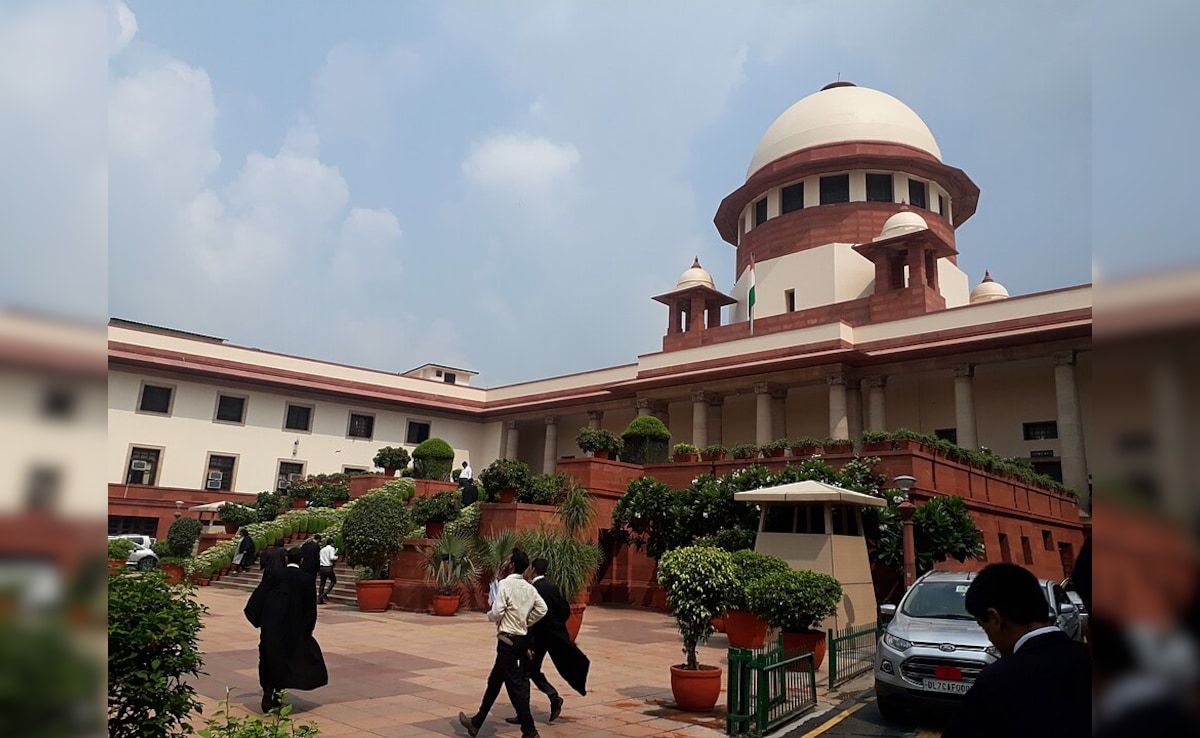
In keeping with the Union government’s fuel-saving initiatives, the Supreme Court has implemented several immediate administrative steps, such as requiring virtual hearings for specific types of cases, allowing justices to carpool, and allowing Registry employees to work partially from home.
The actions are being carried out in accordance with an Office Memorandum bearing F.No. 01-04/2022-CBC (E 3203466) dated May 12, 2026, issued by the Government of India, Department of Personnel and Training, in light of the fuel crisis following the US-Iran conflict, according to a circular released on May 15, 2026, by Supreme Court Secretary General Bharat Parashar.
ALSO READ | HPCL Dealers Allege Forced Sale Of Expensive ‘Power’ Petrol Over Regular Fuel
Until additional directives are given, any cases scheduled during the Court’s half-working days and those listed on miscellaneous days, such as Mondays and Fridays, will only be heard by video conference.
In order to prevent judges from being inconvenienced during proceedings, the circular instructed the Registry to make sure that video-conferencing links are distributed on time, maintain reliable connectivity, and offer timely technical assistance.
Additionally, the judges of the Supreme Court have “unanimously resolved” to promote carpooling among themselves.
Also, the Court has allowed up to 50% of employees in each branch or section of the Registry to work two days a week from home. Nonetheless, the circular made it clear that in order to guarantee continuous operation, a sufficient number of employees must be physically present in the office.
Weekly rosters must be prepared ahead of time by registrars. Remote workers must be approachable via phone and ready to come into the office whenever needed.
Officers are also responsible for making sure that all tasks are completed on schedule.
ALSO READ | The Energy Trap: India Faces Inflationary Crisis, High Import Bills Amid Oil Shock-Led Fuel Price Hike
Additionally, the circular gives Registry officials the freedom to limit or change the work-from-home arrangement in situations when it is not feasible due to the vital nature of work in a specific branch or department.
Prime Minister Narendra Modi made a seven-point plea for economic restraint and resource protection on Sunday, May 10, 2026. He called on people to embrace “economic patriotism” voluntarily in order to lessen supply shocks brought on by the worsening West Asia problem.
Essential Business Intelligence,
Continuous LIVE TV,
Sharp Market Insights,
Practical Personal Finance Advice and
Latest Stories — On NDTV Profit.



