























Is being capable enough?
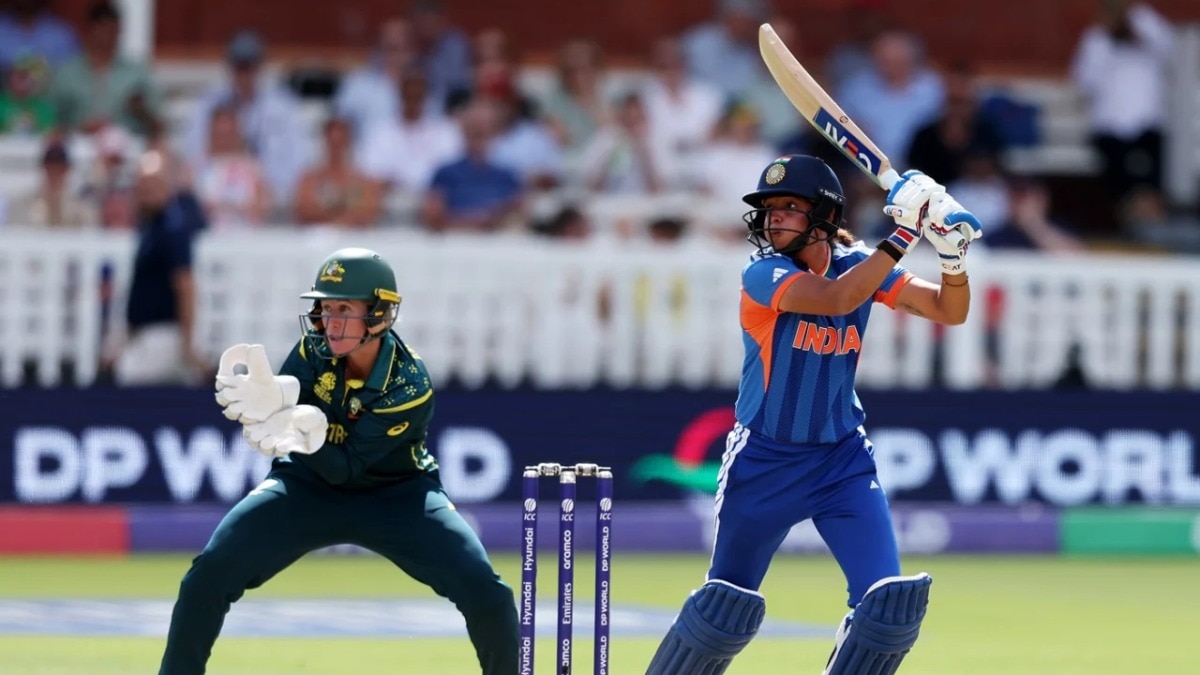
If anyone had been asked before Sunday’s match which team was most capable of beating a full-strength Australia, the answer from most would have been India. At Lord’s, India showed exactly why they were considered capable. But is being capable enough? Perhaps not. Perhaps not because Australia are through to the semifinals, while India are left wondering what could have been.
Amid all the what-ifs, however, one question stands out: who was responsible for India’s defeat to Australia? Yes, Australia were outstanding. Yes, Ellyse Perry and Ash Gardner were magnificent. But who let the match slip away after appearing to have the six-time champions firmly under pressure? Who allowed Australia to pull off the highest successful run chase in Women’s T20 World Cup history?
As brilliantly as Australia played and underlined their class, Harmanpreet Kaur’s India will know they have only themselves to blame for the defeat and the subsequent exit. Had they held their nerve and avoided costly mistakes at crucial moments, they might still have been alive in the competition.
WHY BAT FIRST?
Even before the match began, India had already started faltering. Their first mistake came at the toss. Australia have been among the best batting sides in the ongoing competition, alongside England. That comes as no surprise, considering they have always boasted of their batting depth. Choosing to let them chase, therefore, was inviting danger.
If that wasn’t enough, India should never have made that decision given how vulnerable their bowling has looked throughout the competition. That weakness was exposed against South Africa, where Marizanne Kapp tore into the attack. Without Shreyanka Patil, India’s death bowling has appeared extremely fragile. If those reasons weren’t convincing enough, the numbers at Lord’s further underlined why India shouldn’t have opted to bat first.
Out of 31 Women’s T20Is played at the venue, chasing teams have won 21 matches, reinforcing why India should have bowled first. Sophie Molineux was sensible and got exactly what she wanted, admitting she would also have chosen to bowl had Australia won the toss. Harmanpreet’s decision proved fatal for India, and Molineux’s side capitalised on that mistake to make them pay a heavy price.
THE HORRENDOUS KRANTI SELECTION
India made just one change for the match, bringing in Kranti Gaud for Nandini Sharma, but the decision was a puzzling one. Kranti had featured in two matches earlier in the tournament without taking a wicket, while Nandini had been India’s most effective fast bowler and the only seamer to make regular breakthroughs.
In effect, India left out their most in-form pacer for one who was yet to make an impact, and the move backfired. Kranti’s only over against Australia cost 12 runs as Phoebe Litchfield attacked her from the outset. After that expensive spell, she was never brought back into the attack.
The handling of the change only added to the confusion. If the team had so little faith in Kranti that she was trusted with just one over, why pick her in the first place? More importantly, what justified leaving out Nandini, who had been India’s standout fast bowler throughout the tournament? It was another selection call that ended up hurting India on the biggest stage.
FIELDING HURT INDIA
India’s hopes weren’t undone only by poor bowling or questionable tactics; their fielding also let them down badly at crucial moments. It had been a recurring issue throughout the tournament, with India dropping 11 catches.
Although they didn’t put down any catches against Australia, their overall fielding still left plenty to be desired. As the chase gathered pace, the lapses became even more costly. Kranti Gaud misjudged a cut shot from Ellyse Perry at point, allowing what should have been a routine stop to race away for four.
The errors didn’t end there. India also struggled to cut off boundaries in the deep, with Ashleigh Gardner and Perry repeatedly turning ones into twos and twos into fours through sharp running and hesitant fielding.
There were also moments when India failed to build sustained pressure. A sliced shot from Gardner landed safely as the fielders were unable to get to the ball in time. Against a side as clinical as Australia, every extra run mattered. India’s sloppy fielding only eased the pressure on Perry and Gardner, allowing their match-winning partnership to flourish.
TOO MANY EXTRAS
If poor fielding hurt India, indiscipline with the ball proved equally damaging. The warning signs had been there earlier in the tournament. Against Bangladesh, India conceded seven wides and three no-balls, but escaped punishment because Bangladesh lacked the batting firepower to capitalise. Australia, however, were never going to be so forgiving.
India ended up conceding 10 runs through wides and no-balls, gifting Australia valuable freebies in a pressure chase. The problems began in the opening over when Renuka Singh bowled three wides down the leg side before adding another later in the over.
Instead of tightening the screws after dismissing Georgia Voll, India allowed Australia to settle with unnecessary extras. Renuka had also struggled with her control against Bangladesh, making the recurring issue even more concerning.
The lack of discipline resurfaced in the closing stages. Shree Charani overstepped while trying to bowl a wide yorker to Ellyse Perry, who sliced the delivery for four, turning it into a five-run blow plus a free hit. Renuka then followed with another no-ball in the 17th over. Against Australia, such errors were always going to prove costly, and India paid the ultimate price.
WHAT’S NEXT FOR INDIA?
The World Cup campaign is over, and all India can do now is introspect and identify the areas that need urgent improvement before the 2028 edition. Head coach Amol Muzumdar admitted after the match that the team must raise its standards, particularly in bowling and fielding, if it wants to challenge the world’s best consistently.
At the same time, Muzumdar defended the pace attack, pointing out that it is still relatively inexperienced. He expressed confidence that the fast bowlers would develop significantly over the next 18 months as they gain more exposure and experience. Captain Harmanpreet Kaur, meanwhile, did not shy away from the reality, acknowledging that India simply need to perform better against the top teams.
The warning signs were already evident before the tournament. India entered the World Cup on the back of bilateral series defeats to South Africa and England, with the same vulnerabilities resurfacing on the biggest stage.
Talent has never been India’s problem. The squad possesses enough quality to compete with any side. But talent alone is not enough. Until India cuts out basic errors, improves its decision-making under pressure and becomes more disciplined in key moments, it will continue falling short when the stakes are highest.
– Ends



