


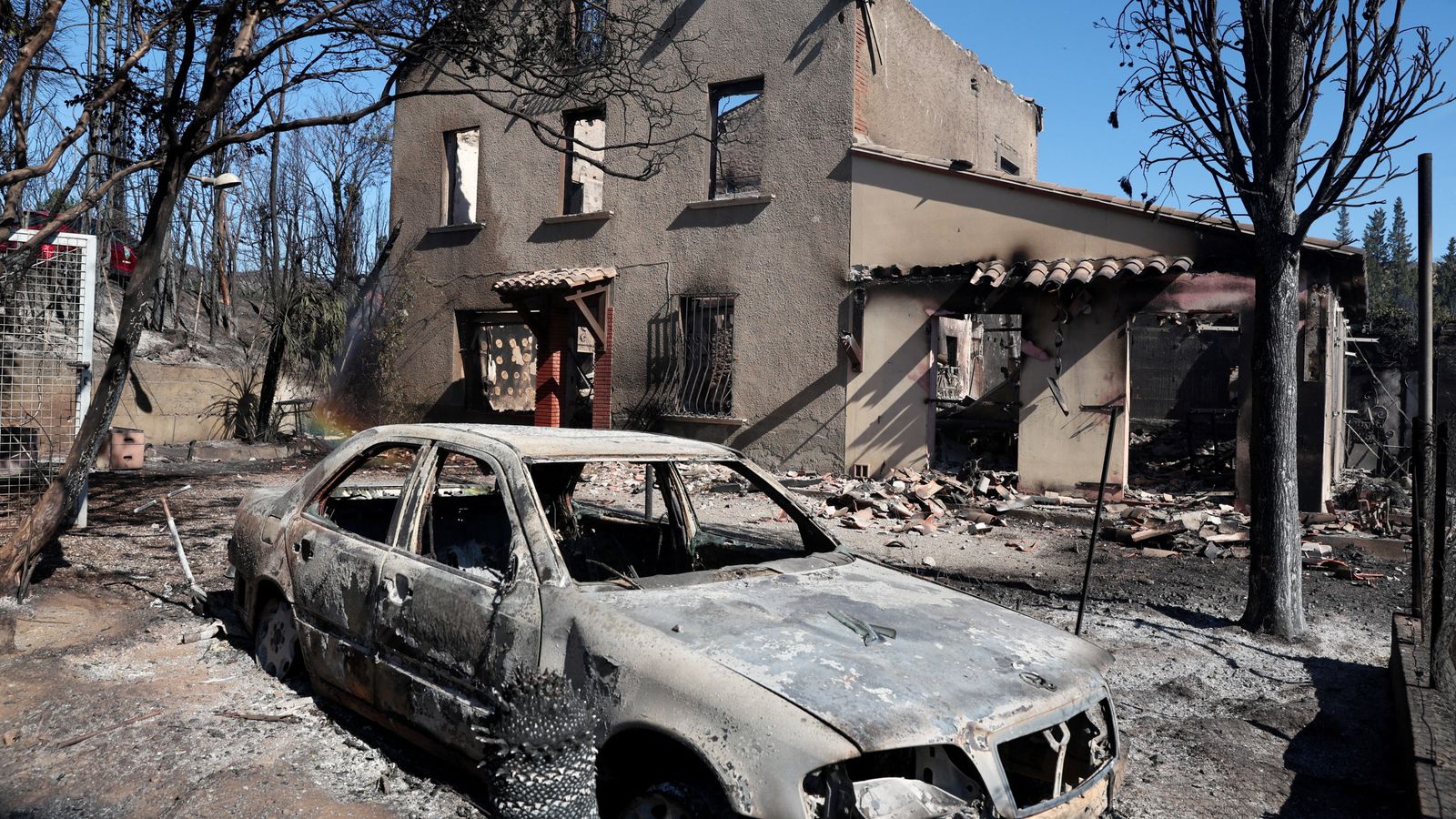
Thousands of people have been evacuated from their homes as wildfires burn through large areas of southern Europe, including in popular holiday destinations.
Hundreds of firefighters are battling major incidents in France, Portugal, Spain and Greece after an early summer heatwave increased the fire risk due to the tinder dry conditions.
It comes as forecasters warn of more high temperatures of around 40C (104F) for much of the region this week.
A wildfire burning out of control in southern France, including near the city of Perpignan, has forced the evacuation of 10,000 people from more than 20 small towns and villages near the Spanish border.
The fire has scorched around 4,600 hectares – equal to around 6,500 football pitches – in the foothills of the French Pyrenees, officials said.
French interior minister Laurent Nunez told TV network TF1 conditions were “deteriorating again” and the “battle resumes”.
Homes and buildings have been damaged – but no details have been released on any possible injuries.
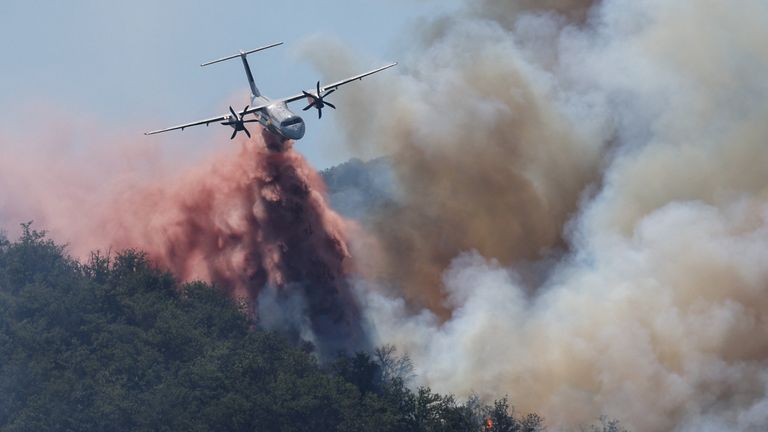
A plane takes part in the effort to tackle a wildfire in Perpignan. Pic: Reuters
A blaze in Trevillach is burning close to the third stage of the Tour de France, forcing the authorities to ban spectators so emergency services can easily access the area.
The race is set to go ahead, but the number of support and team vehicles that routinely follow the competitors are being reduced.
Tour de France organisers said: “The top priority remains the protection of people, property, and natural areas, as well as bringing the fire under control.”
In Greece, residents in the northern city of Thessaloniki were told to stay indoors and close their windows and doors due to toxic smoke from a burning recycling plant which had been engulfed by a wildfire.
Hundreds of people, including a care home, were also evacuated from the area.
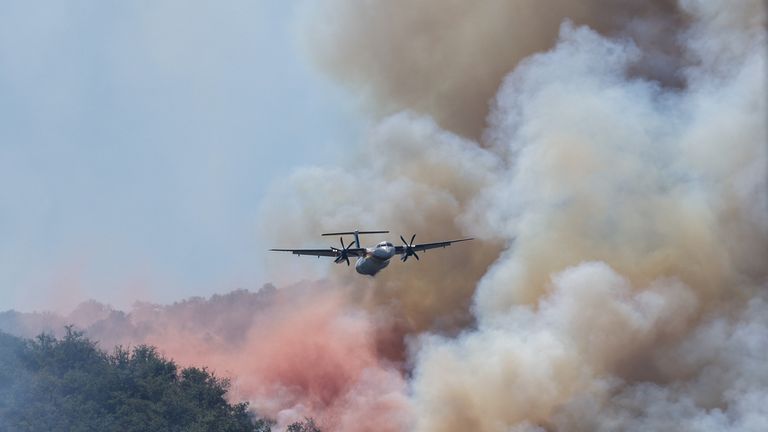
Pic: Reuters
In another wildfire near to the capital of Athens, more than 200 firefighters needed support from volunteers and nearly 30 water-dropping aircraft to fight a blaze in a pine forest in the Mandra area.
Greece has been using more technology to combat the threat of wildfires, including four satellites launched in May that monitor for any incidents.
Fire chiefs said around 85% of wildfires in Greece were being caused by negligence, including through sparks generated by agriculture machinery, discarded cigarettes and the use of outdoor barbecues.
Read more: UK set for highs of 34C this week
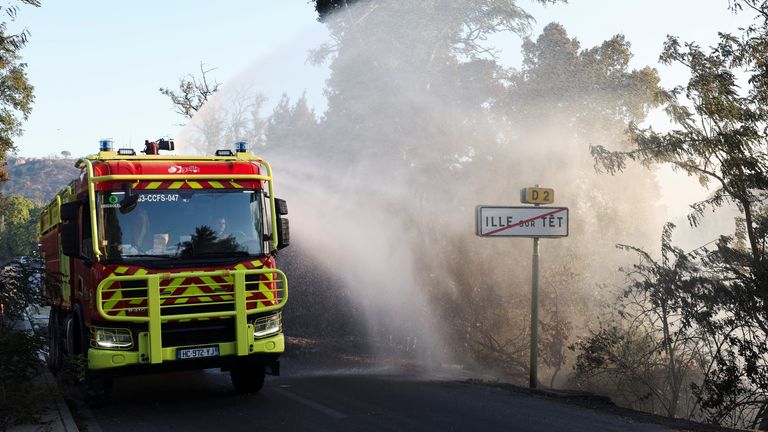
Firefighters work in the French Pyrenees, near the Spanish border. Pic: Reuters
On Sunday, in central Portugal’s Vouzela area, more than 1,200 firefighters backed up by 400 vehicles and 15 aircraft managed to bring under control a blaze which had been burning since Thursday.
The EU’s Copernicus satellite mapping agency showed it took just three days to rip through 12,000 hectares – equal to nearly half the city of Birmingham.
Spain and Italy sent firefighters and air support to help battle the blaze.
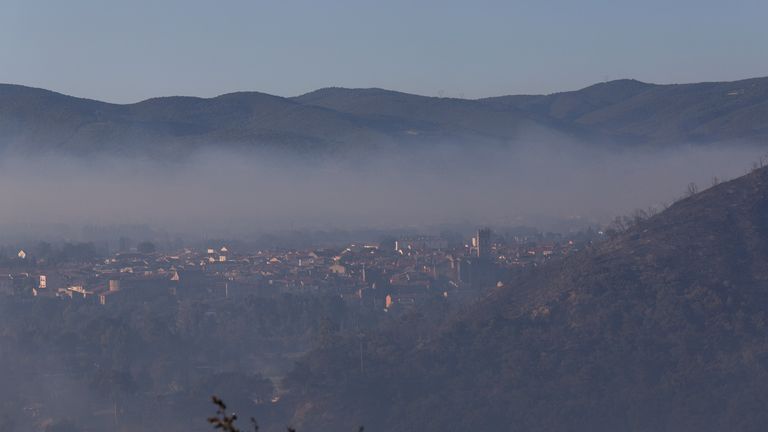
Smoke from approaching wildfires sweeps across Perpignan. Pic: Reuters
In Spain, a wildfire burning since Friday in the northeastern Girona region has scorched nearly 2,200 hectares.
Forecasters are warning of further high temperatures this week for much of southern Europe, with many tourists hotspots such as Athens continuing to face the threat of wildfires.
Seville, Spain, has been warned of 42C (107.6F) conditions while Bordeaux, France, is set for 40C.
Areas across Italy, Portugal and Greece are also expecting temperatures to climb to between 35C (95C) and 40C this week.
The record-breaking heatwave which engulfed large parts of Europe at the end of June would have been “virtually impossible” without human-caused climate change, scientists have said.



