


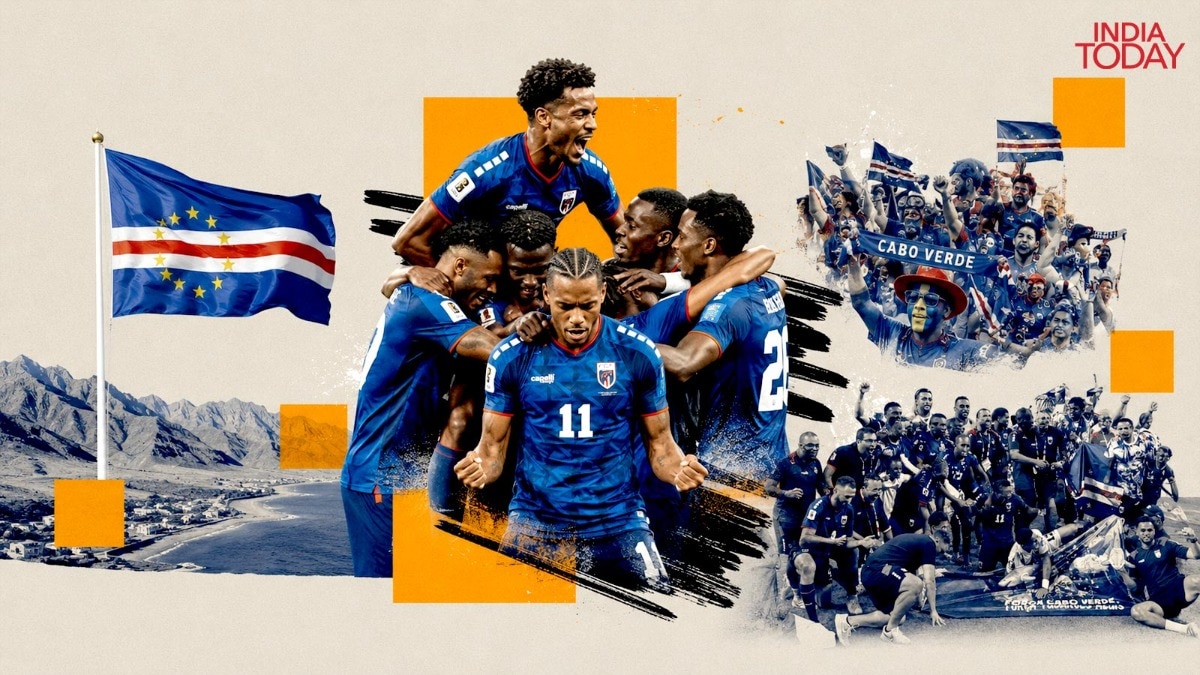
The 2026 FIFA World Cup has generated headlines for reasons beyond football. Ticket prices sparked criticism, while Donald Trump’s immigration crackdown prevented fans, Iranian officials and even an award-winning referee from entering the United States.
Yet as the group stage draws to a close, one story has reminded the world why this tournament remains football’s greatest celebration. Cape Verde, a nation of just 530,000 people, have become the smallest country ever to reach the knockout of a FIFA World Cup. They have done it with a 40-year-old goalkeeper, six players raised in Rotterdam and a center-back who first received his international call-up through LinkedIn. And guess what, they will face Lionel Messi’s Argentina in the Round of 32. More about it later.
Before the tournament, bookmakers gave the Blue Sharks just a one per cent chance of reaching the last 32. Three disciplined performances, three draws and not a single goal conceded later, they had written one of the most remarkable stories of the tournament.
When the final whistle blew against Saudi Arabia and Spain’s victory over Uruguay confirmed qualification, the celebrations began in the dressing room.
“One percent, one percent, one percent,” roared the changing room
The chant echoed around the dressing room as the players danced together, reminding the football world how little had been expected of them.
Cape Verde finished second in Group H behind Spain, ahead of Uruguay and Saudi Arabia. For an island nation scattered across ten volcanic islands off Africa’s west coast, it was a moment few believed possible.
On football’s biggest stage, Cape Verde had barely registered. Now they have become one of the defining stories of the 2026 World Cup.
THE GOALKEEPER WHO STOOD TALL
If you want to understand Cape Verde’s remarkable run, start with Vozinha.
At 40, when most goalkeepers are winding down their careers, he has become the face of the Blue Sharks’ World Cup journey. Against Spain, he produced seven saves to secure a goalless draw against one of the tournament favourites. In the decisive match against Saudi Arabia, played before 68,278 fans in Houston, he made three more as Cape Verde held firm to book their place in the knockout stage.
In the stands, a group of shirtless supporters had painted his name across their chests, one letter each. High above them, in a luxury suite, his mother Ana waved a tiny Cape Verde flag. She had missed the match against Spain because of visa issues. This time, she was not going to miss history.
Vozinha’s heroics have turned him into one of the breakout stars of the tournament. But when asked to explain Cape Verde’s fairytale run, the veteran goalkeeper kept it simple.
“We are small,” he said. “But we have big hearts and we are fighters.”
RECRUITED ON LINKEDIN, BORN IN DUBLIN
Cape Verde’s World Cup squad reflects the country’s global footprint. Fourteen of the 26 players were born outside the islands, with six raised in Rotterdam, home to one of Europe’s largest Cape Verdean communities after decades of migration.
Among them is centre-back Roberto Lopes, better known as Pico. Born in Dublin, he represented the Republic of Ireland at youth level before receiving an unexpected message on LinkedIn from the Cape Verde Football Federation in 2019. The invitation led him to the country of his father’s birth and, eventually, to the World Cup.
“There is an inner confidence in this team that we are good enough to mix with the best teams in the world,” Lopes said. “Since I have been involved, and before that, there has been an ongoing plan to get Cape Verde up at the big table with the big football nations.”
Dailon Livramento, another Rotterdam-born player now playing his club football in Portugal, scored the winner against Cameroon that sealed Cape Verde’s place at the World Cup. Against Saudi Arabia, he was again among their brightest performers, repeatedly testing the defence and coming close to finding a winner.
“We tried to play our style,” Livramento said. “This was the game where we could show it.”
Cape Verde’s rise has been built on players raised in different corners of the world but united by a shared identity. This World Cup has shown what that connection can achieve.
A TEAM THE WHOLE WORLD ADOPTED
Outside the stadium in Houston on Friday night, supporters wearing Brazil, France and England shirts had swapped allegiances for the evening, draping themselves in Cape Verdean hats and scarves. They celebrated alongside Cape Verde fans as if the result belonged to them too.
Every World Cup produces a team that captures the imagination of neutral supporters. This year, it is Cape Verde.
“It feels like everybody supports us,” said Deroy Duarte after being named Player of the Match against Saudi Arabia. “We are a beautiful country, a beautiful people, and it is a dream to put Cape Verde on the map like this.”
Their run has drawn admiration far beyond the islands. Fans with no connection to Cape Verde have found themselves checking the Blue Sharks’ scores before those of some of football’s traditional powers. Few stories at this World Cup have resonated as widely.
But while the football world embraced Cape Verde, nobody felt the moment more deeply than the people who had waited decades to see their nation on this stage.
WHAT THIS MEANS TO CAPE VERDE
Outside the stadium, supporters who had spent the evening beating drums and singing celebrated with tears, embraces and dancing. For a nation of just over half a million people, reaching the World Cup knockout stage was more than a football achievement. It was a moment generations had waited to witness.
Inside the dressing room, players and staff crowded around mobile phones to watch the closing moments of Spain’s victory over Uruguay. When qualification was confirmed, the room erupted once again.
Long after most of the crowd had left Houston Stadium, the Cape Verde players remained on the pitch. They posed for photographs, wrapped themselves in their national flags and embraced family members who had travelled from across the world to share the occasion. Nobody seemed ready for the night to end.
That was perhaps the truest measure of what Cape Verde had achieved. A team given just a one per cent chance of surviving the group stage had become one of the defining stories of the World Cup, earning admiration not only from its own supporters but from football fans everywhere.
A COACH WHO ALWAYS BELIEVED
For all the emotion in Houston, Cape Verde’s breakthrough was no overnight success. It was years in the making.
Much of the credit belongs to Bubista, the former Cape Verde international who took charge in January 2020. While the spotlight has fallen on his players, their rise has been built on years of quiet planning, discipline and belief.
Against Spain, Cape Verde committed just one foul, the fewest by any team in a World Cup match since records began in 1966. It was another example of the discipline that has become the hallmark of Bubista’s side.
Cape Verde came from behind to draw 2-2 with Uruguay, held Spain to a goalless draw and matched Saudi Arabia throughout a tense final group game. Bubista, named African Coach of the Year in 2025, insisted their historic run was no surprise to those inside the camp.
“We always train and play as one unit,” defender Sidny Lopes Cabral said. “This is how we play. This is who we are.”
“I have always said that sooner or later Cape Verde would be on such a stage,” Bubista, who walked into his press conference draped in his country’s flag, said. “I always knew. Football belongs to everyone. We represent our country, we represent Africa, and we represent the small countries around the world.”
Bubista said facing Argentina was an honour.
“It’s a country with which we have a long-standing connection, as many Cape Verdeans have emigrated there,” he said.
“We’ll play our game with the right attitude and a sense of responsibility, but also with our own personality and character. They have Messi, who needs no introduction.
“We represent our island, but we also represent Africa. It’s a source of immense pride. One of our objectives was to showcase the quality of our football and our country. This shows that even the smallest countries can prove that nothing is impossible when you have strength, determination, focus, willpower and resilience.”
THE REWARD: KNOCKOUT vs ARGENTINA
Argentina await next. Lionel Messi and the reigning world champions stand between Cape Verde and another piece of history. Once again, the odds are firmly against them.
Outside the stadium, a woman stood with her face painted blue and white, holding a handmade sign above her head.
“Small islands. Big dreams.”
Cape Verde have already turned those dreams into reality. They arrived at this World Cup with just a one per cent chance of reaching the knockout stage. Now they carry the hopes of a nation and the admiration of football supporters around the world.
Argentina may yet end Cape Verde’s World Cup journey. But nothing can undo what they have already achieved. A team that almost nobody believed in has reminded football that its biggest tournament still has room for miracles.
The Blue Sharks are not done dreaming.
FIFA World Cup | FIFA World Cup Schedule | FIFA World Cup Points Table | Football News
– Ends



