


India’s music market is generating a lot of noise, and attracting a lot of capital.
Universal Music Group, Warner Music, Sony, Believe, Reservoir, and a growing cast of international music companies and investors have all made significant moves in the country in recent years. They’ve targeted everything from Bollywood soundtracks and Punjabi catalogs to regional-language labels and live entertainment.
One of the most consequential recent deals, however, arrived in April 2023, when New York-headquartered Primary Wave Music made a strategic investment in Times Music, the Mumbai-based record label and music publisher owned by media conglomerate The Times Group. The Wall Street Journal reported at the time that the deal formed a joint venture valued at over USD $100 million.
“We started working the phones, doing online road shows, cold calling people,” recalls Times Music CEO Mandar Thakur about the company’s search for a strategic partner ahead of signing the Primary Wave deal.
“We got a call back from everyone. Then, one day, out of the blue, I got a call from a gentleman called David Loiterton [President, Indo & Asia Pacific at Primary Wave], whose wife had worked with me at Channel V.
“He said, ‘I work with this company called Primary Wave.’ They were the one company we had not reached. Larry [Mestel], the founder [and CEO], was on the phone within a couple of days. The fact that they jumped on the opportunity that fast impressed me.”
Since then, Times Music has completed three catalog acquisitions: Symphony Recording Co., a prominent player in Tamil devotional music; ARC Musicq, a pioneering Kannada label; and, most recently, Punjabi specialist Catrack Entertainment, whose catalog spans what the company describes as a “golden era” of the genre, featuring recordings by Babbu Maan, Malkit Singh, and Channi Singh.
“Our thesis remains: it’s got to be golden and legendary,” says Thakur of the company’s acquisition strategy. “It’s like finding rough diamonds.”
Punjabi music has emerged as one of the fastest-growing genres globally in recent years, with artists like Diljit Dosanjh, AP Dhillon, and Karan Aujla breaking into mainstream Western markets. Thakur bet on the genre early: Times Music’s 2016 alliance with Speed Records, which he describes as the world’s top Punjabi label, was the catalyst for the company’s rapid growth and, ultimately, the Primary Wave partnership.
Today, Times Music also operates through two sub-labels: Junglee Music for film soundtracks and ffs for independent releases. The company used to sub-publish in India for Warner Chappell and Peermusic, and still sub-publishes for Wixen, Cloud 9, Riptide, among others.
“We bet very heavily on the Punjabi music market, and look where it is today.”
Thakur is a three-decade-plus veteran of India and South Asia’s music business. His career began in the late 1980s as an assistant to a lighting designer on concert stages in Mumbai. He then spent a two-year stint with a prominent regional concert promoter in Hong Kong before a seven-year run as Head of music and talent industry relations/programming at Channel V. The latter was the Rupert Murdoch-backed music television station that became a dominant force in Indian pop culture during the 1990s.
From there, Thakur co-founded Soundbuzz, which he describes as Asia and India’s first digital music distribution company, “technically founded 20 days before Napster.” After Soundbuzz was acquired by Motorola in 2008, Thakur moved into consultancy, and Times Music came calling.
He joined as COO in 2010, initially viewing it as a “three-to-four year” turnaround job. Sixteen years on, he’s CEO, and the company he inherited, a predominantly physical boutique label, has been transformed into one of India’s most active independent music companies.
According to Luminate data, India is now the world’s second-largest music streaming market by total on-demand volume, with 489.9 billion streams in 2025. That places it behind only the United States (1.5 trillion) and ahead of Mexico, Brazil, and Germany. India also added the fourth-most net new premium on-demand streams of any market globally last year, with premium streaming volume growing 42%.
But 84% of India’s streaming market remains ad-supported, and Thakur argues the opportunity is widely misunderstood.
The addressable audience, he says, is not the entire 1.4 billion population, but closer to “750 million, of which 550 million are connected to broadband and 350 million are repeatedly consuming music.” India “is a volume market,” he explains. “The yield is a much lower average revenue per user [than Western markets].”
But he pushes back firmly on the idea that Indian consumers won’t pay for digital entertainment. “That’s an uninformed view,” he says. The evidence backs him up: JioHotstar, India’s dominant video streaming platform, reached 280 million paid subscribers within months of its February 2025 launch, driven largely by IPL cricket moving behind a paywall.
By contrast, according to a joint report from EY and FICCI, only 14.4 million Indians pay for a music streaming subscription. “It’s been a free market too long, but the changeover has already begun,” says Thakur. “And our rate of growth [in paid subscriptions] is significantly higher compared to the rate of growth of the free customer.”
Thakur is bullish on what comes next for both his company and the wider Indian music industry, and says Times Music is preparing to announce further acquisitions in the near term.
“We’re getting ready to announce two or three big [deals] over the course of the next few months,” he reveals.
But first, Thakur meets MBW to discuss his career, the Primary Wave partnership, India’s subscription challenge, and why he believes we’ll continue to see the explosion of Indian music globally.
How did you get into the music business?
There was no real big plan. I grew up in a small town in India in the late 1980s, and your options were: doctor, engineer, or lawyer. I got into music at an early age, listening to BBC Radio, pirated cassette tapes from Dubai, hungrily devouring used magazines, and watching the ’87 Grammys. I fell in love with the artists and the music behind it.
I read an interview with a band, called them up, shocking them, when I pitched to become their roadie. I think the band was shocked because no one else had called them. The roadie bit was short-lived. I became an assistant to a lighting designer for stage concerts, and that was my real entry point. I worked on the biggest concerts, including the first Indian music fest, Independence Rock, and learned about rehearsals, lighting aesthetics, and performances. That’s really my start.
You joined Times Music as COO in 2010. What was the state of the company?
When we sold Soundbuzz to Motorola, the first M&A transaction in the history of the Asian digital music [and] telecom business, Motorola itself went bust. When I moved out, Times Music came to me and wanted me to consult; to move what was then a predominantly physical company, a boutique label, into [a digital business].
“It was a running joke at the time: just coming out of a digital company: ‘Why would you join a record label?’ “
I looked upon it as a gig of three to four years. Turn the company around, move it fully to digital. The kind folks at [the Times Group] said, ‘We want to grow it, but we want to do it the right way.’ One thing led to the other, and here we are.
It was a running joke at the time: just coming out of a digital company: ‘Why would you join a record label?’ But the only thought in my head was: if the digital industry goes up, the music industry, which is its prime supplier, is bound to rebound. If I get in at the bottom, I’ll be able to effect change.
In 2016, you made a big bet on Punjabi music with Speed Records. That led to rapid growth, and eventually to the Primary Wave deal. What was it about Primary Wave that made them the right partner?
They were the first [such company] to look at India as an opportunity, way before any other investor. They are not really a typical fund. It’s a good bunch of music industry folks playing with capital and marketing. We just hit it off from day one.
India is about Bollywood, right? But we were seeing data. Before data became cool, regional-language markets were growing significantly, led by Punjabi music. We created a first-of-its-kind alliance with Speed Records, the biggest Punjabi label in the world. We bet very heavily on the Punjabi music market, and look where it is today.
That gave us growth and global potential. Then we felt we needed to accelerate. We needed somebody who was a partner, not just capital. If I had to raise capital, we could raise it locally.
Internally, at the Times Group, we thought: we need a strategic partner. You don’t need somebody who’s just coming along on a joy ride for a short time. For that, a bank loan is better. India is not a market for the weak-hearted. It’s a long gestation period. Primary Wave are practical people. They’re not the typical fund that comes in to spray and pray. They’ve been around for 20 years. You’re seeing the fruition of those 20 years now.
Since the JV, you’ve completed three acquisitions. What does a catalog need to have for you to want to buy it?
India is a song-driven economy. Unlike anywhere in the West, you’re not buying a writer’s share of a big, legendary superstar. You’re buying, effectively, other labels, a collection of songs.
The thesis is: the material has to be legendary. There are no two ways about it. But everything in India is not gold. In the last five years, there’s been no more than about six to eight [truly] consequential acquisitions.
Our thesis remains: it’s got to be golden and legendary, the catalog’s got to self-generate, and it’s got to [have] sizable [appeal with the] global diaspora. It’s like finding rough diamonds.
India is attracting a lot of international investment. Is that impacting competition in terms of the price and availability of catalogs?
There is a lot of white noise. China shut itself off, and India emerged as the largest greenfield opportunity. [Then] the capital follows the narrative.
Is it overvalued? Oh yeah, most certainly. You’re talking about a [top-tier] movie soundtrack that could set you back USD $3.5 million to $4 million.
Wherever there is excessive noise, there is overvaluation. Everything is not gold.
Where do you see the biggest global opportunity for Indian music?
Our biggest opportunity actually lies outside of India. You have to wear the hat that you’re in the business of audiences, not in the business of just music. I hate the overused word ‘collaboration’. Nothing great came out of a song camp. No superstar became what they are because they collaborated only.
The opportunity is the ‘boring’ opportunity. You have a diaspora with a large appetite for homegrown culture, and that will cross over slowly into mainstream audiences.
Culture crosses over. It is critical to recognize that. Artists will break globally not just because they’re Indian, but because they have global appeal and the songs. Beyond that, India has a 250-year-plus history of music that is completely unique, combined with [the fact that] a large part of the population has English as a second language.
After the Korean explosion, everyone’s looking for a hit everywhere. The only other opportunity that I still believe [exists] at a multiplication stage is Indian music.
According to a joint EY and FICCI report, only 8% of India’s 178 million music streamers are paying subscribers, and paid streams account for around 3% of the country’s total streams. What needs to change?
The first thing to address is the ‘Indian consumers don’t pay’ narrative. That’s an uninformed view. We used to pay close to 50 rupees, [around] $1, for a ring-back tone two decades ago. That service [at its peak] was 10% to 14% of the large telecom industry’s turnover. Anybody who says Indian consumers don’t pay was probably not born [at the time].
But Indians are notorious for value. When you have a population this large, what happens is: if I’ve got 10 fingers and five rings, I cut the five rings in half. That’s what I call the ARPU cost. The yield in the rest of the world is directly in proportion to the audiences they serve. The yield in India, by the sheer scale and size of the population, is a much lower average revenue per user. India is a volume market. That’s observation number two.
Number three: when Jio started giving free broadband, our need to pay was fulfilled by a free service called YouTube. Every streaming app was sitting on the side of YouTube. If you habituate someone to free, they’re going to stick with free until they reach the last platform that forces them to go paid.
I believe we are at that stage today. India has seen a lot of platforms disappear. [Wynk, Resso, and Hungama have all shut down.] YouTube’s own subscription service is growing because people are fed up with ads. Spotify has started marketing [Premium]. We’re debating: do we need to put new products behind paywalls? Do we need to put the catalog behind paywalls? We are willing to take short-term hits to grow the subscription business.
We charge somewhere in the region of 100 rupees [per month], about [$1.20], compared to [$12.99] in the US [for Spotify]. It’s 1/10th of that price. But the paying customer is really only in the top five metros. Your audience lies in the mini metros and middle India.
What are your ambitions for Times Music over the next two to three years?
India is right now in a bear market, moving toward ‘somebody’s got to pay for music’. We are the speedboat that can move faster than an oil tanker. We’re surgical about our opportunities.
We’re getting ready to announce two or three big [deals] over the course of the next few months. We’re releasing one of Bollywood’s biggest ensemble movies in many years, Welcome to the Jungle (No.3), with the biggest star cast ever assembled.
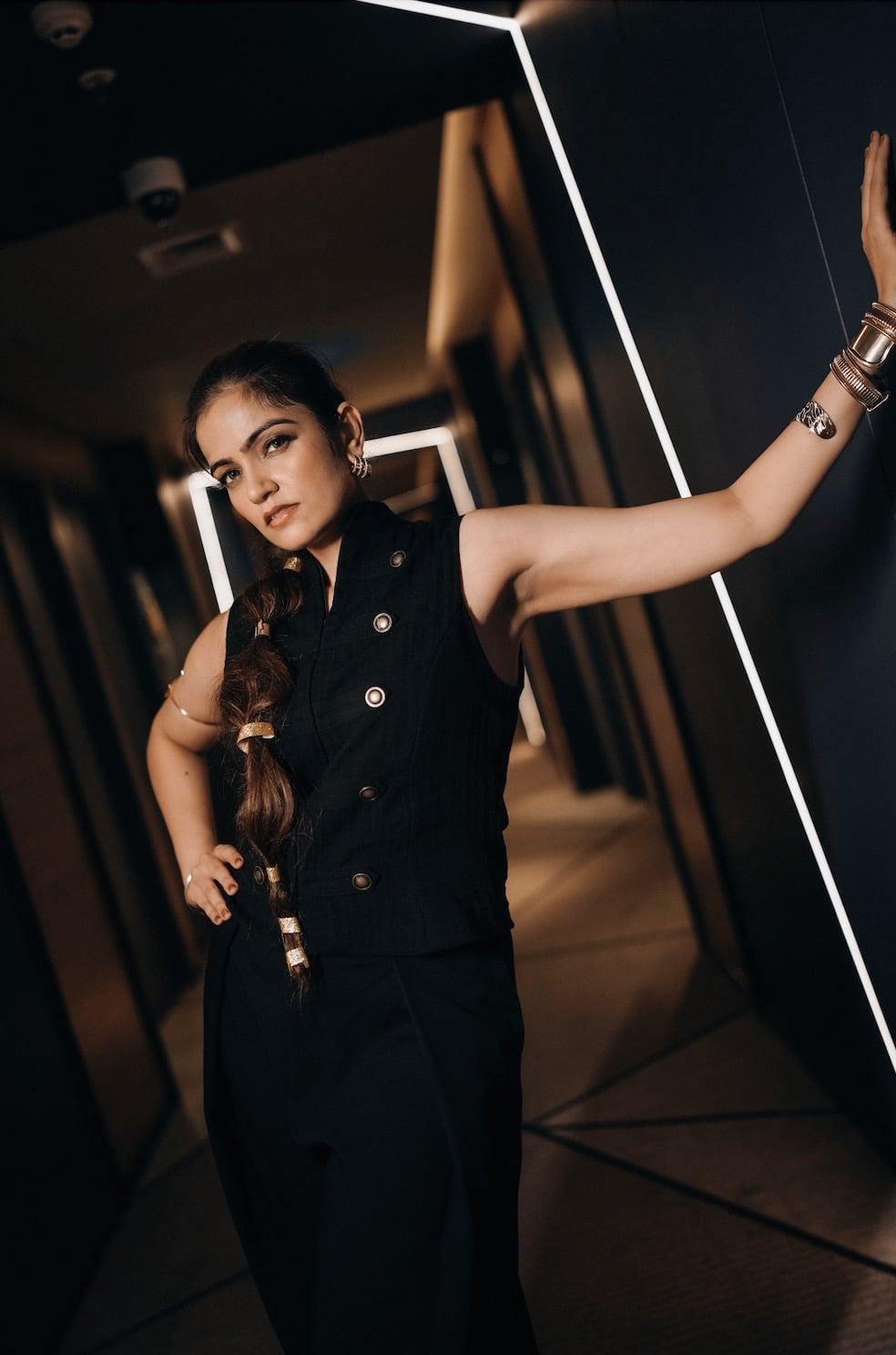
And on the Primary Wave side, the first release [from an Indian artist into the US market] will be [by] Deedar Kaur, a remake of [a] Sarah McLachlan track, Angel. Besides Deedar, other Times Music-signed artists Aarya and Kunwarr also wrote some original tracks with DJ White Shadow [a producer on Lady Gaga’s Born This Way], in writing sessions in Mumbai, and are slated for release over the next two to three months.
Between these various buckets, hopefully, we’re in a good place. I really think the time is right. It’s not only for us. I hope some of our other industry friends and colleagues and other labels also ensure [their] acts break out, because there’s no better [time] than now.
If you could change one thing about the global music industry, what would it be?
We need personalities. We are show business. We’re not in music; we’re in the business of showing and selling personalities to audiences through music.
If you look at Spotify’s numbers, there’s only 12 or 13 [artists globally] that could qualify [as superstars]. That tells you what is wrong with the industry.
The cacophony around distribution and dashboards is pathetic. We’re leaning on artists to think that if they self-release, they’re going to become the biggest stars in the world. Outside of Bad Bunny, how many global superstars really pop out every month?
We don’t need to focus on the mechanics. Fix the product. Bring on the great old sex, drugs and rock and roll. You need to fire up consumers. I’m an old school believer: build it and they’ll come.

All MBW+ subscribers get digital access to our Music Business Worldwide magazine, with six issues released each year. Music Business Worldwide



