


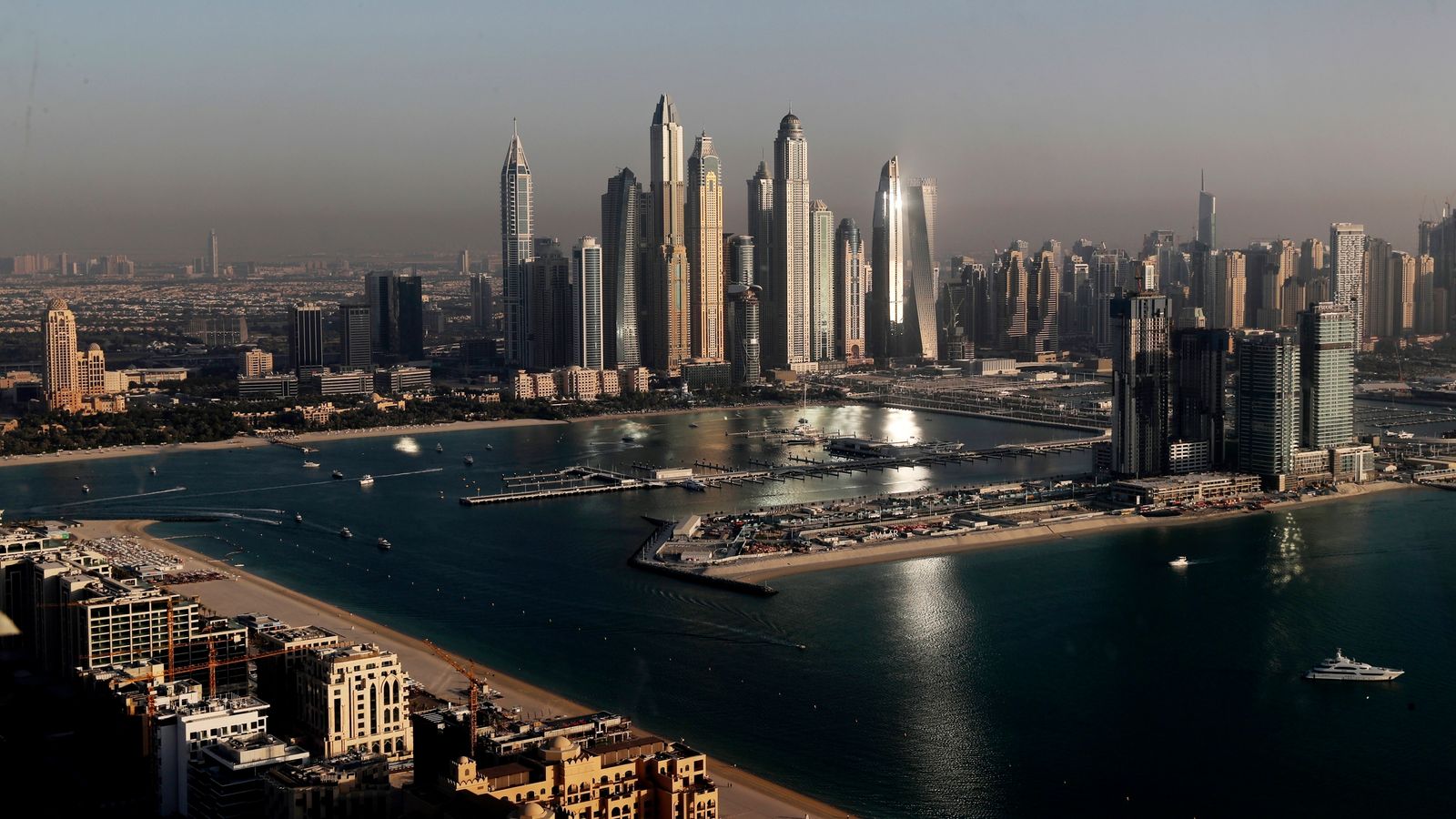
The United Arab Emirates (UAE) has said it is to leave the OPEC and OPEC+ cartels of oil-producing nations, potentially threatening greater turbulence for global energy markets ahead.
The country said it was to cease membership of both groups at the end of the month, arguing the decision would give it greater flexibility to chart its own path under its “long-term strategic and economic vision”.
The Organisation of Petroleum Exporting Countries has been around since 1960. It expanded in 2016 to include the interests of Russia and other producers outside the Middle East but not the United States.
Money latest: John Lewis’s WFH message to partners
These two groups collectively wield huge influence by setting production levels aimed at creating a semblance of balance between supply and demand in the market.
That balance is supposed to produce price stability but the US-Iran war has brought tensions to the surface alongside the supply shock caused by Tehran’s closure of the key Strait of Hormuz shipping route. Gulf states’ energy infrastructure has also been targeted by Iran.
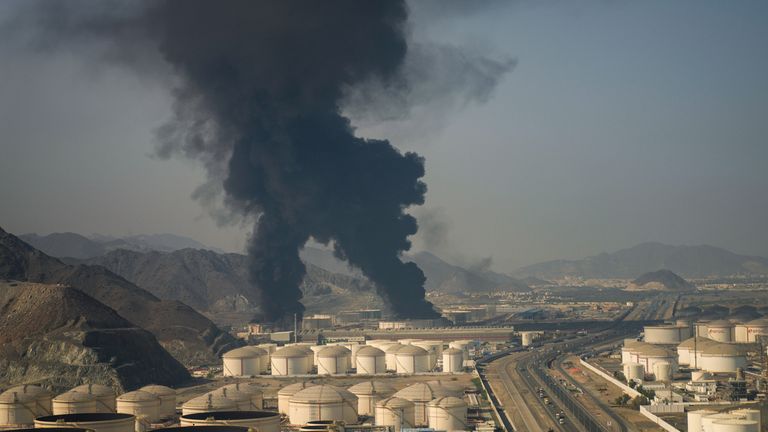
Fire and smoke rise from an oil facility in Fujairah, UAE, in March Pic: AP
THE END OF OPEC?

This moment is significant for a couple of reasons.
The first is that the UAE is such a long-standing member of the cartel, at the very heart of the Persian Gulf.
The second is that OPEC was already losing influence long before today’s bombshell.
Back in the early 1970s, OPEC production accounted for around half of all global crude. But in the past decade or two, the world oil market has been turned on its head by the advent of shale oil from the United States.
Today, the US is the world’s biggest oil producer – by far. That has contributed to a gradual fall in OPEC’s share of global oil production, down to around a third of world crude pumped in 2024 and 2025.
The UAE’s departure from OPEC means its share of global oil production will drop below 30% for the first time in history.
In other words, this cartel that was once able to create economic chaos with a single production cut is less powerful than ever before.
They are reeling from the lost energy revenue and the repair bills which lie ahead despite some limited relief from oil price hikes to above $110 a barrel.
In the case of the UAE, its two most powerful states, Abu Dhabi and Dubai, have suffered wider business damage from safety fears linked to the war, with Dubai’s £60bn tourism sector currently in effective hibernation.
By leaving the Vienna-based OPEC cartels, the UAE will have the freedom to set its own production limits and be free of the influence exerted by OPEC’s dominant member, Saudi Arabia.
Relations between the pair have become increasingly difficult as each diversifies from a dependency on oil and gas.
Dubai began that shift decades ago but neighbour Saudi Arabia has only increasingly moved to hard to compete for foreign investment under Crown Prince Mohammed bin Salman.
A UAE-Saudi coalition to fight Yemen’s Iran-backed Houthi rebels in 2015 broke down last year.
The UAE’s statement said: “This decision reflects the UAE’s long-term strategic and economic vision and evolving energy profile, including accelerated investment in domestic energy production, and reinforces its commitment to a responsible, reliable, and forward-looking role in global energy markets.
“Following its exit, the UAE will continue to act responsibly, bringing additional production to market in a gradual and measured manner, aligned with demand and market conditions,” the country added.
Oil market experts were more forthright over the implications, flagging that the UAE’s exit would take OPEC’s share of the market below 30%.
Saul Kavonic, head of energy research at MST Financial, said it was “the beginning of the end of OPEC”.
“With the UAE leaving, OPEC loses about 15% of its capacity and one of its most compliant members.
“Saudi Arabia will struggle to keep the rest of OPEC together, and effectively have to do most of the heavy lifting regarding internal compliance and market management on its own.”
While Jorge Leon, an analyst at energy market research specialists Rystad, said of the UAE’s decision: “Alongside Saudi Arabia, it is one of the few members with meaningful spare capacity – the mechanism through which the group exerts market influence.
“While near-term effects may be muted given ongoing disruptions in the Strait of Hormuz, the longer-term implication is a structurally weaker OPEC.
“Outside the group, the UAE would have both the incentive and the ability to increase production, raising broader questions about the sustainability of Saudi Arabia’s role as the market’s central stabiliser and pointing to a potentially more volatile oil market as OPEC’s capacity to smooth supply imbalances diminishes,” he wrote.



