


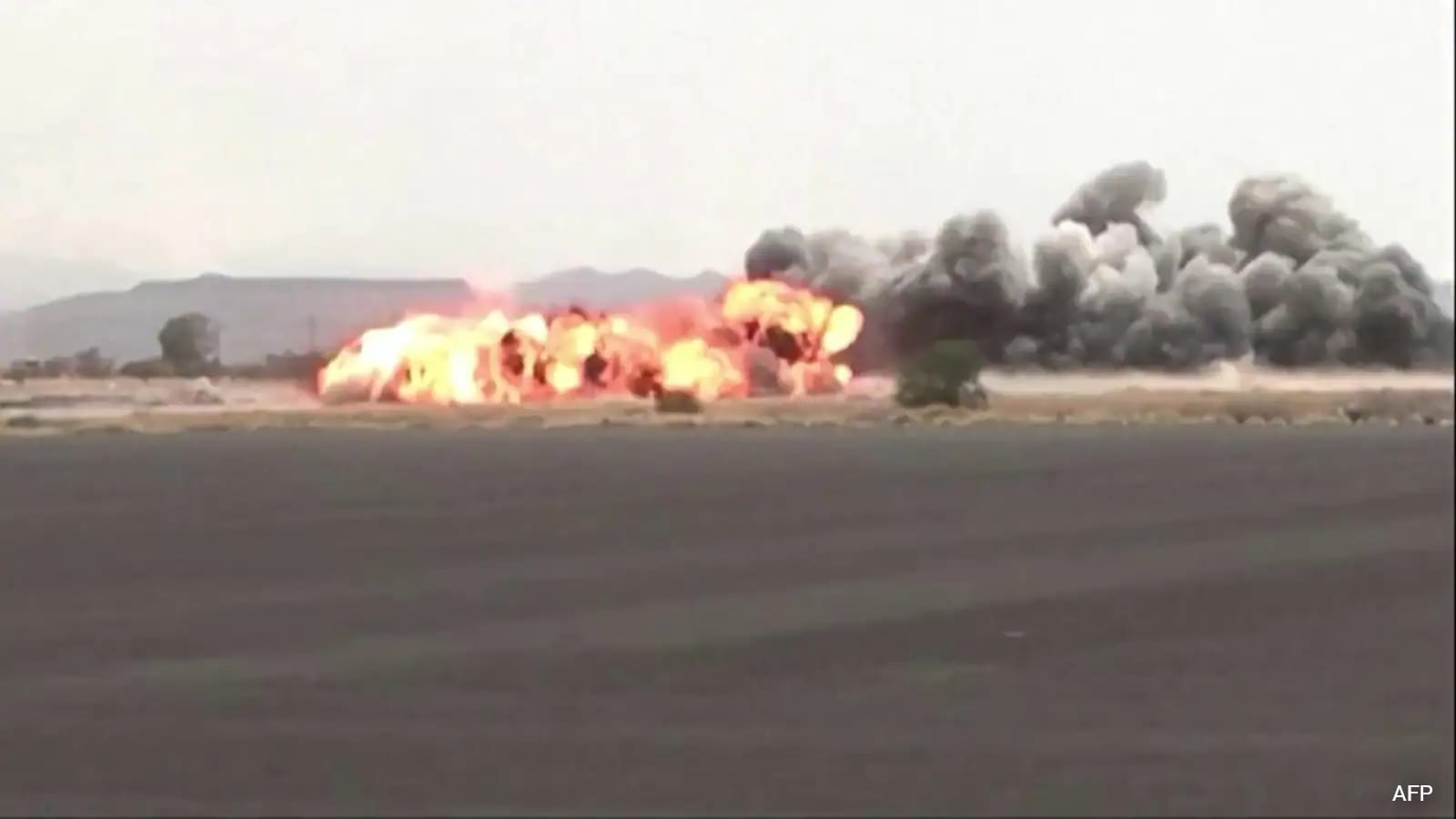
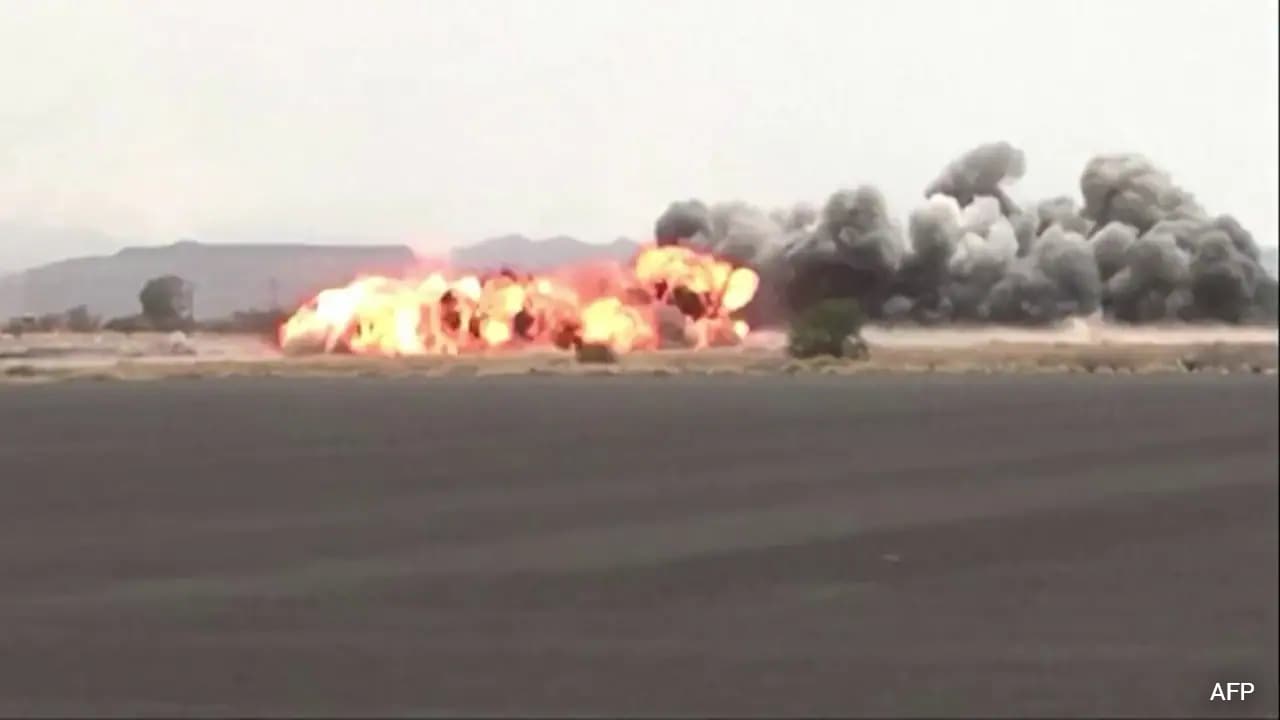
Yemen’s Iran-backed Houthis targeted Saudi Arabia on Monday, hours after the rebels accused the kingdom of attacking Sanaa airport — the biggest flare-up in years between the two sides that threatens to upend a frozen conflict.
The Saudi-backed Yemeni government claimed responsibility for the attack on the Houthi-held airport, saying it wanted to prevent an Iranian plane from landing.
It came after they failed to convince a Houthi delegation that went to Tehran for the late Iranian supreme leader Ali Khamenei’s funeral to board a flight on domestic carrier Yemenia instead.
“In response to this criminal Saudi aggression, the Yemeni Armed Forces carried out a military operation targeting Abha International Airport, using a number of ballistic missiles and unmanned aerial vehicles,” Houthi military spokesman Yahya Saree said in a video statement.
Earlier, Saree accused Saudi Arabia of “ending the de-escalation phase” and warned the attack would not go “unanswered or unpunished”.
Saudi-led coalition spokesman Turki al-Maliki said air defences had “dealt with” the Houthi missiles.
The latest escalation threatens to unravel a truce that has been holding since 2022 despite expiring, and comes at a time of heightened tensions as the United States and Iran trade attacks impacting the Gulf and traffic in the Strait of Hormuz.
Tehran condemned the attack on Sanaa airport, with a foreign ministry spokesperson describing it “as a clear violation of international law”.
But following the strikes on Sanaa, the head of Yemen’s Presidential Leadership Council, Rashad al-Alimi, said he had “ordered that the scope of the confrontation not be expanded”.
Truce ‘collapse’?
Mohammed al-Basha of the US-based risk advisory Basha Report told AFP there was a risk of the 2022 ceasefire failing.
“If this cycle of action and retaliation continues, it could effectively mark the collapse of the April 2022 ceasefire framework and signal a return to a much more intense phase of the conflict,” he said.
For more than a decade, aircraft entering Yemeni airspace have needed prior clearance from the Saudi-led coalition that backs the government and says it enforces the restriction at its request.
The Houthis appeared to have challenged this arrangement by organising direct flights from Iran to Sanaa, angering the government and its backer.
Saree in his statement warned airlines against flying into Saudi airspace “until the blockade on Sanaa International Airport is lifted”.
Tensions had been rising for days, after the Houthis accused Saudi Arabia earlier this month of attacking an Iranian plane that landed in Sanaa and took off carrying the delegation.
The rebels had threatened at the time to hit Saudi airports and vital assets should Riyadh violate its airspace or attempt to attack it again.
Since the Saudi-led coalition entered the war in 2015 to back the government, it has been the one to conduct air strikes on Houthi targets on the authorities’ behalf.
According to Andreas Krieg, a lecturer in security at King’s College London, it is “technically possible” for the government to have carried out the strike with planes provided by the UAE, which would need to travel far from the south.
“It would be a risk as these are not jet aircrafts. The jet aircrafts they have from the 1980s are in a bad shape and probably won’t fly far. This is why it is more likely that it was the Saudis,” he told AFP.
– ‘Safe and accounted for’ –
The latest strikes raised the spectre of renewed Houthi attacks on Saudi Arabia after years of relative calm between the two foes — as well as fears of broader conflict in Yemen.
A 29-year-old homemaker in the Houthi-held city of Hodeida, where rebel media said the plane had landed, said she was worried more conflict lay ahead, “without producing any results, just making the current crises worse”.
Earlier in the day, the Yemeni government accused the rebels of preventing an International Committee of the Red Cross (ICRC) aircraft from leaving Sanaa airport and holding the pilot and co-pilot “hostage”.
“All ICRC staff and the crew of the plane are safe and accounted for,” ICRC spokesman for the Middle East Hachem Osseiran told AFP.
The Houthis have been at war with Yemen’s government since 2014, in a conflict that has killed hundreds of thousands of people and triggered a major humanitarian crisis.
The rebels control Yemen’s capital Sanaa and much of the north, including most population centres, while the internationally recognised government holds much of the south.
(Except for the headline, this story has not been edited by NDTV staff and is published from a syndicated feed.)



