


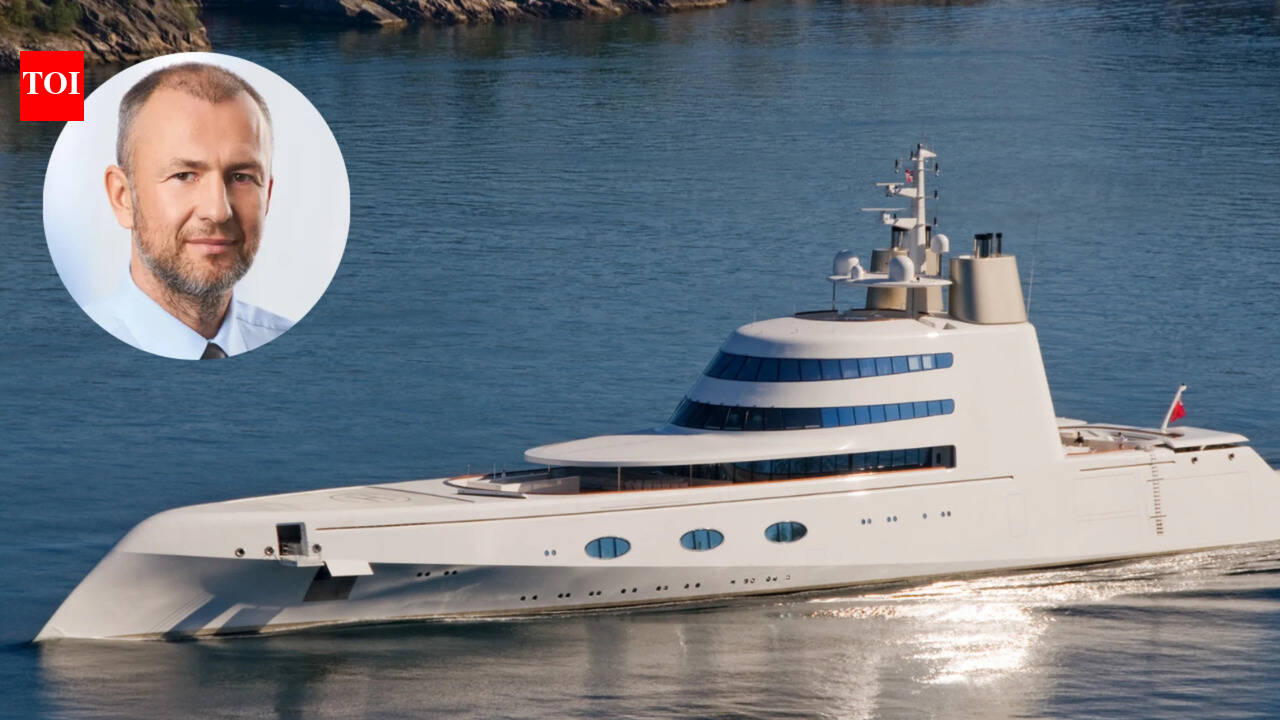
While commercial cargo ships and oil tankers delayed their trips or turned back because of rising military tensions, a Soviet-born billionaire’s $300 million superyacht successfully passed through the highly sensitive Strait of Hormuz on a 2,000-mile journey to the Maldives.The futuristic vessel, Motor Yacht A, owned by sanctioned businessman Andrey Melnichenko, left Dubai’s Port Rashid on July 4. According to vessel-tracking analysis by YouTube channel The Yacht Report, the 390-foot yacht safely crossed the narrow and closely watched waterway before entering the open waters of the Indian Ocean.The journey follows a similar route taken earlier this year by Nord, another giant 466-foot superyacht. Both trips are unusual because most luxury yacht captains have avoided the Strait of Hormuz due to security concerns and the risk of conflict.
A sudden departure after four years
The voyage marks Melnichenko’s first major trip outside the United Arab Emirates (UAE) since March 2022. The billionaire moved his assets to the Gulf after being sanctioned by Western countries following Russia’s invasion of Ukraine.For almost four years, Motor Yacht A remained near the UAE coast, first anchored off Ras al-Khaimah and later near Dubai’s World Islands. Last year, the yacht briefly sailed toward Oman under a Malaysian flag before turning back. This latest voyage suggests the vessel has now left the Gulf for a longer journey.Built by German shipbuilder Blohm+Voss and delivered in 2008, the yacht is one of the world’s most unusual-looking private vessels. French designer Philippe Starck gave it a bold design with a sharp reverse bow and a low metallic shape. Many people compare it to a stealth warship or Captain Nemo’s fictional submarine, the Nautilus.The yacht’s simple name, A, was also chosen carefully. Besides honouring Melnichenko’s wife, Aleksandra, the single-letter name places the vessel at the top of many global shipping registers.
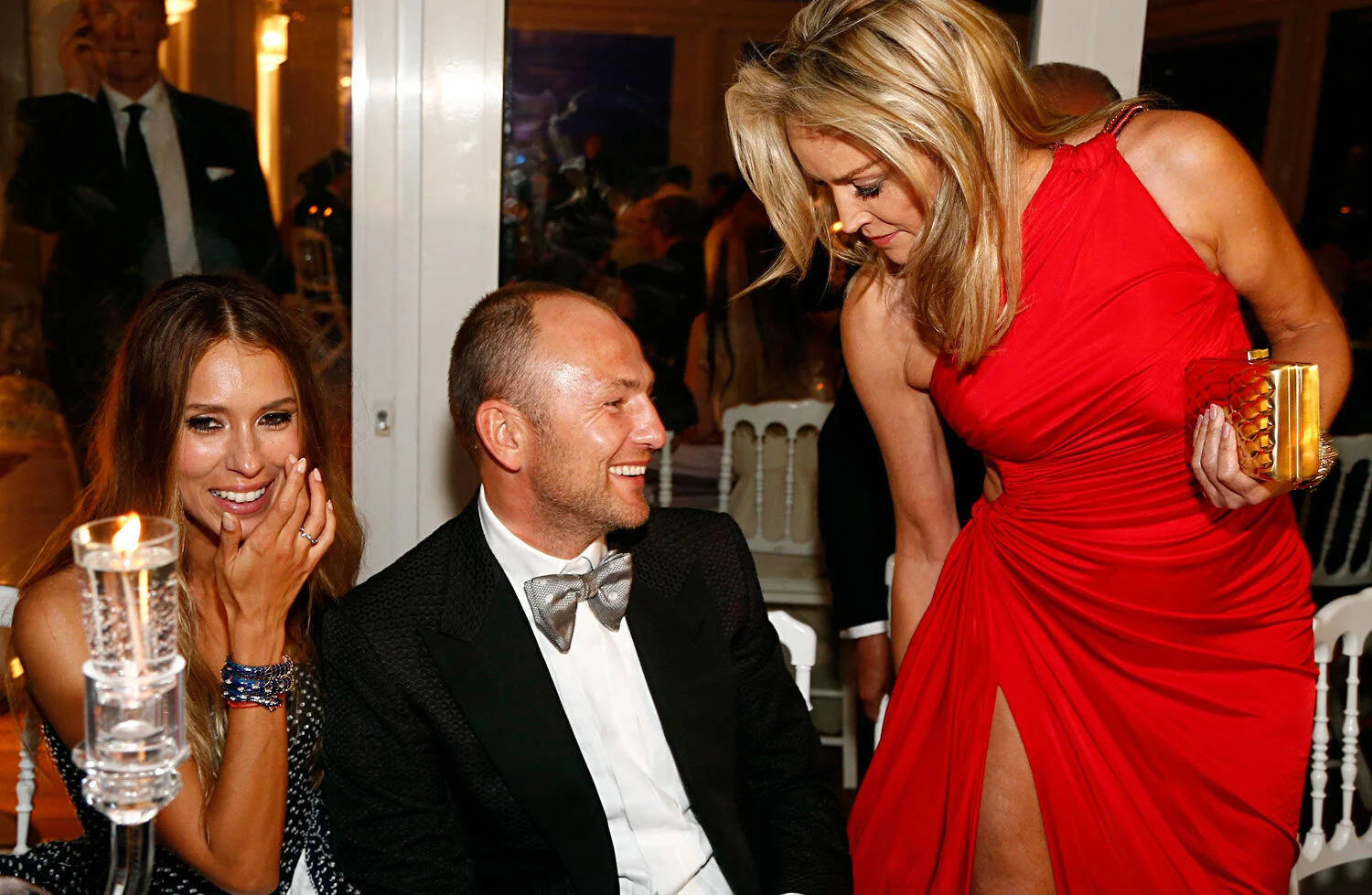
Andrey and Aleksandra Melnichenko with Sharon Stone
Inside a floating luxury home
Behind its military-style exterior is a luxury interior covering 23,600 square feet across eight decks. The owner’s private apartment is 2,500 square feet and includes bomb-resistant glass windows and a custom-built rotating king-size bed.The yacht has seven guest cabins with movable walls that can combine rooms into larger suites. Philippe Starck used expensive materials throughout the interior, including white stingray skin, fine calf leather, and custom chairs made from alligator hide and kudu horn. The bathrooms feature stainless-steel whirlpool bathtubs and floor-to-ceiling mirrors.The 5,959-gross-ton yacht is powered by twin MAN diesel engines. It has three swimming pools, including a glass-bottom pool that forms the ceiling of a nightclub below. Other features include a helipad, an onboard hovercraft, two custom tenders designed by Starck, and a special garage built to carry the owner’s luxury car.
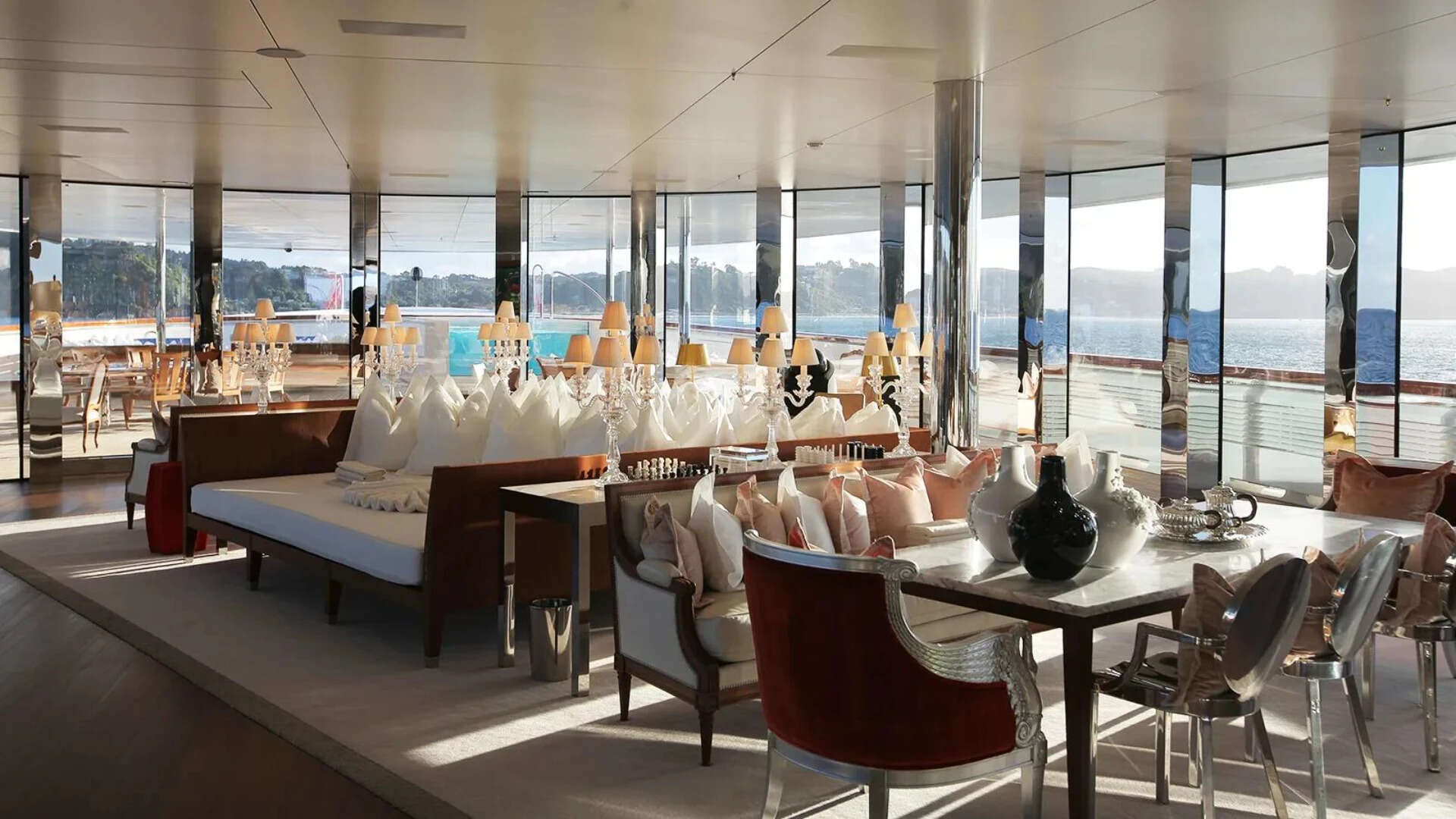
The owners cabin has rotating bed and Ballistic-grade protective glass
Sister yacht seized in Italy
While Motor Yacht A avoided European waters by staying in the Middle East, Melnichenko’s larger yacht was not as lucky. In March 2022, Italian authorities seized his 468-foot Sailing Yacht A.Built by Nobiskrug, the vessel is the world’s largest sailing yacht. It was seized in the northern Italian port of Trieste just days after Melnichenko was placed on the European Union’s sanctions list. The yacht was estimated to be worth 530 million euros ($578 million).Melnichenko made his fortune through major stakes in fertilizer company EuroChem Group and coal producer SUEK. After sanctions were imposed, both companies said he had resigned from their boards and was no longer a financial beneficiary.Following the asset seizures, Melnichenko’s spokesperson, Alex Andreev, defended the billionaire and said the sanctions would be challenged in court.“He has no political affiliations,” Andreev said. “There is no justification for putting him on the EU sanctions list. We will challenge these unjustified sanctions and believe the rule of law and common sense will prevail.”
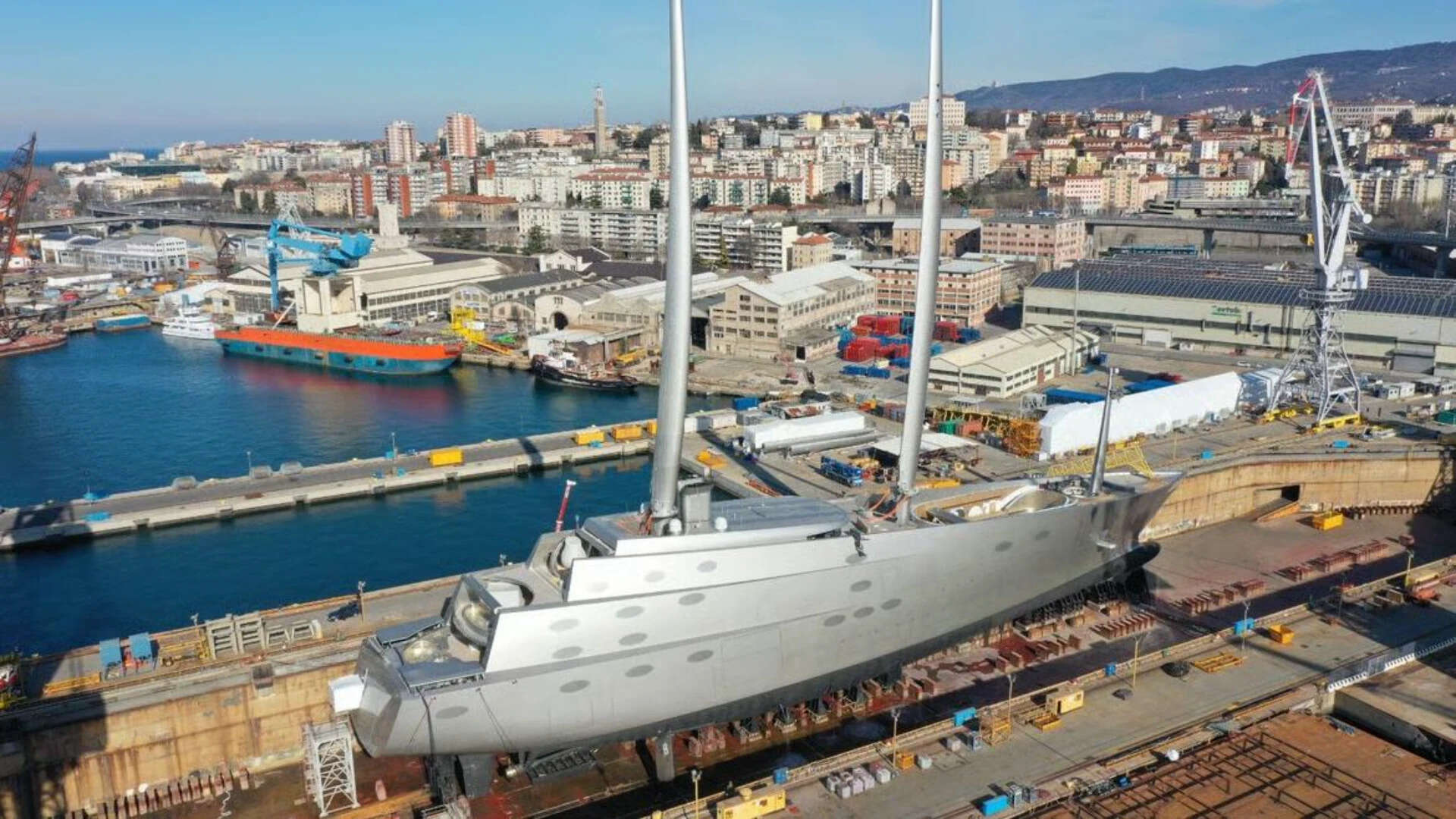
Sailing Yacht A was seized in Trieste in 2022
How the collapse of USSR helped a billionaire
Andrey Melnichenko began building his fortune after the collapse of the Soviet Union in 1991. He left university and started a chain of currency exchange booths in Moscow, taking advantage of Russia’s newly opened market economy. In 1993, he co-founded MDM Bank, which quickly grew into one of Russia’s largest private banks. Around 2000, he shifted from banking into industry, buying coal mines, fertilizer plants and other industrial assets with business partner Sergei Popov. These investments led to the creation of EuroChem, now one of the world’s largest fertilizer producers, and SUEK, Russia’s biggest coal company. These businesses became the main source of his multi-billion-dollar fortune. His current net worth is estimated at around $20–25 billion, making him one of Russia’s richest people.
Why the Strait of Hormuz became a global concern
The latest tensions around the Strait of Hormuz began after the conflict between Iran, Israel, and the United States increased in 2025. The Strait, located between Iran and Oman, is one of the world’s most important oil shipping routes, with around one-fifth of global oil supplies passing through it.After military strikes and rising threats in the region, Iran warned that it could block the Strait if pressure on the country continued. Because Iran controls the northern side of the waterway, it has the ability to disrupt shipping using naval forces, mines, or other military actions.The United States became involved because any disruption to the Strait could affect global energy prices and international trade. Washington has military forces in the Gulf region to protect shipping routes and support its allies. US naval forces have also carried out operations aimed at keeping the waterway open.Although Iran has threatened to close the Strait several times, it has not completely blocked the route. However, fears of a possible shutdown have already affected shipping decisions, with some commercial vessels delaying journeys, changing routes, or avoiding the area because of security risks.



