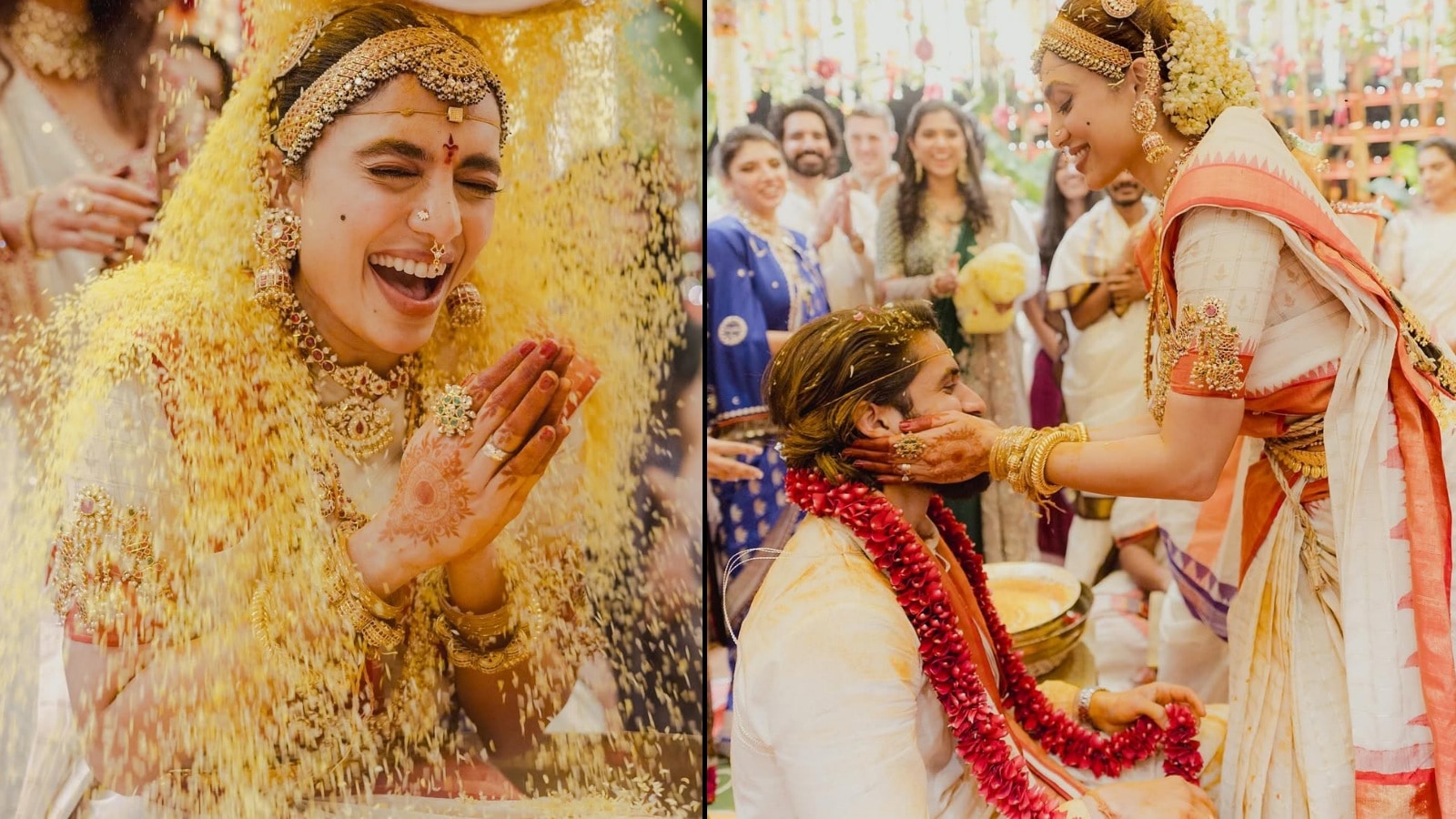
Sobhita Dhulipala’s relationship with Indian handlooms appears to have deepened after her wedding. In a conversation with Adyam Handwoven, for whom the actor is also a brand ambassador, when asked about her favourite Indian weave, the actor said, “I am in love with Ponduru Khadi right now. I have been exploring it since my wedding.”
And when asked what a saree means to her, she offered a poetic reflection: “The sensuality of drapery. It’s formless. It is you. It is an extension of you. How beautiful is that!”
For starters, this is not your everyday khadi.
According to fashion entrepreneur, personal stylist, and designer Rinkoo Shroff, Ponduru Khadi is considered among the purest and most labour-intensive forms of handspun cotton in India, with roots in Andhra Pradesh.
What makes Ponduru Khadi special?
View this post on Instagram: A post shared by Aadyam Handwoven (@aadyamhandwoven)
“Ponduru is like a district in Andhra, and they still use absolutely tana-bana hand, all the threads are hand-woven because they are in the traditional form of using the charkha, the Gandhi charkha with 24 spokes.”
That’s a major distinction, she explains.
“The other technique which other khadi weavers normally use is the amber charkha… that’s a hybrid form where one spin is a handwoven spin, and the other is imported cotton,” she says.
In simpler terms, while many khadi fabrics today involve partially mechanised or hybrid spinning methods, Ponduru Khadi continues to rely heavily on traditional manual processes.
Story continues below this ad
Another unusual detail? Fish bone. “In Ponduru you use that fish boning technique where you take the fish jaw… it is used so it is the most special, the most authentic and the most natural form of cotton.”
Yes, you read that right. Traditionally, parts of fish jaw bones have reportedly been used in the preparation process to help refine the cotton fibres—a detail that makes the craft even more fascinating.
Why are heritage weaves having a moment?
Sobhita is not alone in embracing handwoven Indian textiles. From celebrity wardrobes to conscious fashion labels, traditional fabrics appear to be finding fresh relevance among younger consumers.
“Yes, I see the traditional weaves and hand-spun fabrics being the mainstream fashion nowadays,” Ghosh tells indianexpress.com, while adding that Gen Z, in particular, is becoming more aware of sustainability and mindful consumption.
“They are turning towards sustainability… they are switching on to vegan leather, they are switching on to sustainable fabrics, the hand-woven things, so that the artisans and the craft people get employment and they are reviving the traditional weaves of India.”
Story continues below this ad
India, she adds, has always had extraordinary textile wealth; we may simply be rediscovering it.
Not just for sarees anymore
If you think khadi is limited to political kurtas or occasional sarees, think again. Ghosh says these fabrics are increasingly being reimagined for modern wardrobes.
“A lot of people are trying to wear khadi kurtas, khadi Jawahar jackets, khadi sarees, khadi trousers, khadi waistcoats, khadi dresses.” In fact, you can also spot “khadi business suits” in the market now, which perhaps explains Ponduru Khadi’s appeal. It carries history, craftsmanship, sustainability, and, as Sobhita put it, a certain sensuality.