



The Association of Mutual Funds in India (AMFI), under the guidance of the capital market regulator, the Securities and Exchange Board of India (SEBI), launched the “Mutual Funds Sahi Hai” campaign in March 2017. The mainstay of this campaign was promoting systematic investment plans or SIPs, as a convenient mode of investing in mutual funds systematically over a period of time, instilling the necessary discipline in the journey of wealth creation.
Moreover, over the years, AMFI rolled out targeted sub-campaigns focusing on SIP investing habits, such as navigating market volatility, the power of compounding, and automated monthly investing.
Last year, in February 2025, SEBI proposed and introduced sachetisation of SIPs, allowing micro–SIPs of Rs 250/- to democratise investing in smaller towns and target the lower sections of society.
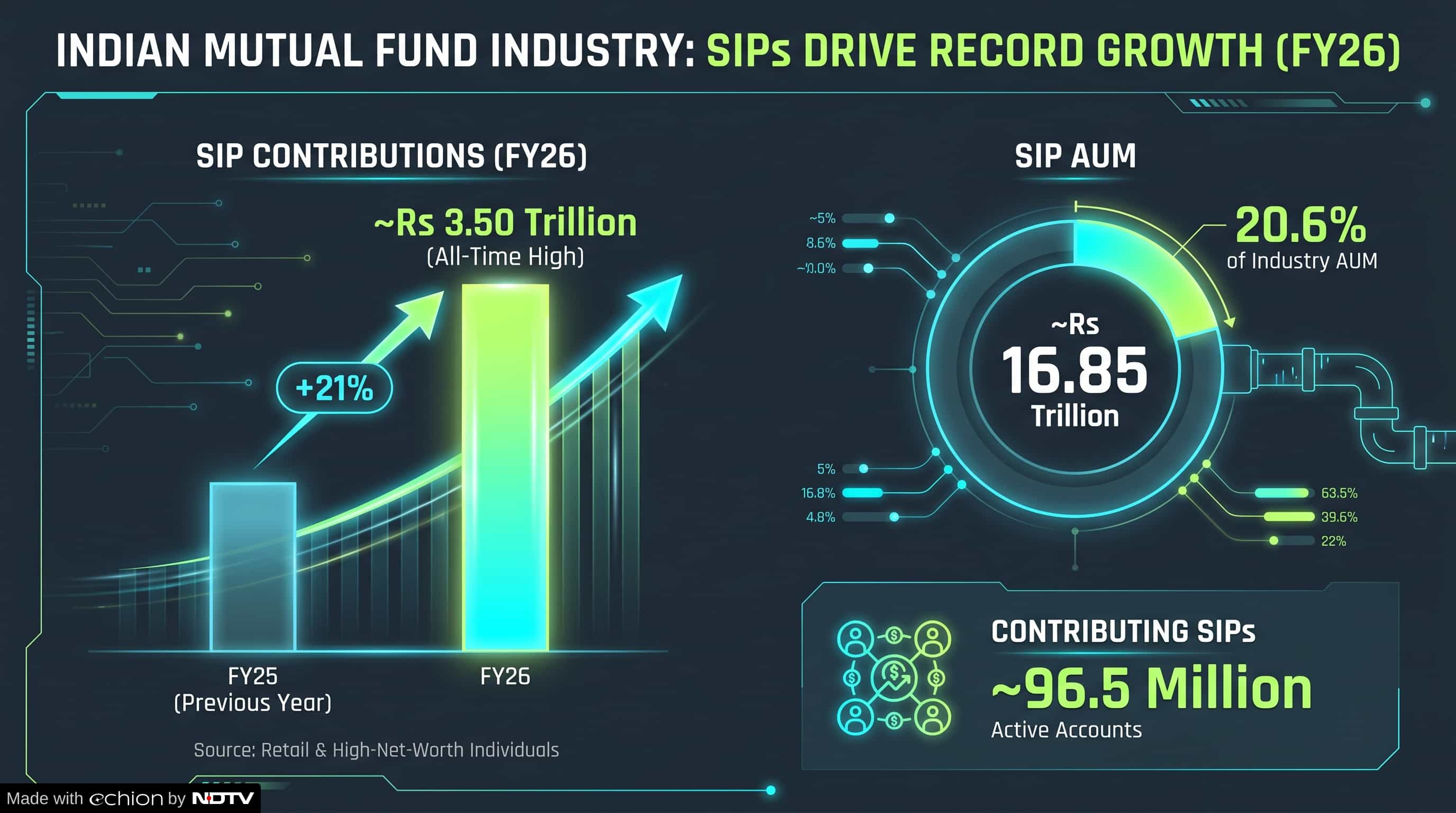
These efforts have fructified well. The Indian mutual fund industry has witnessed sizeable inflows over the years, with much of them coming through SIPs, particularly from retail and high-net-worth individuals. The SIP contributions jumped to an all-time high in FY26 of nearly Rs 3.50 trillion (21% higher than FY25), SIP AUM is worth around Rs 16.85 trillion (constituting 20.6% of the industry’s AUM), and contributing SIPs are about 96.5 million.
To build upon this, SEBI, now vide a draft circular (dated 20 May 2026), has proposed payroll-linked SIPs, which will allow the payday also to be the SIP instalment day.
The regulator has proposed that an employer invest in mutual fund units on behalf of its employees by way of a deduction from employees’ salaries.
It acknowledges that there is already an established practice of employers offering various benefits and savings avenues to their employees, such as PF and voluntary NPS contributions through salary deductions.
Who Will This Apply To?
The regulator has proposed that a payroll-linked SIP deduction would be available to all listed and EPFO-registered companies and the AMCs themselves, plus only “interested employees” may opt for such an arrangement and agree to salary deductions for mutual fund schemes of their choice.
In other words, the payroll-linked SIP deduction will be voluntary. So, an employee consent mechanism would be needed with transparent disclosures.
The proposal has been discussed in the Mutual Fund Advisory Committee (MFAC) and is based on the committee’s recommendations and internal deliberations.
Should Salaried Individuals Opt For Payroll-Linked Deduction?
SEBI’s proposal finds its premise in legendary investor Warren Buffett’s philosophy of paying yourself first. He advises, “Don’t save what is left after spending, but spend what is left after savings.”
If the proposal (which is currently open for public comments/suggestions till 10 June 2026) is well received, organisations (including listed and EPFO-registered companies) would offer payroll-linked SIP facilitation in the same way as health insurance and retirement benefits to improve employees’ financial wellness or security.
It would change how employees in the organised sector save and invest. A payroll-linked SIP, by integrating investment planning into the monthly payroll systems, would instil even more investment discipline and help keep a check on the SIP stoppage ratio.
It is in your long-term financial well-being and financial goals that you save first and then spend.
SIPs, with their inherent rupee cost averaging feature, may help reduce the shocks of volatile markets, make market timing irrelevant, and potentially multiply hard-earned money at a decent real rate of return, adjusted for inflation. SIPs are an effective medium for goal planning, provided you are consistent.
It would change how employees in the organised sector save and invest. A payroll-linked SIP, by integrating investment planning into the monthly payroll systems, would instil even more investment discipline and help keep a check on the SIP stoppage ratio.
It is in your long-term financial well-being and financial goals that you save first and then spend.
SIPs, with their inherent rupee cost averaging feature, may help reduce the shocks of volatile markets, make market timing irrelevant, and potentially multiply hard-earned money at a decent real rate of return, adjusted for inflation. SIPs are an effective medium for goal planning, provided you are consistent.

The table here shows that even an annual 5% step-up in your monthly SIP of Rs 10,000 can make a 20% difference in corpus growth. And if the step-up rate is higher, say 10-15%, the corpus built can be even higher.
Stepping up your SIPs ensures that your marginal propensity to save and invest increases every year with discipline enforced, so that you counter inflation effectively, build a bigger corpus, and accomplish the envisioned financial goals comfortably.
To ensure you are on track to achieve your envisioned financial goal (s), review the mutual fund portfolio regularly (biannually or annually) and rebalance it. If you do not possess the skill to do it, do not hesitate to seek the services of a SEBI-registered investment adviser.
Devising a sensible ‘pay yourself first’ approach with prudent scheme selection in your best interest will pave the path to wealth creation.
But make sure you are handling your mutual fund SIPs thoughtfully. Keep a watch on your asset allocation and make sure you are also investing in other avenues, such as fixed deposits, bonds, small savings schemes, and precious metals such as gold and silver.
Happy investing!
Essential Business Intelligence,
Continuous LIVE TV,
Sharp Market Insights,
Practical Personal Finance Advice and
Latest Stories — On NDTV Profit.



