


Load up a satellite map of Texas and find your way to a city called Midland, all the way over in the west of the state.
Now zoom out a bit and scroll around the environs. For miles, hundreds of miles off into the scrubland of West Texas, and all the way into New Mexico, you see something… strange. It’s as if the entire surface of the land is covered in what looks like a printed circuit board – the desert pocked with perpendicular plots of what look like concrete, with lines running between them. Raising the question: what on earth is going on here?
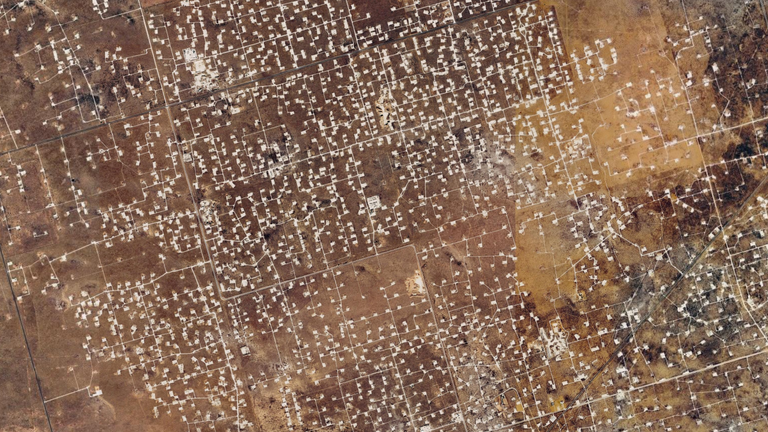
A satellite picture of the Permian Basin
The short answer is that these are the surface manifestations of one of the most extraordinary and underappreciated phenomena of the modern age. They are the visible signs of an energy gold rush that has completely changed geopolitics as we know it, as well as going some way to explaining why Donald Trump is intervening so aggressively in the Middle East.
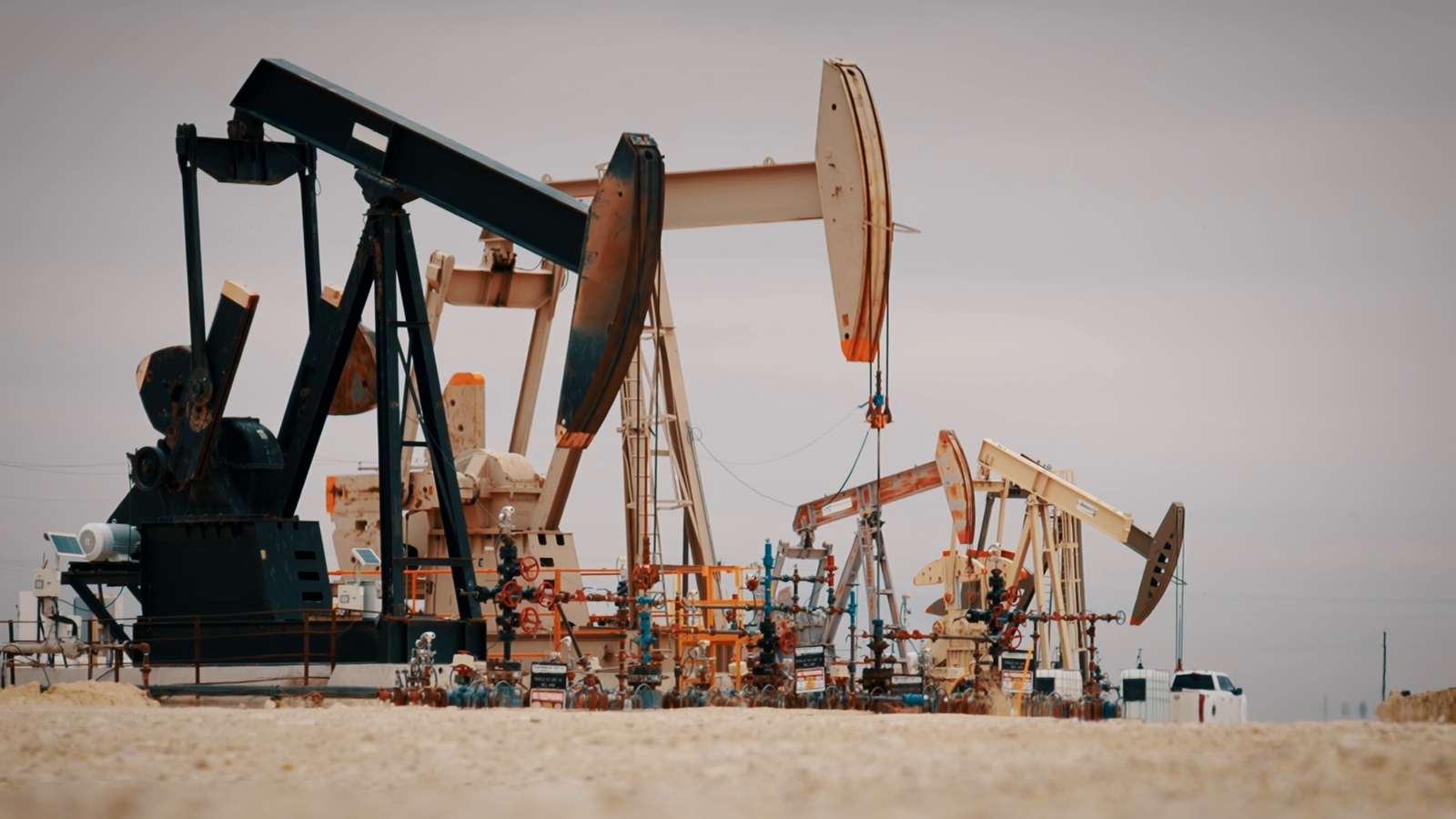
Zoom in on those pads (actually, they’re not made of concrete but hard rock quarried from the desert – caliche, as they call it here) and you might just be able to spot what’s going on. Some are topped by tall drilling rigs that cast their shadows across the desert landscape. Others have a single pumpjack, nodding away. These are the hallmarks of oil extraction.
The single most important region for fracking
For this area, around Midland, Texas, is the epicentre of a geological region known as the Permian Basin. And the Permian Basin is the single most important region for fracking anywhere in the world.
To watch Ed Conway’s full report from Midland on YouTube, click here
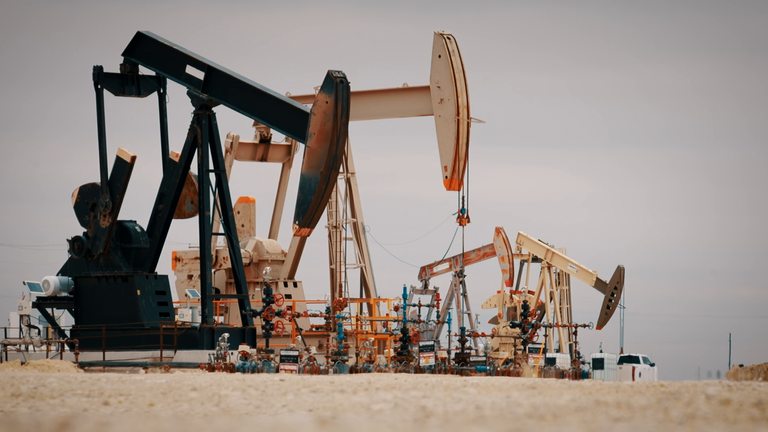
Oil pumpjacks in the Permian Basin
And fracking – hydraulic fracturing to give it its full name – has completely changed the game for America. This country was always a big oil producer, but fracking has sent its oil and gas production into the stratosphere, making it comfortably the world’s biggest producer of these fossil fuels.
The main principle behind fracking is that, rather than drilling into an oil or gas reservoir, a large underground area where these hydrocarbons have collected over millions of years, instead you go looking for them in different types of rock. It’s harder work, and involves a lot more effort, since you have to agitate and blast the oil and gas out rather than collecting it from a reservoir (this is an enormous simplification but that’s the main principle – it’s not like turning on a tap).
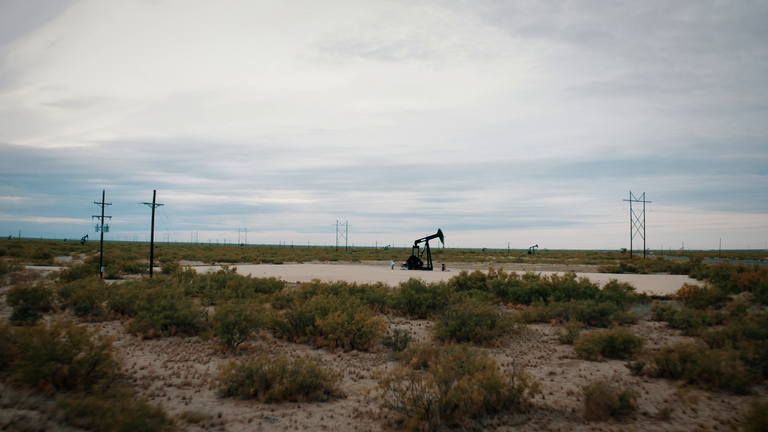
An oil pump jack in the Permian Basin
The story of the fracking revolution goes back decades, with many of the precursor technologies having been pioneered in the 1940s, but at least part of the origin story is to be found in the 1970s, and the original oil price shocks. Back then, Middle Eastern countries imposed an oil embargo on the rest of the world, plunging countries like the US into crisis.
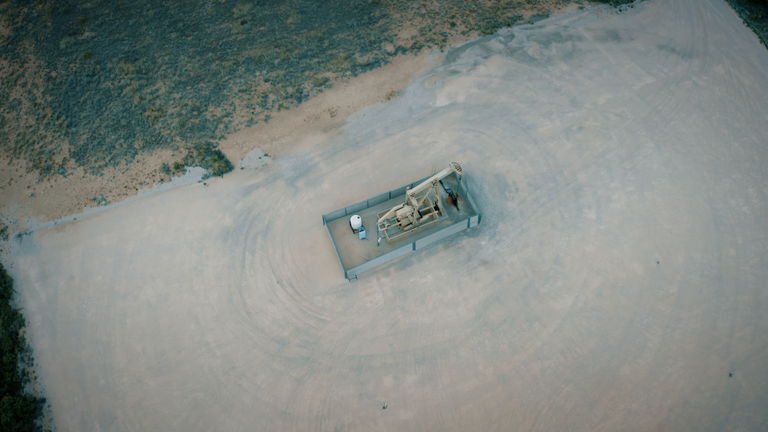
Drone imagery of an oil pump jack in the Permian Basin
While America in general, and Texas in particular, (those of an older vintage will remember the soap opera Dallas) have long pumped oil from the ground, the country was always dependent on imported oil to top up its supplies and feed the mammoth fleet of American refineries, American trucks and American planes. So the oil crises of the ’70s and ’80s were a serious shock to the system. Successive presidents, from Jimmy Carter and Ronald Reagan onwards, began to incentivise domestic US gas production and the extraction of hydrocarbons from “unconventional” sources. The objective was to try to make America energy independent, so nothing like this would happen again.
But it wasn’t until the 2000s that the shale revolution began in earnest, as first gas and then oil producers deployed new drills and pumps that enabled them to penetrate far under the ground. Once upon a time, you could only go down so far, but new drill bits changed that. Once upon a time, you could only drill vertically, but new techniques enabled oil producers to drill horizontally, all the way along the oil and gas-bearing shale rocks.
As is often the case with new technologies, the advent of fracking was viewed by some with deep suspicion – and for understandable reasons. Some botched early attempts at hydraulic fracturing contaminated local water supplies in Pennsylvania and Wyoming. And since pumping water underground can cause seismic activity, there have been some small earthquakes caused by fracking. Fears about these impacts are part of the explanation for why most countries in Europe have banned the new technologies.
In America, however, the oil industry has embraced fracking with gusto. And the impact has been extraordinary. For nearly half a century, the world’s oil leaderboard in terms of crude production was led by Saudi Arabia and, every so often, Russia. But a decade ago, America leapfrogged everyone else and strode into top place. Since then, its oil production has only risen higher. Now it pumps nearly double the amount that the next biggest oil producer does.
And much of that story comes back to the Permian Basin, which is where most of America’s oil comes out of the ground. The basin actually comprises a number of different regions, but most of them feed into pipelines that find their way down to the Gulf coast, in particular to export terminals like Corpus Christie and Houston.
It’s not quite right to say America is energy independent these days. Its refineries are configured for the heavy, sticky crude you get in Canada and Venezuela, so most of them still suck in oil from overseas. But if you look at total production, statistically at least, America produces enough crude oil to satisfy all its needs.
An extraordinary moment passed below the radar
In fact, something rather extraordinary happened last year, though it passed mostly below the radar. For the first time in many decades, America pumped more oil and crude products (which also includes other hydrocarbon-related liquids) out of the ground than it consumes for its own economy. This watershed moment is part of the reason why an assault on Iran is plausible for America, in a way it never was before.
For while the closure of the Strait of Hormuz is certainly causing a serious economic impact in the US, where prices of gasoline and diesel are up sharply in recent months, America is nonetheless less vulnerable, less dependent on the Middle East than ever in the post-Second World War period. In statistical terms, if not in practice, it is an energy island, in a way few other countries – especially those in Europe or Asia – can claim to be.
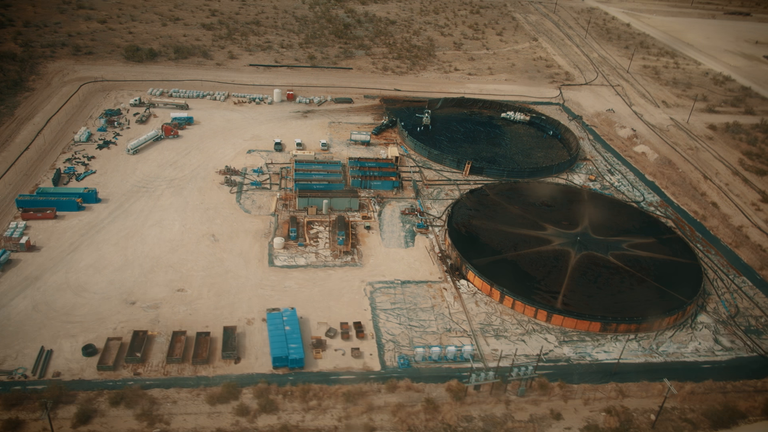
Oil tanks viewed from a helicopter
That is almost entirely thanks to the oil being pumped out of the ground in the Permian Basin, which accounts for the lion’s share of that increase in domestic production. And, whether or not this sea change in energy provision was at the top of the president’s mind when he committed troops and vessels to the Persian Gulf, it is of great significance when it comes to the consequences.
The prime issue the world is faced with today is that about a fifth of the oil it had come to depend on is no longer there. The closure of the Strait of Hormuz means the world – especially Europe and Asia – need to replace the oil and gas they were previously getting from the Middle East with oil and gas from somewhere else.
For many, including Europe, Russia is not an option. So the main other supplier is none other than the US. If Europe and the UK are to thrive in the coming months, not to mention continuing to be able to fly and replenishing their gas storage for next winter, they will depend, to an extraordinary degree, on the stuff coming from fracked wells in the US. For all that it has banned fracking domestically, Europe is now wholly reliant on it.
An armada of tankers on the way
All of which raises the question: can America step up and provide the missing oil the rest of the world needs? The market certainly hopes so. An armada of oil tankers is currently on its way across the Atlantic to the Gulf of Mexico, hoping to fill up with American oil, diesel, kerosene and other products. It is a rush the likes of which we have rarely ever seen before, as shipping companies redirect carriers that would once have headed for the Strait of Hormuz and the other Gulf on the other side of the world.
But, based on our experiences travelling through the Permian Basin in recent weeks, the answer is not entirely encouraging. Although American exports have leapt in recent months, oil producers in Texas remain reluctant to increase their production at the rate European buyers would like.
In part, that’s because they’re nervous that the oil price will not stay high for long. Think back to the engineering necessary to frack oil: it takes far more capital investment than traditional oil production in places like Saudi Arabia. Increasing production does not simply involve turning a tap. American oil costs more, per barrel, to get out of the ground than that in regions like the Middle East and Russia, and so producers remain nervous to commit to a blizzard of new drills and wells.
The second issue is rather more pragmatic. Right now, there is plenty of pipeline connecting the Permian Basin with the export terminals in Corpus Christi and Houston. However, there is a lack of pipelines to take the natural gas that comes out at the same time. The upshot is that for every extra barrel of oil pumped out right now, there is a lot of natural gas which currently has nowhere to go.
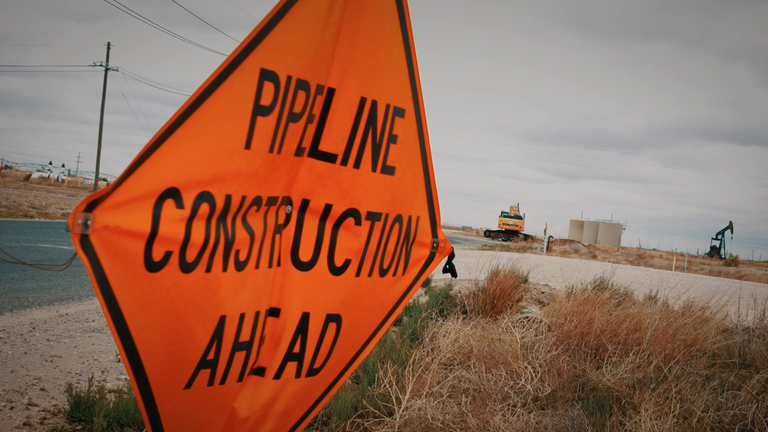
The consequence of that – crazy as this will sound in energy-starved Europe – is that right now gas prices in the Permian are in negative territory. Producers are literally paying people to take gas off their hands. Why? Because they want to pump oil but can’t do anything with the gas. An increasing amount of it is being flared into the sky above Texas, purely to try to satisfy the demand for oil from mainly European consumers.
That, however, is a real waste of money – not to mention bad for the environment. However, it underlines why this is not as simple an issue as you might have thought. Those hoping America would come to the rescue as Europe and Asia face an energy shock might find themselves seriously disappointed.



