


New Delhi:
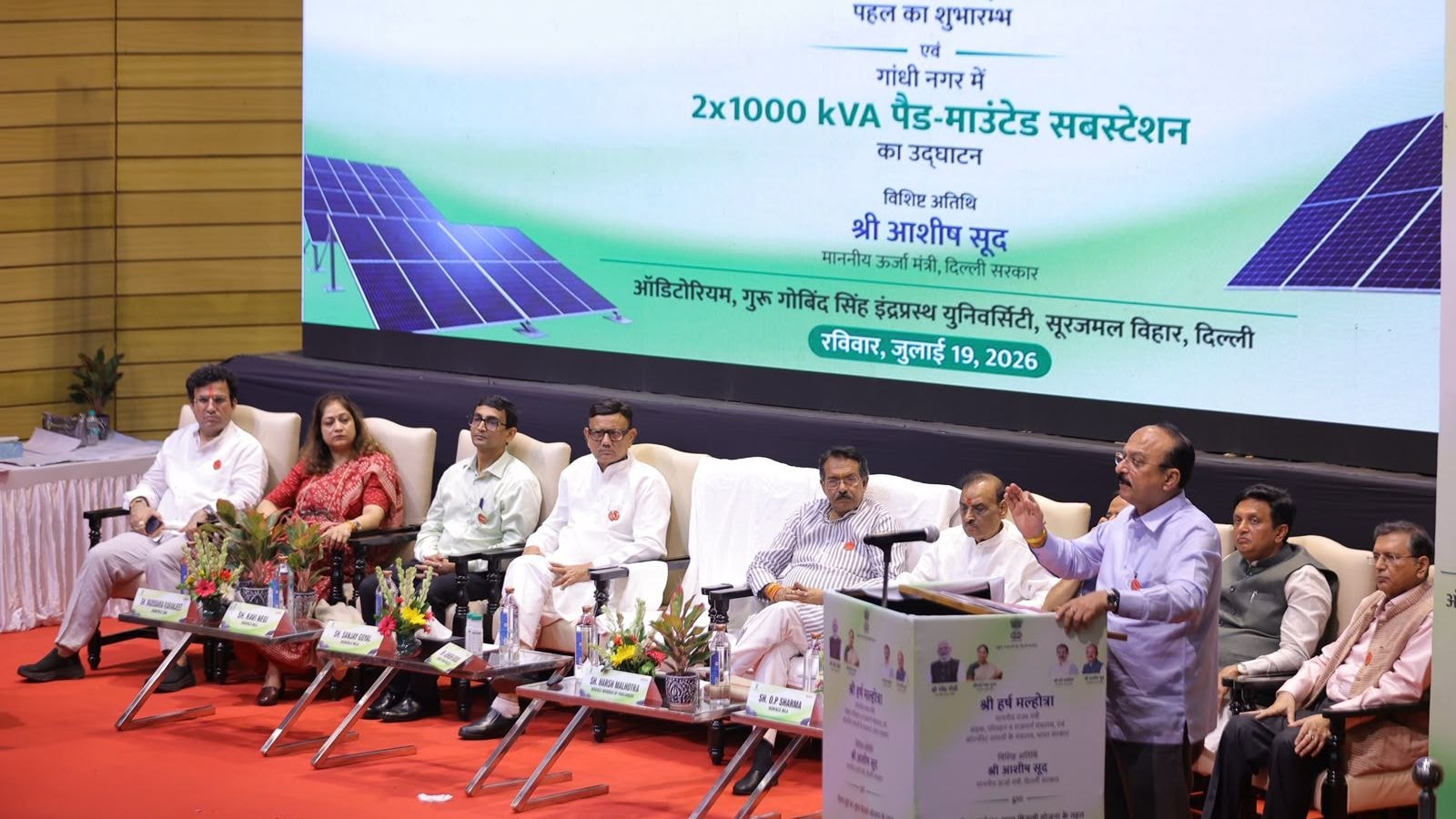
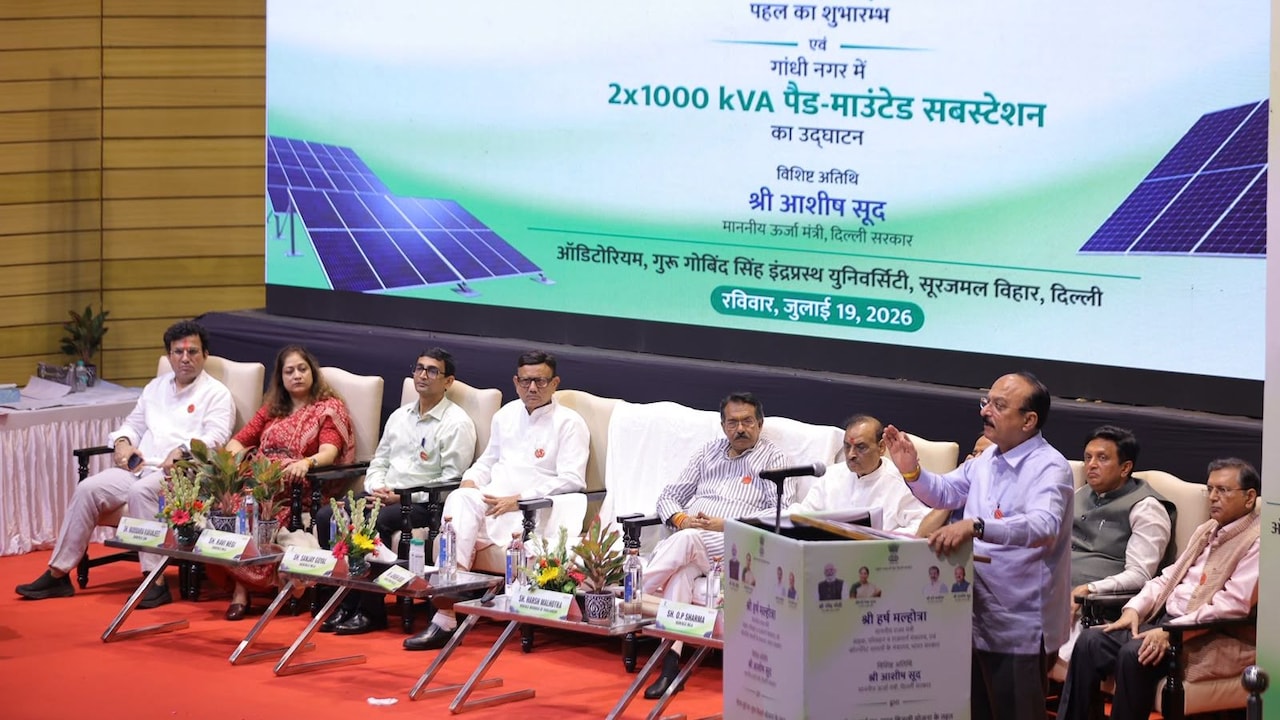
The Delhi government on Sunday launched a new scheme under which residents considering rooftop solar to lower their electricity bills will be offered help in navigating subsidies, finding solar partners and completing the installation and net-metering process.
The “Solarize East” campaign is aimed at connecting eligible households with the PM Surya Ghar: Muft Bijli Yojana, under which residential consumers can receive a central subsidy for installing rooftop solar panels.
Under the scheme, the subsidy is Rs 30,000 for a 1-kW system and Rs 60,000 for a 2-kW system. The support is capped at Rs 78,000 for systems of 3 kW or more. Residents must apply through the national PM Surya Ghar portal and select a registered vendor for the installation.
The state government’s scheme, being rolled out with BSES Yamuna Power Limited, will initially cover South-East Delhi. Depending on public response, it will later be expanded to other areas supplied by the power distribution company, the government said.
Easier Way To Install Solar Panel
The launch comes three days after the Delhi Electricity Regulatory Commission, or DERC, introduced new rules to simplify rooftop solar connections.
The process will now be completed online in two stages, replacing the earlier three-stage system. Domestic consumers applying under the PM Surya Ghar scheme can submit their applications through the national portal.
For rooftop systems of up to 10 kW, a separate technical-feasibility assessment will no longer be required when the system is being installed on the same type of electricity supply. Such consumers will also not have to pay application or registration charges.
Once the panels have been installed and the required documents submitted, the distribution company must verify the documents, inspect the system, install the net meter and provide connectivity within 10 days. Time taken by the consumer to install the system or correct deficiencies will not be counted in this period.
Net metering allows a household to use the electricity generated by its solar panels and send surplus power to the grid. The exported electricity is then adjusted against the consumer’s power consumption under the applicable billing rules.
Delhi Power Minister Ashish Sood said the campaign would bring together the government, residents’ welfare associations, housing societies, consumers and solar companies. Residents will be given information on subsidies, net metering and the steps involved in getting a system installed.
“Our objective is not merely to provide electricity. Our goal is to deliver Reliable Power, Affordable Power, Smart Power and now Green Power,” Sood said.
Compact Substation Opened In Gandhi Nagar
Alongside the solar campaign, the government inaugurated a smart pad-mounted substation in Gandhi Nagar.
The government says the new facility requires nearly 80 per cent less space than a conventional substation, making it suitable for neighbourhoods where large plots for electricity infrastructure are difficult to find.
The substation uses a supervisory control and data acquisition system, commonly known as SCADA, which allows electricity supply and equipment to be monitored remotely. Officials say the technology can help identify faults and restore supply more quickly.
Sood said similar compact substations could be considered for other congested parts of Delhi.
The government also said Delhi’s peak electricity demand reached a record 8,748 MW this year without a major citywide outage.



