


New Delhi:
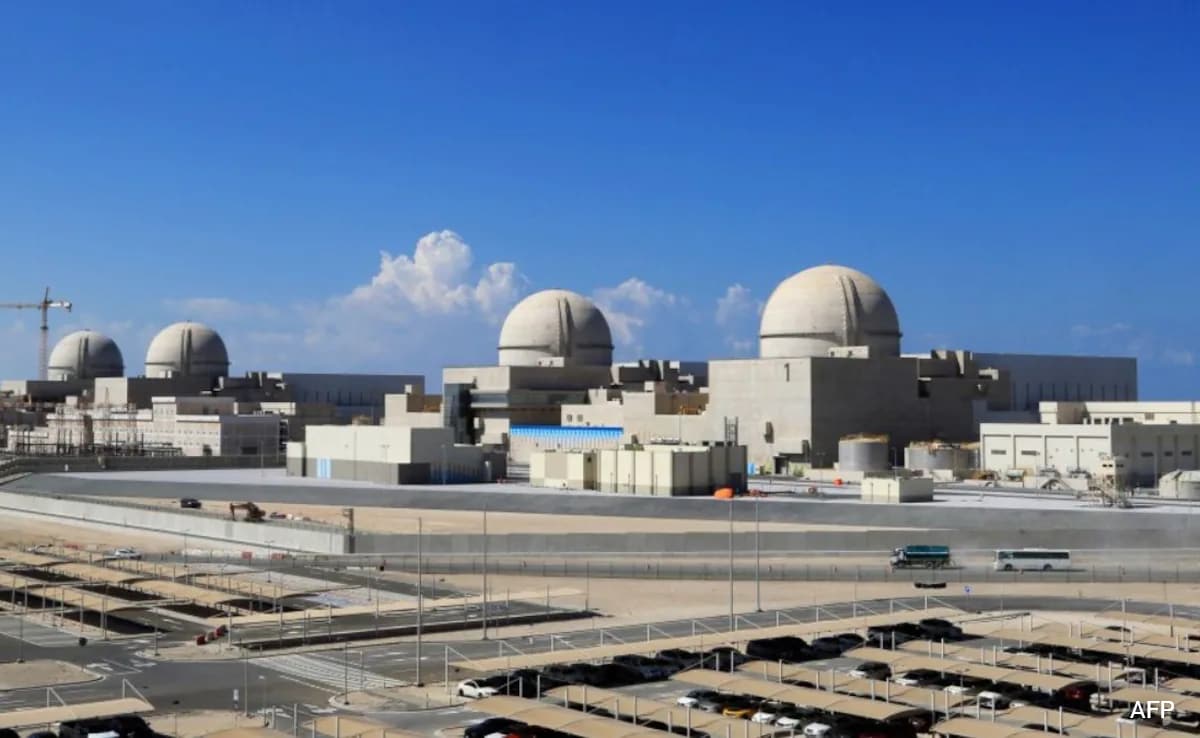
The Ministry of External Affairs urgently called for restraint after a drone strike triggered a fire near UAE’s Barakah, which provides around 25 per cent of the emirate’s electricity.
A statement by the ministry read, “India is deeply concerned at the attack targeting the Barakah nuclear facility in the UAE. Such actions are unacceptable and represent a dangerous escalation. We urgently call for restraint and a return to dialogue and diplomacy.”
No injuries or impact on radiation levels were reported following the Barakah facility attack. The UAE said three drones entered from the western border – one struck the inner perimeter of the nuclear facility, while two others were intercepted.
The attack comes at a time the ceasefire in the Middle East is more fragile than ever as reports hint at US plans to renew the war against Iran and a lasting peace proposal remains elusive.
The UAE “condemned in the strongest terms the unprovoked terrorist attack” and “will not tolerate any threat to its security and sovereignty under any circumstances”, a foreign ministry statement said. “These attacks constitute a dangerous escalation, an unacceptable act of aggression and a direct threat to the country’s security,” it added.
UAE foreign minister Sheikh Abdullah bin Zayed Al Nahyan held calls with his counterparts in Qatar, Jordan, Saudi Arabia, Kuwait, Morocco, Egypt and Bahrain after the attack, his office wrote on X. The ministers condemned the attack and reaffirmed the Gulf nation’s “full and legitimate right to respond” to it, his office added.
UAE presidential adviser Anwar Gargash appeared to refer to Iran and its regional proxy groups in his condemnation of the attack. “The terrorist targeting of the Barakah clean nuclear power plant, whether carried out by the principal perpetrator or through one of its agents, represents a dangerous escalation,” he wrote on X.
He called the incident “a dark scene that violates all international laws and norms”, accusing the perpetrators of a disregard for the lives of civilians in the UAE.
UAE’s neighbour Saudi Arabia strongly condemned the drone attack, later adding that it had intercepted three drones that entered from Iraqi airspace.
The $20 billion Barakah nuclear power plant was built by the UAE with the help of South Korea and went online in 2020. It is the only nuclear power plant in the Arab world and can provide a quarter of the energy needs in the UAE, a federation of seven sheikhdoms that is home to Dubai.
It’s the first time the four-reactor Barakah plant has been targeted in the war. Yemen’s Iran-backed Houthi rebels, whom the UAE has battled as part of a Saudi-led coalition, claimed to have targeted the plant while it was under construction in 2017, which Abu Dhabi denied.
The UAE signed a strict deal with the US over the nuclear power plant, known as a “123 agreement,” in which it agreed to forego domestic uranium enrichment and reprocessing of spent fuel to ease any proliferation concerns. Its uranium comes from abroad.
Iran’s nuclear program poses a contrast and remains at the heart of its long-standing issues with the US, making it one of the biggest hurdles in the way of lasting peace in the region. Iran insists its program is for peaceful purposes, but it has enriched its uranium close to weapons-grade levels and is widely suspected of having had a military component to its program until at least 2003. It has often restricted the work of UN inspectors, including since the 12-day war with Israel last year.
Israel is widely believed to be the only nuclear-armed country in the region, but has neither confirmed nor denied having atomic weapons.



