The US Copyright Office (USCO) has launched a public inquiry into music streaming fraud.
The Office published a notice of inquiry in the Federal Register on Wednesday (October 7), seeking information on how streaming fraud is carried out, its economic impact, and its relationship to AI-generated music.
Written comments are due by November 23, with reply comments due by December 21.
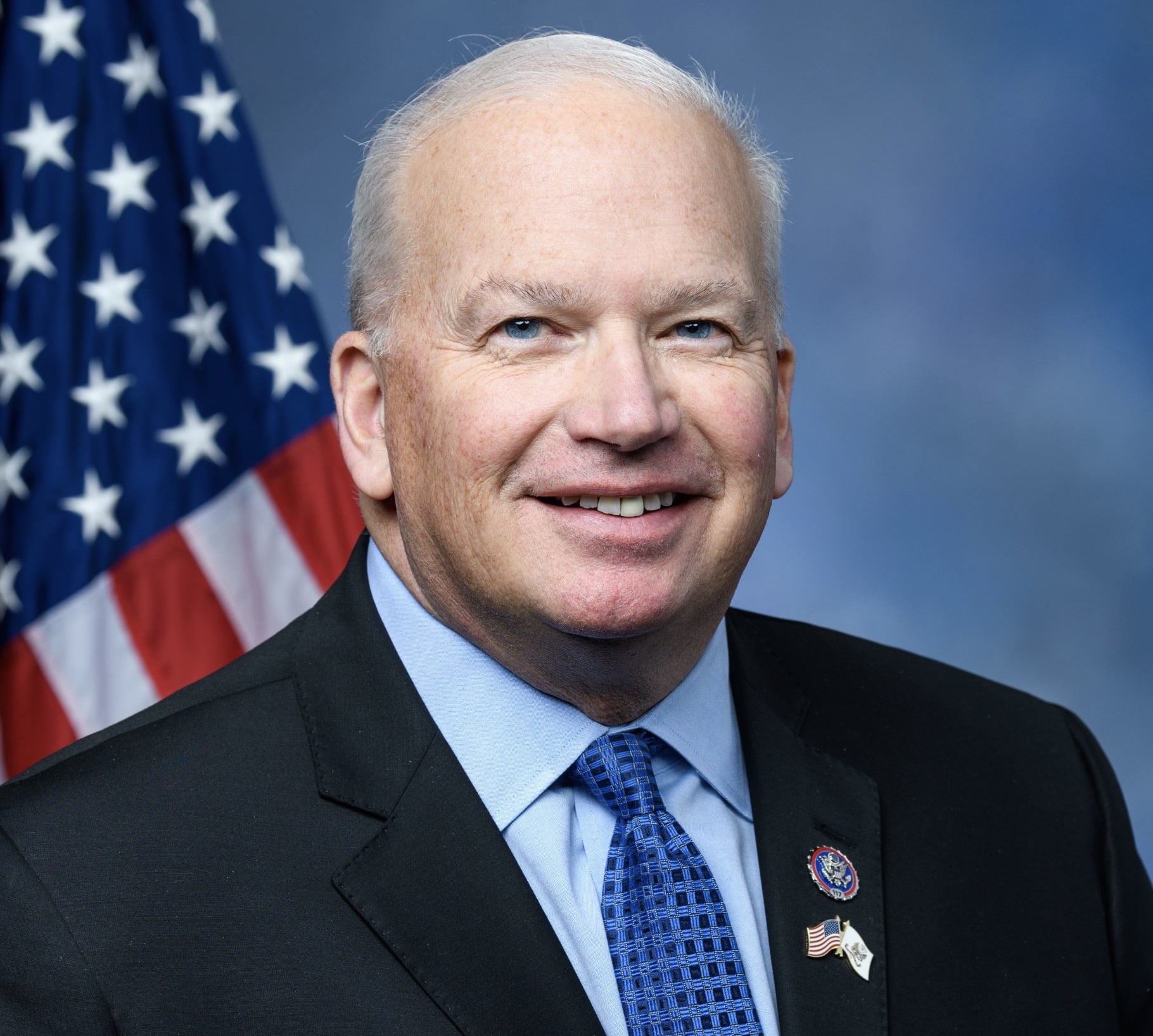
The inquiry follows a request from Scott Fitzgerald, the Republican US Representative for Wisconsin’s 5th District, who sits on the House Judiciary Committee.
His letter to the USCO, dated May 21, opens by asking it to “examine the contributory effects of artificial intelligence (AI) in music streaming fraud, and the resulting effect on the music industry.”
“While there is nothing inherently wrong with using AI as a creative tool in music development, or the organic growth of AI-generated music, specifically, generative AI can serve as a catalyst for criminals to perpetrate streaming fraud,” wrote Fitzgerald.
Fitzgerald added: “When AI-generated outputs compete against human-made works, they divert money from a finite royalty pool that would otherwise be distributed to actual rights holders. If done fraudulently by bad actors deploying bots or other forms of manipulation, it represents a clear theft of the royalty pool.”
“When AI-generated outputs compete against human-made works, they divert money from a finite royalty pool that would otherwise be distributed to actual rights holders. If done fraudulently by bad actors deploying bots or other forms of manipulation, it represents a clear theft of the royalty pool.”
Rep. Scott Fitzgerald
The letter cited Deezer‘s finding that “up to 85% of the streams generated by fully AI-generated tracks” on its platform in 2025 were fraudulent.
It also pointed to Deezer’s disclosure in April that nearly 44% of its daily music uploads were AI-generated.
Deezer said in July that the share had passed half in June, with close to 90,000 fully AI-generated tracks arriving a day.
Fitzgerald asked the Office to “examine the prevalence of streaming fraud across digital platforms and how it may be affecting the music industry as a whole,” and, specifically, “the effects of AI-generated streaming fraud on the licensing and distribution of sound recording, performance and mechanical royalties.”
The notice was published one day after Michael Smith was sentenced to 18 months in prison for a scheme that used bot accounts to stream hundreds of thousands of AI-generated songs.
Smith, of Cornelius, North Carolina, pleaded guilty in March to one count of conspiracy to commit wire fraud.
The USCO‘s notice, dated October 5, states that Smith “fraudulently collected some $10 million in royalties” – the figure alleged at the time of his indictment in 2024.
On Tuesday (October 6), US District Judge John G. Koeltl ordered Smith to forfeit USD $8,091,843.64, the loss figure agreed by both sides.
The notice states that the “primary harm” of streaming fraud is “the dilution of the royalty revenue pool.” To support that point, it quotes an MBW op-ed by IFPI CEO Victoria Oakley and RIAA CEO Mitch Glazier.
The USCO also points to secondary harms, including effects on playlist placement and on the streaming data that artists and venues rely on when planning tours.
Among the notice’s 10 subjects of inquiry is the question: “What industry policies or practices may be inadvertently contributing to streaming fraud?”
The USCO also asks how streaming fraud affects live music, including venue selection and ticket sales.
It seeks views on the effectiveness of policies on “trusted distributors, content verification, customer verification, royalty clawback, fines, and content removal,” and on the industry’s use of anti-fraud vendors such as Beatdapp, which the notice names.
Other questions in the USCO‘s notice cover the sharing of suspicious activity reports, “[a] shared database to track instances of known streaming fraud,” metadata standardization, and labeling content that is ineligible for statutory royalties.
On remedies, the notice asks whether legislation providing for “no-fault injunctive relief” could be used against streaming fraud, citing proposals including the American Copyright Protection Act of 2026 and the DEFEND IP Act.
On criminal enforcement, the USCO asks for views on prosecutions at the state and local level, and on the use of streaming fraud by organized crime.
The notice points to what it calls an “alarming” 2023report out of Sweden that found criminal networks had used fake streams of songs to launder money.
The notice adds that “there appear to be growing concerns that organized crime will use streaming fraud for money-laundering and other nefarious purposes,” citing a June statement from NMPA President and CEO David Israelite.
Israelite called streaming fraud “a national security issue” at the trade body’s annual meeting in New York on June 10.
Reacting to Smith’s sentence on Wednesday (October 7), IFPI said: “This result sends a clear message that streaming fraud is a crime and has serious consequences. But enforcement is only one part of tackling streaming fraud – we also need to prevent, detect and disrupt fraudulent activity.
“The global music industry is collectively doing just that through the Streaming Integrity Initiative which protects artists, rightsholders and fans and strengthens trust in streaming.”
IFPI launched the initiative (SII) on September 14, setting out five baseline anti-fraud practices for distributors, including Know Your Customer (KYC) checks and intelligence sharing.
A total of 24 companies and trade bodies signed up to the SII at launch, including the three major music companies. Participation is voluntary.
The USCO‘s notice references the SII.
It also mentions UMG‘s lawsuit against DistroKid in Delaware federal court on September 15, alleging deceptive trade practices and copyright infringement.
Seperately, DistroKid had not signed up to the SII at launch, as reported by MBW. The distributor was a founding member of the Music Fights Fraud Alliance, the cross-industry anti-fraud body launched in 2023, and remains a member.
The notice also cites DistroKid’s guidance on artificial streaming, alongside TuneCore‘s, as an example of distributors that penalize violators.
This isn’t the first time a letter from Fitzgerald has led to a Copyright Office inquiry.
That inquiry drew more than 5,000 public comments.
In November 2025, the USCO sent Congress a letter summarizing those comments. According to the Office, the letter “does not contain new policy recommendations.”Music Business Worldwide