


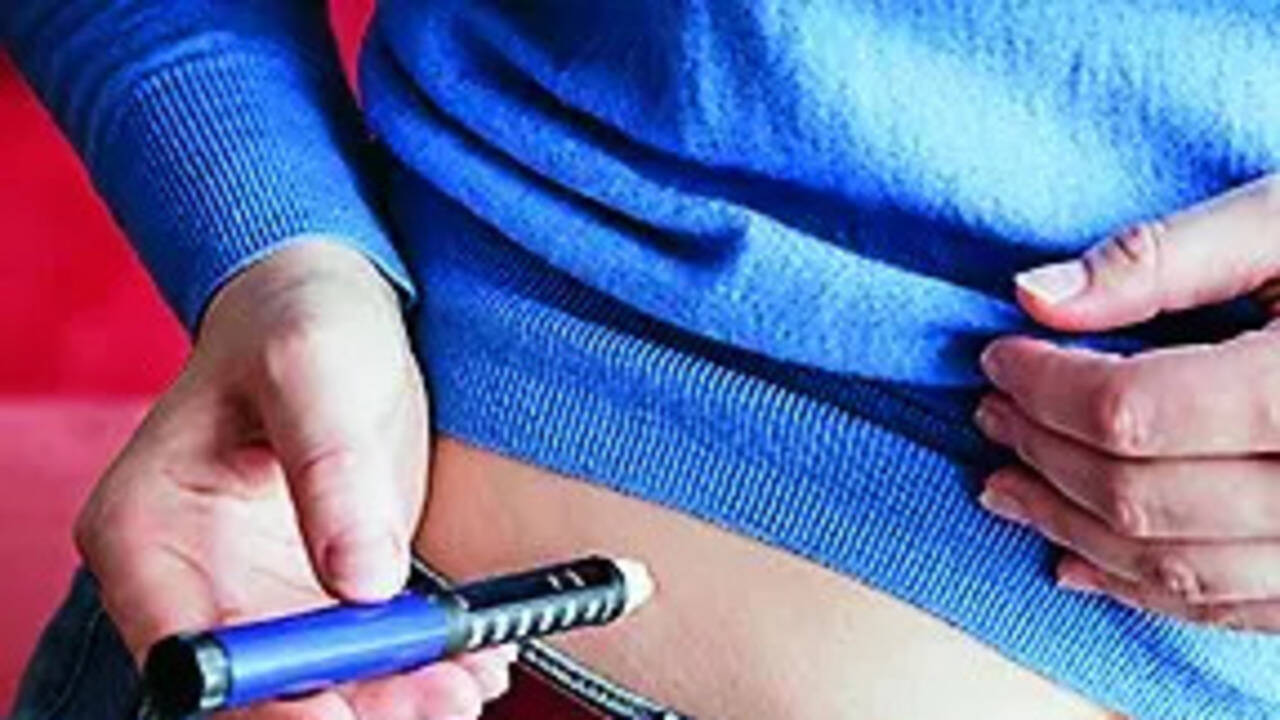

Almost 104 years after daily insulin shots were first introduced, Indian patients with diabetes now have access to a once-a-week alternative.Danish drugmaker Novo Nordisk on Thursday introduced Awiqli (insulin icodec), the country’s first weekly basal insulin for adults with Type 1 and Type 2 diabetes. India is among the dozen countries where the product was launched.For doctors, however, the arrival of the drug is less about replacing daily insulin than expanding treatment options. India has an estimated 101 million people living with diabetes and another 136 million with prediabetes, making it one of the world’s largest diabetes populations.In patients with diabetes, insulin – the hormone that allows cells to use glucose for energy – either isn’t produced at all or the body’s cells fail to use it properly. While everyone with Type 1 diabetes requires insulin, Type 2 diabetes patients need it only when oral medicines can no longer control their sugar levels, either once or twice a day.Awiqli reduces injections from 365 days a year to 52 days. Novo Nordisk said it could help overcome one of the biggest barriers to insulin therapy in India – fear of daily injections – which often delays insulin initiation by seven to nine years. The company said clinical trials of more than 4,000 adults, including Indian participants, showed better HbA1c reduction than daily basal insulin.Delhi-based endocrinologist Dr Anoop Misra said the biggest advantage was fewer injections. “There has been little innovation in basal insulin for nearly two decades. Fewer needle pricks may encourage patients to start insulin when they need it,” he said.Doctors cautioned, however, that the weekly insulin is unlikely to replace daily injections for everyone. Endocrinologist Dr Shashank Joshi of Lilavati Hospital said patients would still require regular blood sugar monitoring. “It is a useful addition to our treatment options but would be best suited for patients willing to use technology to manage their diabetes,” he said.KEM Hospital endocrinologist Dr Tushar Bandgar, who led one of the Indian trial centres, said the treatment is best suited for patients who still produce some insulin naturally and require only basal insulin replacement. “Those needing multiple insulin injections every day may not benefit as much,” he said.Dr Bandgar added that newer weight-loss drugs and GLP-1 receptor agonists are already reducing insulin requirements in many patients. “While once-weekly insulin is an important advance, the number of patients needing basal insulin may gradually shrink,” he said.



