


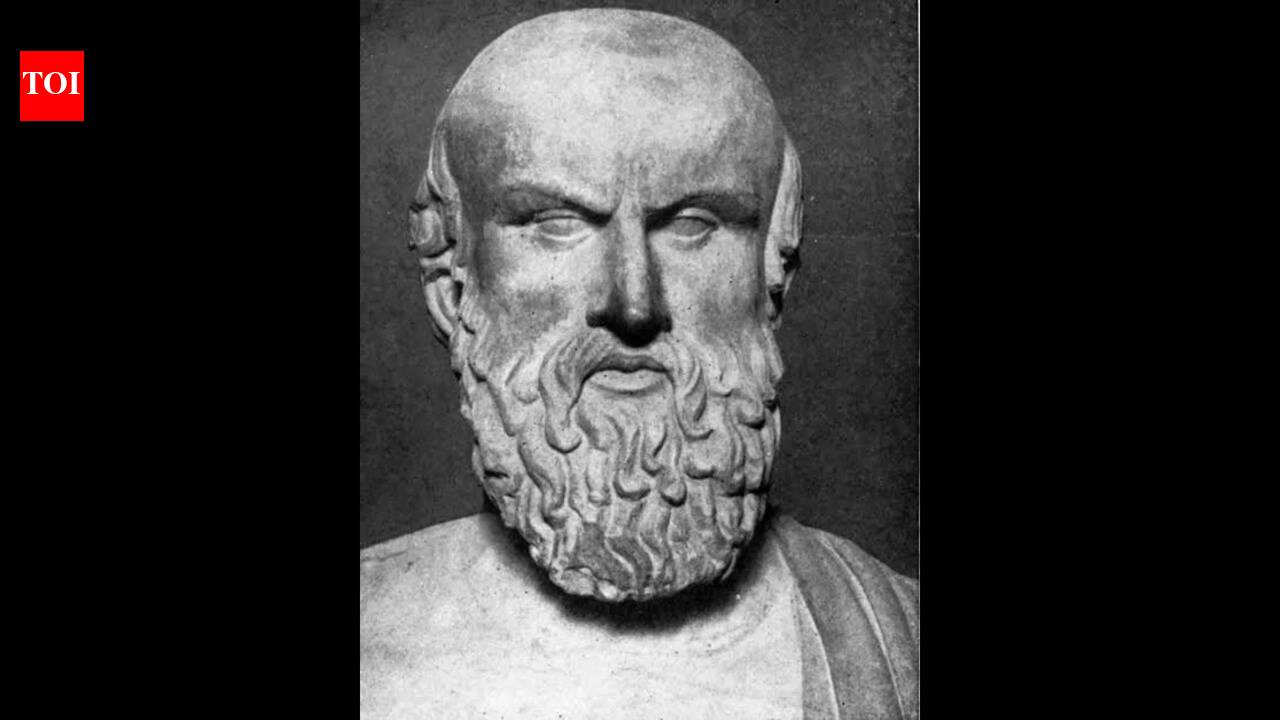
Ancient Greek playwright Aeschylus who redefined theater and was known as the ‘Father of Tragedy’ gave us this lofty quote, which serves as a survival lesson even today. In his play Prometheus Bound, Oceanus gives this advice to Prometheus, suggesting that when dealing with powerful tyranny like Zeus, it is sometimes safe and smarter to pretend that you don’t know anything or to lay low rather than flaunt your intellect.Today’s quote of the day is from Prometheus Bound: ‘When one is wise, it’s wisest to seem foolish’This quote is about strategic survival. It means that when you are in a dangerous situation, especially one where someone more powerful than you holds all the cards, flaunting your intelligence or being openly defiant is a quick way to get crushed. Sometimes, the smartest thing you can do is pretend to be harmless, naive, or even a bit dense.Powerful people, tyrants, or insecure bosses are often threatened by highly intelligent or capable people. If you show how smart you are, you instantly become a target. By “seeming foolish,” you disarm them. They let their guard down because they don’t view you as a threat.When people think you are foolish or clueless, they stop filtering themselves around you. They talk openly, reveal their plans, and underestimate your capabilities. This gives you a massive information advantage. You get to observe everything clearly while remaining completely underestimated.Openly arguing or trying to prove you are right to a powerful, stubborn force is usually a waste of time and energy. Feigning ignorance allows you to avoid unnecessary conflicts and save your strength for when it actually matters.
Context of Prometheus Bound
Prometheus stole fire from the gods to give it to humanity. As punishment, Zeus chained him to a rock to be tortured for eternity. When his friend Oceanus comes to visit, Oceanus tells Prometheus to stop being so openly defiant and angry at Zeus. Prometheus, being stubborn, refuses. But the quote itself has lived on as a timeless piece of political and social strategy.
Who was Aeschylus?
Before Aeschylus, Greek plays were incredibly simple. There was just one actor on stage and a large chorus (a group of people who sang and danced). The single actor would just talk back and forth with the chorus. Aeschylus had a brilliant breakthrough: he added a second actor. By introducing a second character, he allowed actors to actually have dialogue, argue, and interact with each other face-to-face, instead of just narrating to the crowd. This single change basically invented “drama” and theater dialogue as we know it today. He also popularized using elaborate costumes, stage designs, and masks. He is said to have written about 90 plays, but only 7 have survived the centuries.Aeschylus viewed himself primarily as a soldier. He fought for Athens in the famous Persian Wars (specifically at the battles of Marathon and Salamis), defending his city from invasion. When he died, his self-written gravestone didn’t say a single word about his famous plays or his theater trophies. It only mentioned his bravery as a soldier fighting the Persians.According to legend, he met a tragic death when an eagle mistook his bald head for a shiny rock and dropped a tortoise on his head to break its shell.



