


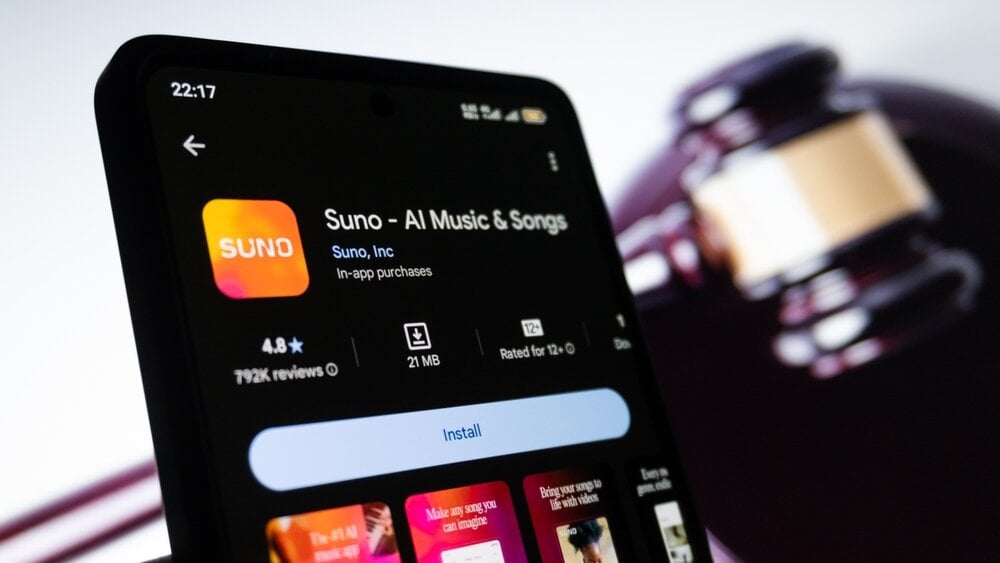
AI music startup Suno is expected to close its Series D funding round within weeks, raising more than USD $250 million and achieving a valuation of $5 billion.
That’s according to separate reports from Billboard and Axios on Monday (May 4).
Billboard reported, citing sources familiar with the process, that Suno will likely raise above $250 million.
Axios reported that the Series D could value Suno at over $5 billion, more than double its valuation after its last funding round in November.
In November, Suno achieved a valuation of $2.45 billion post-money following a $250 million Series C round led by Menlo Ventures.
Other participation in that Series C round came from NVentures (NVIDIA’s venture capital arm), Hallwood Media, Lightspeed and Matrix.
Billboard said Suno’s Series D will likely close in the coming weeks.
A source told the newswire that multiple music industry investors are involved in the latest round, and had been investing in each of Suno’s previous rounds. However, most kept their involvement private due to the controversies surrounding Suno.
One exception is Hallwood Media, the firm launched by Neil Jacobson, former President of Universal Music Group’s Geffen Records. Hallwood Media signed the first record deal for an artist who creates music primarily using Suno.
Alongside Jacobson, Hallwood’s investment arm – Hallwood Media Ventures – is led by other ex-UMG executives, including Chuck Ciongoli and Mike Biggane.
Sources did not disclose how Suno plans to deploy the new Series D capital. But materials from Suno’s Series C, obtained by Billboard in the fall, showed that compute power was the company’s biggest expense since January 2024.
Suno’s Series C was earmarked to 30% computing power; 20% mergers and acquisitions; 20% discovery; 20% marketing; 15% data; and 5% partnerships, Billboard noted.
(These percentages, presumably taken from a Suno deck, add up to 110%.)
The Series D fundraise comes amid Suno’s turbulent relationship with the music industry.
In April, the Financial Times reported that talks between Suno and both Universal Music Group and Sony Music Entertainment had made little progress, with a person involved in the negotiations telling the newspaper: “We have ongoing engagement, but there is no path forward with the current proposal.” The FT also reported that Suno‘s partnership with WMG itself had seen “minimal progress.”
Suno remains the target of active copyright litigation from Universal Music Group and Sony Music Entertainment. Last week, French digital music company Believe and its global platform for self-releasing artists, TuneCore, unveiled a significant update to their Generative AI policy, automatically blocking the distribution of AI-generated tracks partly or fully produced on unlicensed “pirate studios”.
Believe’s definition of “pirate studios” includes Suno. Believe CEO Denis Ladegaillerie told MBW: “Two or three months ago, everyone still thought Suno, and some of the other still-unlicensed studios, might yet get licensed [by the industry’s biggest rights-holders].”
“The reality now is it’s unlikely, at least for the models they’ve already trained on. Which means the Gen-AI content made on those models is illegal, and is going to stay illegal, for the foreseeable future.”
In February, Suno CEO and co-founder Mikey Shulman disclosed that the platform has reached 2 million paid subscribers and $300 million in annual recurring revenue. He also noted that over 100 million people have now used Suno.
Suno offers a free tier alongside two paid subscription plans: a Pro plan at $10 per month ($8 if billed annually) and a Premier plan at $30 per month ($24 if billed annually).
Also in February, a coalition of artist representatives published an open letter titled ‘Say No to Suno’, describing the company as a “brazen smash and grab” platform and accusing it of using “unauthorized AI platform machinery trained on human artists’ work”.
Despite these challenges, Suno continues to expand its offerings, acquiring live music and concert-discovery platform Songkick from Warner Music Group in November. On Thursday (April 30), Suno formally assumed control of Songkick user data, sending emails to Songkick users confirming that personal data held by the platform “will be transferred to Suno, who will become the controller responsible for that data going forward.”
Separately, Suno has posted a job listing for a General Manager of Songkick, describing the platform as having “a well-established artist and venue data layer” and “a massive untapped opportunity to reimagine what live music discovery experiences look like when powered by AI.”
The role reports to Suno Chief Music Officer Paul Sinclair, the former General Manager and EVP of Atlantic Records, who joined the AI company in July 2025.
Music Business Worldwide



