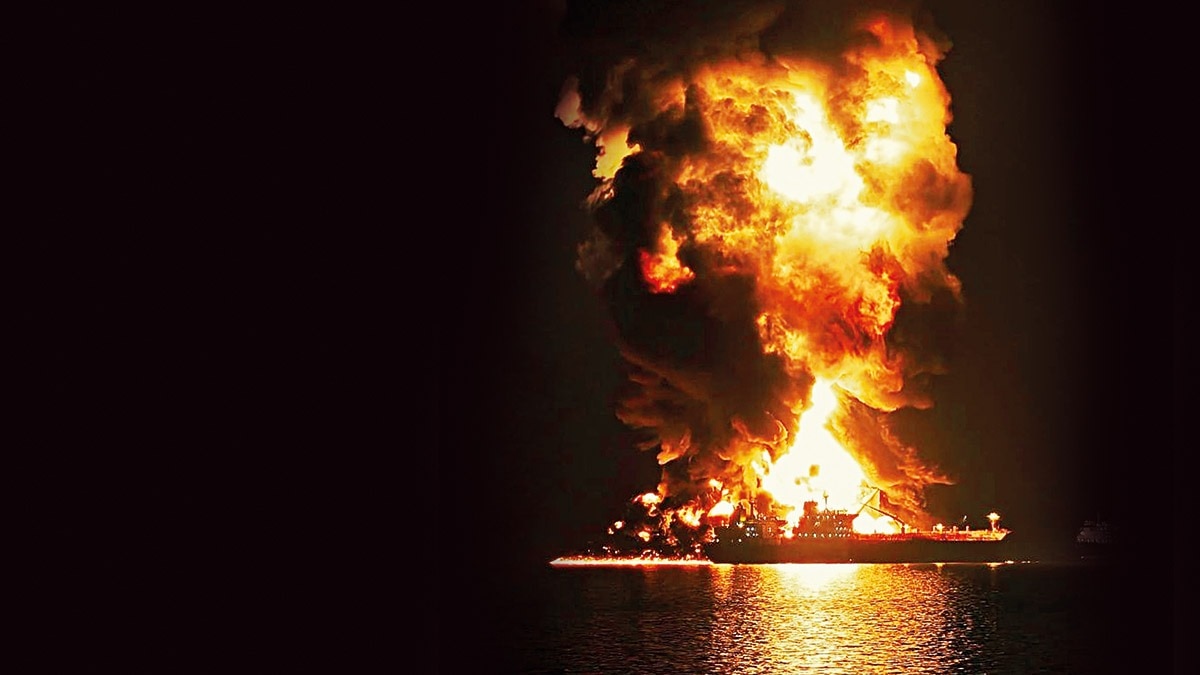
The deathly rattle of missiles and drones may have eased following the April 7 announcement of a two-week ceasefire by the principal combatants of the 39-day US-Israel-Iran war. The truce was hammered out hours before President Donald Trump’s deadline—to obliterate “a whole civilisation”—was about to expire. Yet across the Gulf, there is little illusion that this tenuous pause will translate into lasting peace. The scale of disruption in the region has been unprecedented in recent memory. It has laid bare the Gulf’s vulnerabilities, damaged its economic engines, and punctured its carefully cultivated image of stability in ways that may take years to repair.
From Saudi Arabia to the United Arab Emirates (UAE), Qatar to Oman, and across Bahrain and Kuwait, the six states of the Gulf Cooperation Council (GCC) find themselves confronting the same unsettling reality—that the war may not have been theirs, but its consequences are. As one expert bluntly puts it, the conflict has already “destroyed years of careful investment in the security and prosperity” of these states. The ceasefire, therefore, is not an end, only an interlude. And what it reveals is a Gulf that is wounded, wary and recalibrating.
If the Gulf states bore the brunt of the cost of war, it was because a beleaguered Iran adopted a high-risk, two-pronged strategy to combat the conventional military superiority of America and Israel, prevent the collapse of its internal regime and retain its nuclear and ballistic missile ambitions. Its first weapon was the Strait of Hormuz, the aortic valve of the global economy, through which passes nearly 25 per cent of the world’s crude oil and 20 per cent of its liquefied natural gas, along with fertilisers, aluminium and other critical industrial inputs. The shock waves were immediate and global: crude prices surged, supply chains convulsed and mounting economic pressure pushed major powers to urge Washington to end a war that Trump launched without broad international backing even from America’s North Atlantic Treaty Organisation (NATO) allies.
Iran’s other successful ploy was dragging the Gulf into the war, by accusing these regional states of allowing the use of their territory for US military operations. Indeed, the US has, over decades, embedded itself across the GCC through an extensive military ecosystem comprising eight major bases, airfields, naval hubs and logistics corridors supported by more than 35,000 American troops. As tensions spiralled, Iran widened the arc of conflict by moving beyond US-linked assets to strike oil infrastructure and, increasingly, civilian targets in the Gulf, turning the region into a high-risk frontline.
THE PRICE OF WAR
The economic toll has been brutal. The Gulf could be staring at losses exceeding $200 billion (Rs 18.5 lakh crore) from infrastructure damage, lost oil and gas revenue, disrupted trade and stalled investments. Growth forecasts across GCC economies have been slashed by 3.1 percentage points, from pre-war projections of 4.4 per cent. But the deeper cost lies beyond the numbers. This was a region in the midst of a historic pivot. Saudi Arabia, the UAE, Qatar and Oman were racing to reduce their dependence on hydrocarbons and reinvent themselves as global hubs across aviation, tourism, logistics and services. The war has shaken these very pillars of the economy, fundamentally eroding the credibility of their core promise of stability to investors.
Nowhere in the Gulf has the psychological impact of the war been felt more sharply than in the UAE, which, for decades, sold itself as the haven where capital, energy, talent and ambition converged and prospered in a relatively liberal air. During the war, the UAE alone intercepted over 550 missiles and more than 2,200 drones. Missile debris, disrupted flights, falling tourism numbers and shaken investor sentiment tested its “safe harbour” image. Beneath the spectacle of war, a quieter crisis is unfolding. As an Indian expatriate in Dubai, who lost his job as shipping routes collapsed, put it: “You don’t just walk away from this life. But you don’t know what comes next either.” This is the Gulf’s human story—millions of expatriates suspended between stability and uncertainty.
India, indeed, has high stakes in the Gulf’s stability, and the shock of the war has been particularly acute for it. The Gulf is not just a major source of energy—with India importing 30 per cent of its crude oil through the Strait—but also a lifeline. Close to 10 million Indian expatriates live and work across the region. Annually, they remit $51.5 billion (Rs 4.7 lakh crore), or a third, of India’s total remittances of $135.5 billion (Rs 12.5 lakh crore). As the airspace closed, shipping slowed, raising insurance costs, the ripple effects hurting India’s economy, including fuel prices, freight costs, aviation routes, financial markets and even the value of the rupee.
THE UNITED STATES OF THE GCC
One of the most striking features of this conflict has been the response of the Gulf states themselves. Despite being targeted, they have largely chosen restraint over escalation. Saudi Arabia, for instance, has faced repeated missile and drone attacks on its economic infrastructure. Instead of retaliating, the nation focused on continuity, keeping its oil flowing, its markets stable and escalation in check. Its East-West Petroline, built decades ago, allowed it to reroute a large portion of its exports away from Hormuz, demonstrating both foresight and resilience. Even in the UAE, the government’s instinct was to stabilise—through liquidity support, business relief and visible leadership outreach.
And if the war has exposed the Gulf’s vulnerabilities, it has also sparked new thinking. Oman, quietly and characteristically, is pointing to an alternative future. Its proposition is deceptively simple: reduce the world’s dependence on the Strait of Hormuz. Omani ports like Duqm and Salalah, located outside the Strait and opening directly onto the Indian Ocean, could serve as alternative gateways for energy and trade. Pipelines, rail links and logistics corridors could connect Gulf producers to these ports, bypassing chokepoints. But this is not just a regional project. It requires global participation and massive finances. Countries like India, China and Japan, whose economies depend heavily on Gulf energy, would need to invest in, and support, such infrastructure.
It is a long-term solution. But the war has made one thing clear: the old template is obsolete. Across all six Gulf states, one strategic objective has come into sharp focus: containment of Iran. Not regime change but a calibrated outcome that could see it incapable of harming its neighbours, whether through missiles, militias or nuclear capability. Also, one that cannot threaten energy infrastructure or critical maritime routes.
How that objective is achieved, however, remains deeply contested, as assessments by seven experts from the region, who have penned columns in the following pages, indicate. Diplomacy is the preferred path, with mediation efforts from Oman to Pakistan to China reflecting a collective push to avoid escalation. Force, they believe, should remain a last resort and not a first impulse as Trump has demonstrated. Yet beneath this preference lies a hard realism. Iran is not a conventional actor; its radical ideological framework and religious embrace of martyrdom do complicate the use of traditional deterrence measures. There is also a growing recognition that a weakened but vengeful Iran may prove more dangerous than a stable one.
A GULF-SIZED PREDICAMENT
This is the Gulf’s central dilemma: to contain Iran but not destabilise it beyond control. Complicating this calculus is a parallel anxiety, seldom expressed openly but felt widely. Of an unchecked Israel, emboldened by its recent military campaigns and savage force in Gaza, emerging as a dominant regional power. The images of destruction in Gaza have inflamed public opinion across the Arab world, placing governments in a fragile position. So, while they must preserve strategic ties with America and reach quiet security understandings with Israel, they cannot appear complicit in actions abhorred deeply among their own people.
Walking this tightrope requires careful calibration. Gulf states are likely to double down on multi-layered diplomacy, by maintaining channels with Iran even as they support its containment, while engaging the US to ensure any regional security architecture does not tilt decisively in Israel’s favour. Simultaneously, they may seek to rebalance through broader partnerships with major and middle powers such as China, Europe, Russia and India to reduce dependence on any single axis.
There is also a growing emphasis on de-escalation frameworks: backchannel talks, crisis hotlines and confidence-building measures that can prevent flare-ups from spiralling into wider conflict and avoid the dangerous brinkmanship of the past six weeks. Crucially, the Gulf will continue to invest in economic interdependence and regional integration, using trade, energy cooperation and infrastructure linkages as stabilising anchors. If there is one takeaway from our experts’ assessments, it is that the Gulf will not emerge from this conflict unchanged.
For the present, though, the immediate uncertainties remain unresolved: whether the Strait of Hormuz will stay open, whether Iran will retain leverage over global energy flows or whether this conflict will settle into a prolonged, low-intensity disruption. As one expert puts it with stark clarity: there are no winners in this conflict, only degrees of loss. The drones may have fallen silent for the moment, but the Gulf remains wounded. Whether this pause paves a pathway to peace or proves to be a mere prelude to another cycle of conflict will shape the future not just of the region, but of the world.
– Ends
Tune In