


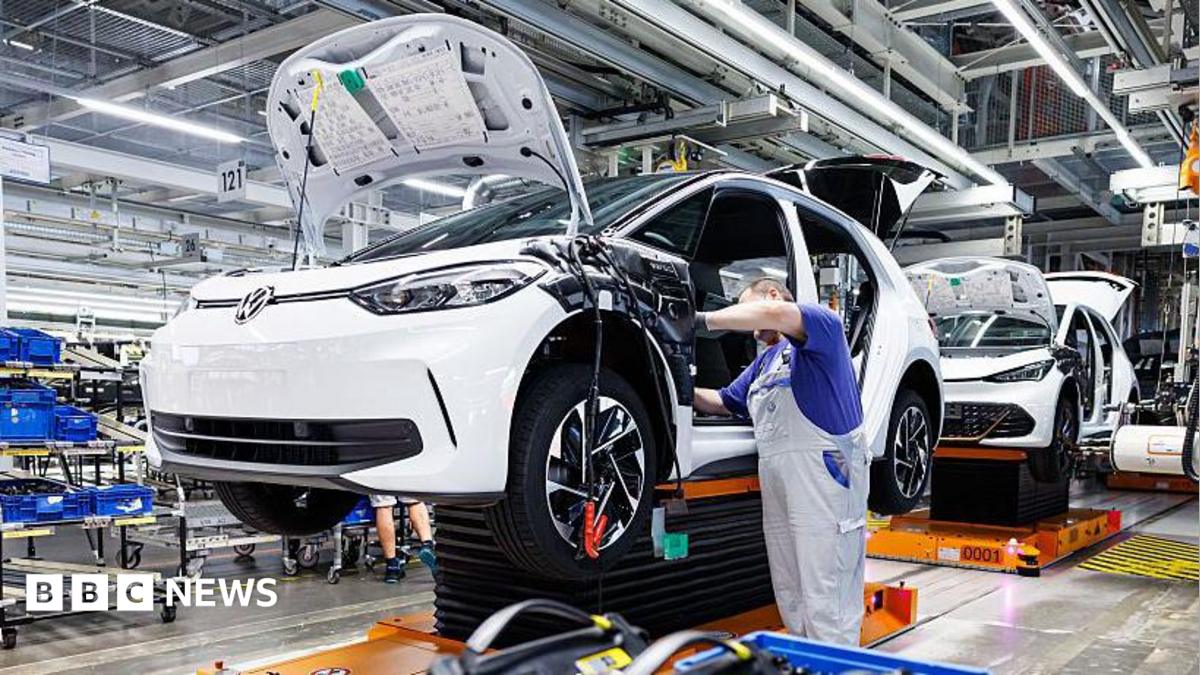
The chief executive of the German car giant Volkswagen Group has confirmed it is looking to cut up to 100,000 jobs – twice as many as previously stated.
The group, which includes Porsche, Audi, Seat and Skoda as well as the VW brand, had previously said it would axe some 50,000 posts in Germany by 2030.
It suffered a steep decline in profits last year – the result of falling sales in key markets, as well as increasing competition from Chinese brands moving into Europe.
In a widely-reported memo to staff, chief executive Oliver Blume said the Group’s costs were 20% higher compared to rival businesses, and it would need to reduce its outgoings even further.
This, he said would mean a “theoretical deduction” of 50,000 jobs worldwide.
“We are currently assessing across all brands, companies and regions how many adjustments are actually necessary and feasible,” he said.
“We need to become more efficient, more robust and simpler. We must reduce our costs.”
He added the company had been “unable to confirm” alternative uses for four factories in Germany which have previously been threatened with closure.
Two of the plants, in Zwickau and Emden, are used for electric car production. But along with other factories in Hanover and Neckarsulm, they are seen as expensive to run.
VW’s profits have fallen sharply in recent years. In 2023, it made an operating profit of €22.6bn ($25.8bn, £19.3bn). This dropped to €19.1bn in 2024, and then to just €8.9bn last year.
The group has been badly hit by a fall in sales in China, once one of its most lucrative markets. In the first six months of the year they were down 26% compared to last year.
In the US, sales fell more than 7%, in part due to the impact of tariffs on car imports introduced by the Trump administration.
Meanwhile Chinese brands have been moving aggressively onto international markets, introducing new technologies while benefitting from lower production costs than European rivals.
This has added to the pressure on established brands to keep their own costs under control, and slashed profit margins.
In late 2024, after threats of mass strikes, VW reached an agreement with the German trade union IG Metall to cut 35,000 jobs at its namesake brand by 2030, in a “socially responsible manner”, with another 15,000 jobs to go at its other brands.
The plans now under discussion appear to go much further.
Last week saw widespread protests at Volkswagen sites across the country, ahead of a meeting of VW’s supervisory board, which includes labour representatives as well as company managers.
Some industry analysts suggested to Agence France Presse that Volkswagen had deliberately publicised the number of 100,000 as a negotiating tactic, and that the final figure of cuts is likely to be lower.



