


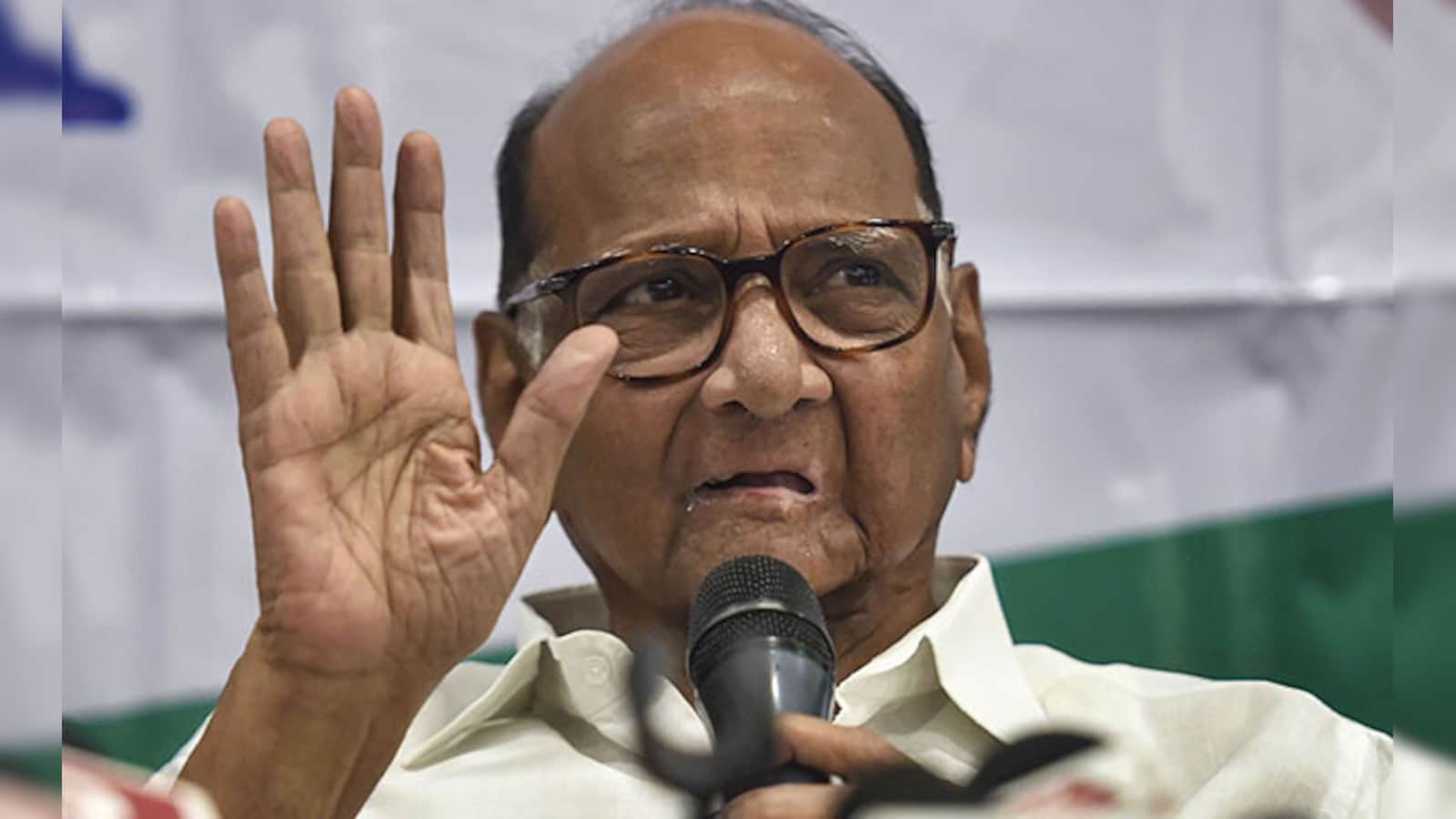
Many moons ago, Delhi’s political folklore records, Prime Minister PV Narasimha Rao asked his Defence Minister Sharad Pawar a deceptively simple question: how much is two plus two? Pawar’s reply was vintage Pawar: “It depends whether you are buying or selling.”
Three decades later, the question has returned in a more consequential form. How much are eight Lok Sabha MPs worth when the government is searching for the numbers to pass a constitutional amendment capable of altering India’s political map for a generation? The answer, once again, depends on who is buying and what is being sold.
Advertisement – Scroll to continue
A Long Rematch
The Constitution (One Hundred and Thirty-first Amendment) Bill, 2026, was introduced on April 16 and defeated a day later. It received 298 votes in favour and 230 against, short of the 352 votes then required. The bill sought to raise the constitutional ceiling on Lok Sabha seats from 550 to 850 and permit Parliament to determine which census would be used for the next delimitation.
That defeat came before the Bengal and Tamil Nadu elections rearranged the opposition’s internal balance. Since then, reports have come out about a large group of Trinamool MPs moving towards the BJP, six of Shiv Sena (UBT)’s nine Lok Sabha MPs gravitating towards the Eknath Shinde camp, and the DMK breaking with the Congress. Seven AAP members in the Rajya Sabha also defected to the BJP in April.
The arithmetic has improved for the government, though it has not made arrangements seamless. One post-election calculation put the NDA-aligned Lok Sabha tally at 324 after the reported Trinamool and Sena defections; even adding the DMK’s 22 MPs would have left it six short of the April threshold. In the Rajya Sabha, estimates placed the NDA near 148, still dependent on regional parties, abstentions, and attendance.
This is why the Monsoon Session of Parliament beginning July 20 is the INDIA bloc’s litmus test. The government is expected to revive the measure, while Amit Shah has floated a uniform 50% increase in seats as an assurance that no state needs to lose seats in absolute terms. But absolute numbers are not the real argument. Relative political weight is.
A Trap, A Promise
The bill bundles two different propositions. One is the implementation of 33% reservation for women in Parliament and state assemblies. The other is the redistribution of representation among states after the census. The 2023 women’s reservation amendment made implementation contingent on a later census and delimitation. The 2026 bill attempted to accelerate the process by allowing the latest published census to be used.
That allows the government to ask its opponents an emotive question: are they opposing women’s representation? Southern parties ask a different one: should states that successfully reduced population growth lose influence to those that did not? PRS projections illustrate the anxiety. If the Lok Sabha remained at 543 and seats were reapportioned by population, Tamil Nadu could fall from 39 to 32 and Kerala from 20 to 15, while Uttar Pradesh could rise from 80 to 89 and Bihar from 40 to 46. Even with a larger House, relative shares would change.
There is another concern. Raising the Lok Sabha ceiling to 850 without restructuring the Rajya Sabha would reduce the Upper House’s relative weight. The bill would also leave Parliament with substantial discretion over the census to be used (the 2011 count, or the ongoing one, which will be completed in 2028-29) and timing, through a later law. The dispute is, therefore, not simply over seat totals; it is over who controls the rules of India’s next federal bargain.
The Pawar Premium
Enter Sharad Pawar, who appears to be keeping two doors open. Reports say the NCP (Sharadchandra Pawar) has explored both a reunion with the faction founded by the late Ajit Pawar and a merger with the Congress. Several accounts suggest that a majority of its legislators and MPs prefer the NDA route. The party has eight Lok Sabha MPs, 10 Maharashtra MLAs, and one Rajya Sabha member – small in ordinary times, significant in a Constitutional cliff-hanger.
The public picture is less tidy. Supriya Sule has repeatedly denied reports of joining the NDA and insists the eight MPs remain with the opposition. Rohit Pawar has said a reunion of the factions was unlikely soon and separately described a Congress merger as possible at the appropriate moment. Reports that Sule and Rohit are the principal holdouts are plausible, but the precise claim that everyone except them is ready to cross over remains unverified.
The Delhi theory is that Narendra Modi and Amit Shah may demand Pawar’s support on delimitation before blessing reunification and entry into the NDA family. There is no public confirmation of such a condition. Yet the logic is clear. Leaders of the Ajit Pawar faction have acknowledged that reunion would require the BJP’s consent, while the government’s hunt for Constitutional-amendment votes gives it every incentive to turn organisational accommodation into Parliamentary commitment.
Eight Votes, And The Meaning Of Opposition
Eight Pawar MPs would not guarantee passage. But Constitutional amendments are shaped not only by ‘yes’ votes, absences and abstentions alter the threshold among those present and voting. Pawar’s support could also persuade other regional actors to negotiate. More importantly, it would give the NDA political cover: a veteran federal leader from western India certifying that delimitation is not merely a northern majoritarian project.
For INDIA, that would be devastating. If Pawar supports the bill while formally remaining in INDIA, the bloc must decide whether it has a common Constitutional floor or is merely an election-time photograph.
Pawar could still turn the test around. He might condition support on safeguards: no reduction in any state’s existing representation, a transparent formula for expansion, an independent and consultative delimitation process, a stronger Rajya Sabha, and separation of women’s reservation from contentious reapportionment. He could then claim not that he surrendered to the NDA, but that he forced it to rewrite the bargain. Shah’s offer of uniform expansion has opened the door to precisely such negotiation.
The DMK’s estrangement from Congress does not automatically make it pro-delimitation; Tamil Nadu’s structural interests may prove stronger than coalition resentment. The same is true of other regional parties that can bargain with Delhi but cannot wish away the demographic consequences. INDIA’s real test is whether it can turn these separate anxieties into a coherent federal alternative rather than assume anti-BJP sentiment is sufficient glue.
Pawar has spent a lifetime demonstrating that political equations are rarely solved on paper. But this transaction is larger than Maharashtra, party reunification, or ministerial accommodation. If he buys entry into the NDA by selling opposition unity on delimitation, two plus two may still equal four in Parliament. Outside it, the political cost could be incalculable.
(Rasheed Kidwai is an author, columnist and conversation curator)
Disclaimer: These are the personal opinions of the author



