


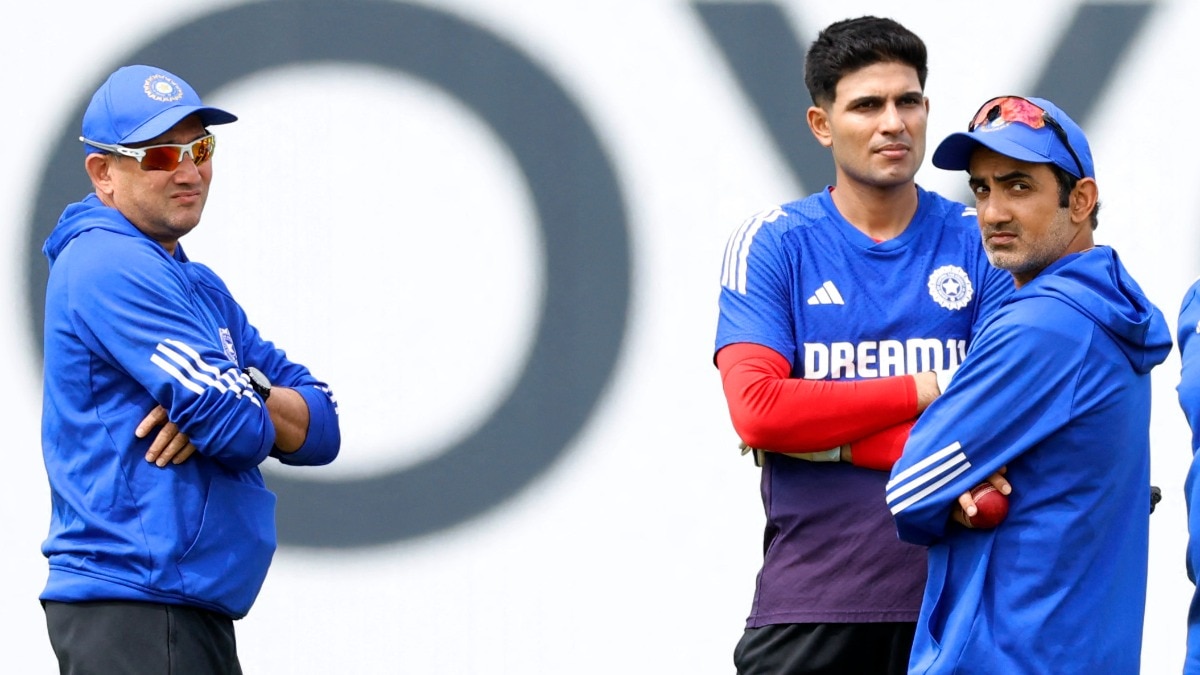
India’s squad announcement for the Afghanistan ODI and Test series was supposed to mark the beginning of two massive journeys.
In ODI cricket, it officially starts India’s final year of combinations, experiments and selection calls before the 2027 World Cup in South Africa, while in Tests, it opens what the Shubman Gill-led side will hope becomes a redemption season after a deeply disappointing 2025-26 red-ball cycle.
But once the squads dropped, the real conversation quickly shifted towards the names missing rather than the names included.
Rishabh Pant lost both his ODI spot and Test vice-captaincy. Mohammed Shami was not even in the selectors’ longer-format thinking any more. Jadeja and Axar were rested together, while even recent ODI centurions Yashasvi Jaiswal and Ruturaj Gaikwad could not force their way into the 50-over squad.
At the same time, India pushed several younger names into the spotlight.
Harsh Dubey earned selection in both formats. Manav Suthar entered the Test setup. Gurnoor Brar received a maiden call-up across formats. Prince Yadav was brought into the ODI squad as another younger fast-bowling option India want to assess ahead of the 2027 World Cup. It was difficult to ignore the larger pattern unfolding underneath the selection meeting.
India are not exactly shutting the door on the older core yet. But they are very clearly preparing for what comes next.
“With regard to one-day cricket, we have 15–16 months left to that World Cup. We want to assess what our options are, particularly keeping in mind the conditions in South Africa, and give exposure to some of the newer guys,” India chief selector Ajit Agarkar said.
India ODI squad vs Afghanistan: Shubman Gill, Rohit Sharma, Virat Kohli, Shreyas Iyer, KL Rahul, Ishan Kishan, Hardik Pandya, Nitish Reddy, Washington Sundar, Kuldeep Yadav, Arshdeep Singh, Prince Yadav, Prasidh Krishna, Gurnoor Brar, Harsh Dubey.
India Test squad vs Afghanistan: Shubman Gill (capt), Yashasvi Jaiswal, KL Rahul (vc), Sai Sudharsan, Rishabh Pant, Devdutt Padikkal, Nitish Kumar Reddy, Washington Sundar, Kuldeep Yadav, Mohammed Siraj, Prasidh Krishna, Manav Suthar, Gurnoor Brar, Harsh Dubey, Dhruv Jurel.
PANT’S WHITE-BALL SPOT IS NO LONGER SAFE
Pant’s omission felt harsh because it arrived from two directions at once.
He was removed as India’s Test vice-captain, with KL Rahul stepping into the role under Gill’s leadership setup. Then came the bigger surprise, Pant missing entirely from the ODI squad.
But the selectors very carefully separated those two decisions.
Agarkar repeatedly stressed that Pant remains one of India’s most valuable Test cricketers.
“Rishabh is an incredible Test player. We want him to become the best Test player that he has always been,” Agarkar said.
And honestly, his red-ball numbers still scream world-class.
Even after suffering an injury during the England series, Pant still scored 629 runs in seven Tests at an average of 48.38 and a strike rate of 77.75. That included two centuries at Leeds against England and four fifties overall.
Those are elite overseas numbers for any wicketkeeper-batter.
The ODI picture, though, has slowly become messy for him over the last 18 months.
Pant last played an ODI in 2024 and IPL 2026 did not really strengthen his case either. He managed 286 runs in 13 matches for Lucknow Super Giants at an average of 28.60 and strike rate around 140, but the innings rarely carried enough control or consistency to force selectors into reshaping their middle-order plans.
More importantly, India’s ODI setup now already has KL Rahul as the safest wicketkeeping option, while Sanju Samson and the returning Ishan Kishan continue pushing strongly from behind.
Pant’s Test future still feels secure. His ODI role suddenly does not.
SHAMI’S SNUB FEELS FAR MORE SERIOUS
Unlike Pant, Shami did not receive any public reassurance from the selectors.
And that alone made his omission feel significantly bigger.
Agarkar openly admitted that Shami was currently only being viewed as available for T20 cricket.
“At this point, it’s T20 cricket that he’s ready for, so there was no discussion regarding Mohammed Shami,” Agarkar said.
For a bowler who last played for India during the 2025 Champions Trophy final, that statement says a lot.
Shami has actually done almost everything possible to push for a comeback. He returned to domestic cricket and picked up 47 wickets across formats for Bengal this season. He also played regularly for Lucknow Super Giants in IPL 2026, taking 10 wickets despite LSG enduring a miserable campaign overall.
But India clearly remain unconvinced about whether his body can consistently survive the demands of ODI and Test cricket after his heel and Achilles surgery.
And the replacements selected instead tell their own story.
Gurnoor Brar received a maiden call-up in both squads, while Prince Yadav was brought into the ODI setup as another younger fast-bowling option India want to assess ahead of the 2027 World Cup. Prasidh Krishna also remained ahead in the pecking order.
India may never publicly announce it this way, but the selection direction strongly suggests that Shami is no longer central to their long-term Test and ODI plans.
JADEJA-AXAR RESET OPENS A NEW CHAPTER
India resting Ravindra Jadeja and Axar Patel together immediately opened the door for younger spin-bowling all-rounders.
Harsh Dubey earned selection in both formats while Manav Suthar entered the Test setup.
Agarkar explained the ODI omissions quite directly.
“We know what Ravindra Jadeja or Axar Patel can do. This is the time we try and give some opportunity to some of the other guys,” he said.
And honestly, with the 2027 World Cup being played in South Africa, the selectors are probably trying to understand whether India need slightly different spin profiles overseas.
Jadeja’s omission from Tests appears more workload-based because Agarkar still called him “a very integral part” of the red-ball side.
Axar’s situation, though, feels slightly more complicated.
His IPL 2026 season with Delhi Capitals never really took off. He scored only 134 runs in 13 matches at an average of 16.75 while also taking 10 wickets at an economy over eight.
Even his captaincy future at Delhi has now started becoming a talking point after another inconsistent season for the franchise.
India’s selectors may simply have felt this was the right time to widen the spin-all-rounder pool instead of leaning entirely on the same senior combination again.
BUMRAH RESTED, SIRAJ MANAGED CAREFULLY
Bumrah’s absence was probably the easiest call to understand.
India are protecting him aggressively after multiple injury setbacks over the last few years, especially with the 2026-27 Test season now becoming hugely important under Gill’s captaincy.
India’s Test side desperately needs a strong recovery phase after a disappointing 2025-26 cycle, and Bumrah remains central to that rebuild whenever he returns.
His absence also offered a glimpse into India’s future pace plans.
Gurnoor Brar’s maiden inclusion across formats shows that selectors are actively trying to build left-arm pace depth for the next cycle.
Siraj’s ODI omission, meanwhile, felt more like workload management than an outright dropping.
Unlike Shami, Siraj still remains heavily involved across formats and India probably saw little value in overloading him during a relatively short Afghanistan series immediately after the IPL.
Importantly, Siraj was retained in the Test squad, showing that India still continue to view him as a key part of their red-ball pace attack moving forward.
JAISWAL, RUTURAJ STUCK IN TRAFFIC JAM
Yashasvi Jaiswal’s omission from the ODI squad raised genuine questions because he had scored a century in his previous ODI appearance against South Africa.
But India’s ODI top order is ridiculously crowded already.
Rohit Sharma, Shubman Gill and Virat Kohli remain automatic selections whenever available.
Now, with Ishan Kishan returning to the ODI setup as part of his broader India comeback journey, the competition has become even tighter. Ishan had already rebuilt his place in India’s white-ball plans by becoming an important member of their successful T20 World Cup title defence in 2026, and his return to the ODI squad marks his first appearance in the format since 2023.
That comeback has naturally complicated the equation further for players like Ruturaj Gaikwad and Jaiswal, especially in a format where India are now prioritising role clarity and long-term combinations ahead of the 2027 World Cup in South Africa.
Jaiswal still appears to be viewed more strongly as a Test and T20 player right now rather than a settled ODI option.
Ruturaj’s situation feels similar, even though his ODI numbers remain respectable in limited opportunities.
In nine ODIs so far, Gaikwad has scored 228 runs at an average of 28.50 and a strike rate of 89.76, including a century and a fifty. His standout knock came against South Africa when he smashed 105 off 83 balls in Visakhapatnam, showing exactly why he remains highly rated within Indian cricket circles.
But the issue for Ruturaj is less about performances and more about timing.
And when it comes to Tests, Ruturaj honestly was never realistically close to selection given the current pecking order around Gill, Jaiswal, Rahul and Sai Sudharsan.
AUQIB NABI’S OMISSION SPARKS OUTRAGE
While most discussions focused on the senior names missing, one domestic omission quietly triggered the loudest fan reaction online.
Jammu and Kashmir pacer Auqib Nabi failed to make India’s Test squad despite producing one of the most ridiculous domestic seasons in recent Ranji Trophy history.
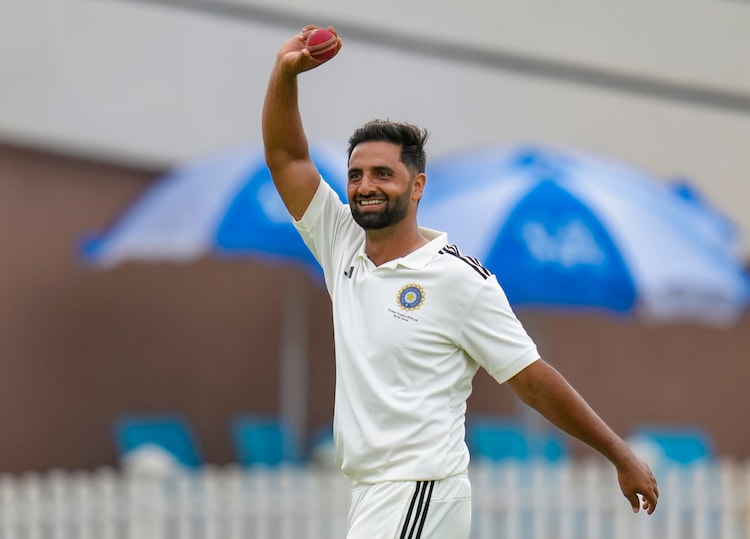
Nabi finished the Ranji Trophy campaign with 60 wickets in just 10 matches at an average of 12.56 and was named Player of the Tournament after helping Jammu and Kashmir secure their historic maiden Ranji Trophy title.
His season included several outrageous spells, including nine wickets against Bengal in the semifinal and a stunning 12-wicket haul against Madhya Pradesh in the knockouts.
Nabi’s rise had already been rewarded during the IPL 2026 auction when Delhi Capitals snapped him up for Rs 8.40 crore.
That is why many fans expected him to earn at least a maiden Test call-up against Afghanistan, especially with India resting Bumrah and looking at younger fast-bowling options.
Instead, selectors preferred Gurnoor Brar as the newer pace investment for now.
And almost instantly, Nabi’s omission became one of the loudest debates after the squad announcement.
More than anything else, this squad felt like India quietly fast-forwarding into the future.
While the senior core still remains intact, the selectors are very clearly beginning the transition phase ahead of the 2027 World Cup and a new Test cycle under Shubman Gill.
– Ends



