


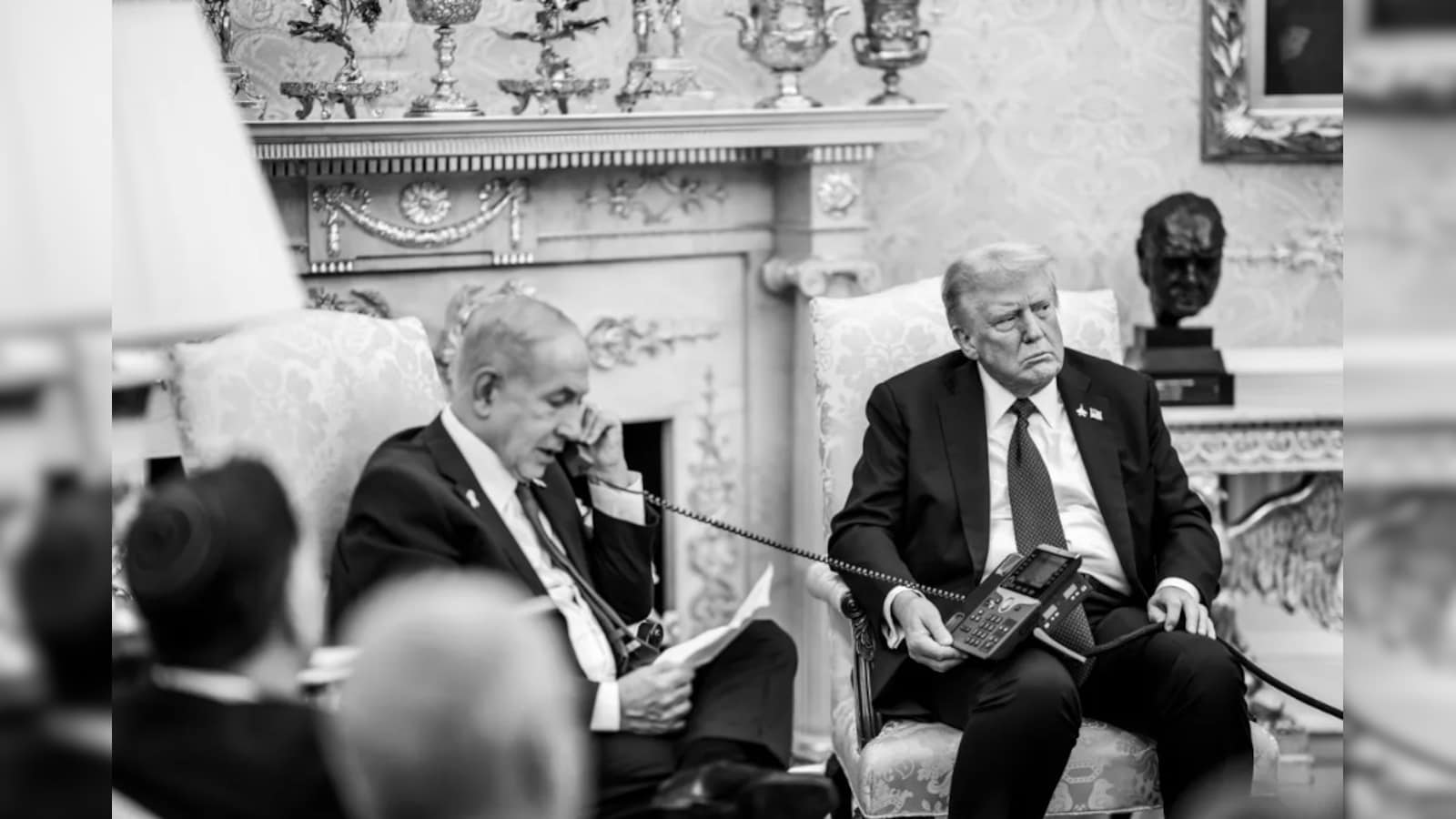
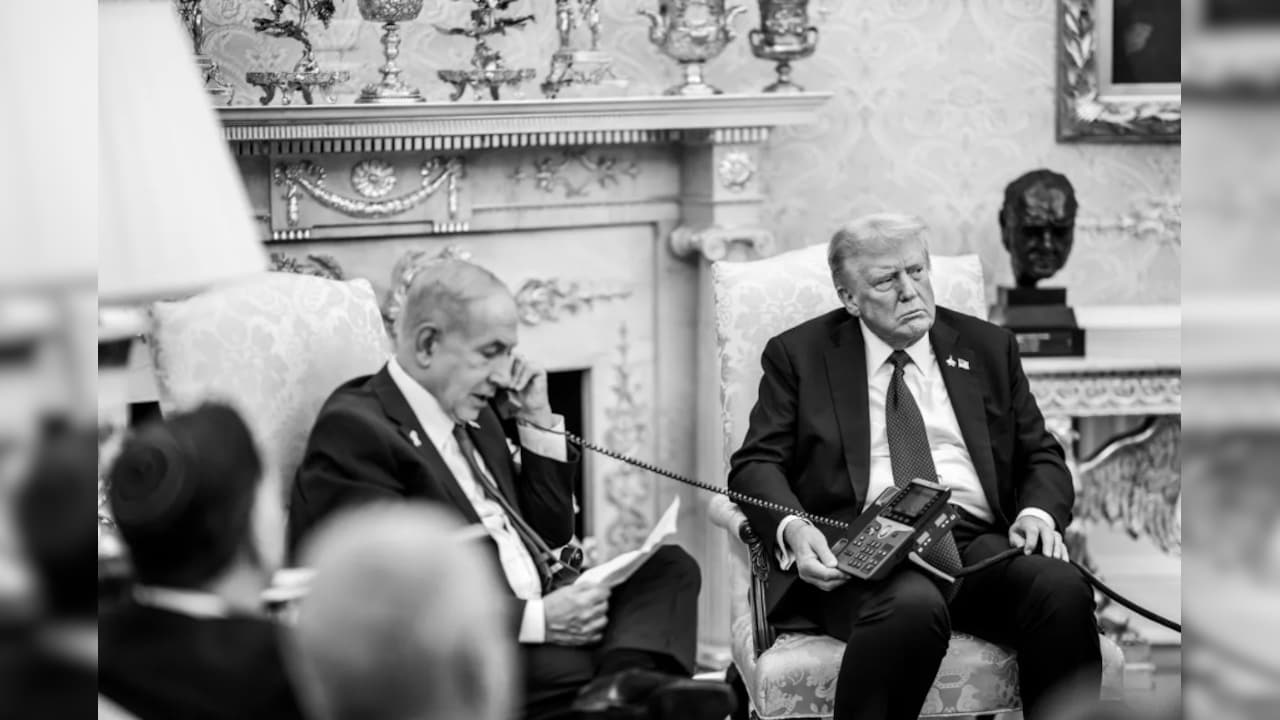
It was just over five months ago that President Trump invited Israel’s prime minister, Benjamin Netanyahu, to the White House’s Situation Room, a rare honour for a foreign leader. The highly classified event, attended by the top security teams of both countries, was arranged at Netanyahu’s request to persuade Trump to launch a joint military operation against Iran. The Israeli leader managed to convince the President that this was an opportunity for the US to secure a quick victory, similar to the one it achieved in Venezuela a month earlier. But that proved to be not only a major miscalculation but also the worst foreign policy decision by a US president in decades.
Trump is now so annoyed with Netanyahu that he doesn’t even want to meet him. After failing to get an appointment with the President, the Israeli leader had to cancel his planned Monday visit to Washington. In recent weeks, Trump has humiliated Netanyahu by calling him ‘crazy’ and using expletives during phone calls. Last month, he told the Financial Times, “I call all the shots.” Referring to Netanyahu, he added, “he doesn’t call the shots”. It is a remarkable fall from grace and power for the veteran Israeli leader, who, for over three decades, openly confronted and sometimes even lectured US presidents, without jeopardising his position or damaging Israel’s special relationship with the United States. But that has now changed.
Shifting US Opinion
For the first time since the State of Israel’s establishment in 1948, the US political consensus in Israel’s favour is under the most serious strain, largely due to Netanyahu’s actions. Last week, more than 100 Democratic members of the House of Representatives (about half of their strength) voted to end $3 billion in military and humanitarian aid to Israel. Although the proposal was defeated, prominent Democrats, including Nancy Pelosi, Katherine Clark of Massachusetts (the minority whip), and Ro Khanna, backed it. Israel has been the largest recipient of US foreign aid since World War II, receiving over $300 billion between 1946 and 2025. The proposal to cut aid was intended as a protest against the actions of the Israeli government in Gaza, the West Bank, and Lebanon. Israel can’t survive without military and economic aid from the United States.
A week earlier, Rahm Emanuel, chief of staff in the Obama White House and a potential Democratic Party nominee for the 2028 Presidential election, delivered a stern message to Israel. Emanuel, who is Jewish and whose father was born in Jerusalem, told Tel Aviv University that the US-Israel alliance “can not stand or survive as it has been” and needs significant changes and a new direction. He attacked Netanyahu’s leadership, which he said had turned Israel into a “territorial pariah”, adding that America’s “unconditional support has allowed you to deny food and medical relief to innocent Palestinians in Gaza, leaving the world to conclude that Israelis not only want to kill Palestinians, but are completely indifferent to their death, to their destruction and completely indifferent to their suffering”.
Even sections of the Republican Party, which were earlier staunch supporters of Israel, are now openly critical of its government. The Vice President, JD Vance, who warned Netanyahu a month ago that President Trump was Israel’s only ally, last week accused it of funding a campaign to manipulate US public opinion about the Iran war and to undermine negotiations to end the conflict.
These developments reflect shifting public opinion in the United States about Israel, particularly since Netanyahu’s disproportionate military campaign in Gaza following the Hamas attack on October 7, 2023. More than 72,000 Palestinians were killed in that campaign. In February, a Gallup survey found – for the first time in the poll’s history – that more Americans now sympathise with Palestinians than with Israelis,. In April, a Pew survey found that 60% of Americans have an unfavourable view of the Israeli government. The survey also found that, across both political parties, majorities of adults under 50 now rate Israel and Netanyahu negatively. Among Democrats, the figure was 84%.
Trump-Netanyahu Bromance
Soon after taking office, Trump announced a plan to ‘relocate’ Palestinians from Gaza to new homes elsewhere and presented a stunning proposal. He suggested that the US would take ownership of the strip and build what he called the “Riviera of the Middle East”. Netanyahu was thrilled, as it gave him a political lifeline. However, Trump soon realised the plan was unrealistic, and the Gaza war was becoming increasingly unpopular in the US. With some Israeli hostages still held by Hamas, the dealmaker in Trump saw an opportunity. Within months, he presented his 20-point peace plan for Gaza and imposed a ceasefire on both Israel and Hamas. This marked the first setback for Netanyahu, who wanted the conflict to continue.
Lasting Damage
But Netanyahu had a bigger plan: to invade Iran. He had been trying to persuade American presidents to attack the Islamic Republic for more than three decades, but all had turned down the idea, except Trump. The Israeli leader had already convinced him during his first term to abandon the 2015 Iran nuclear deal, the Joint Comprehensive Plan of Action (JCPOA), negotiated by President Obama. In June 2025, Trump decided to bomb Iran’s nuclear facilities during the war started by Israel, even though the US and Iran were negotiating a new nuclear agreement at the time. The US decision to join Israel’s war in February was seen in Israel as a major success for Netanyahu.
But as we know now, the war has trapped Trump, forcing him to sign a humiliating MOU with Iran, which has emerged as a more radical and uncompromising country. Tehran now has leverage to halt a fifth of the world’s energy supplies passing through the Strait of Hormuz. No wonder Trump is frustrated and angry with Netanyahu. It’s been even worse for Israel, making the Jewish nation more insecure and destroying Netanyahu’s Mr Security brand at home. One of his war aims was to gain popularity and get re-elected in the October elections. But that now looks increasingly unlikely as Netanyahu is blamed for the debacle in Iran. Two opinion polls published in the past few days in Israel predict a narrow victory for the opposition in the upcoming election. One poll gives Netanyahu’s coalition only 48 seats in the upcoming election, while another gives it 50, still short of the 61-seat mark for a majority in the Knesset.
Netanyahu’s Questionable Record
The Iran war is the culmination of a series of actions by Netanyahu over the years that have harmed Israel’s reputation overseas and damaged its special relationship with the United States. He stalled the peace process mediated by President Bill Clinton, which led to the Oslo Accords signed in 1993 by his predecessor, Yitzhak Rabin, with the late PLO leader, Yasser Arafat. He used the Hamas attack on Israel to launch the Gaza war. An AP-NORC poll earlier this month found that about one-third of US adults – including roughly half of Democrats – believe Israel has committed genocide against Palestinians in Gaza. Netanyahu faces an arrest warrant from the International Criminal Court in The Hague over these allegations. On Saturday, New York’s mayor, Zohran Mamdani, told The New York Times that he was considering ordering Netanyahu’s arrest when the Israeli leader visits the city to address the UN General Assembly in September.
Over the years, Netanyahu has pushed back against American pressure to build Jewish settlements in the occupied West Bank. His government is often accused of complicity in the escalating violence by settlers against Palestinians. Last week, a new UN report declared: “Settler violence is state violence.” It detailed how Israel has used settlers to advance annexation efforts, while systemic impunity for perpetrators ensured the violence grew unchecked. But the Israeli military commander in the West Bank, Major General Avi Bluth, told settlers he “appreciated their work” and considered them partners with the military.
Will Israel Adapt To The New Reality?
The Israelis are concerned about their growing international isolation and the erosion of vital support in the United States. Yet the Netanyahu government seems undeterred. On Saturday, it announced plans for three illegal settlements in Gaza and more than $400 million in funding for construction in the West Bank. Israel has not completely lost America, as last week’s US Congress vote to end aid to Israel shows. Israel has the most powerful and organised lobbying groups in the United States. It has hired at least six firms in the US and set aside a budget of $700 million for 2026 to improve the country’s image in the US and other countries. Netanyahu personally remains in touch with popular American media groups, such as Fox News.
But the Israel-US relationship is unlikely to remain the same, whether Netanyahu wins or loses the October election. Trump has not endorsed him, another sign that their bromance is over. But one can’t predict Trump. Democrats are already demanding radical change to America’s Israel policy. Even Republican voters are not in favour of the status quo. Trump’s decision to join Netanyahu in the Iran war has only reduced their sympathy for Israel. Vance, who opposed the Iran war from day one, is well aware of the shift in US public opinion. This is important because he is the frontrunner for the Republican Party’s presidential nomination in 2028.
The escalation of the US-Iran conflict over the past week and the new US military buildup in the region are matters of concern for India and the rest of the world because of their economic implications. These developments may please Netanyahu, who has opposed the US decision to end the war. But the escalation should not be seen as America’s support for Israel’s war aims. Trump is now pursuing his own objectives, the most important of which is the reopening of the Strait of Hormuz. Sooner or later, Israel will have to face the writing on the wall.
(Naresh Kaushik is a former editor at the Associated Press and BBC News and is based in London)
Disclaimer: These are the personal opinions of the author



