


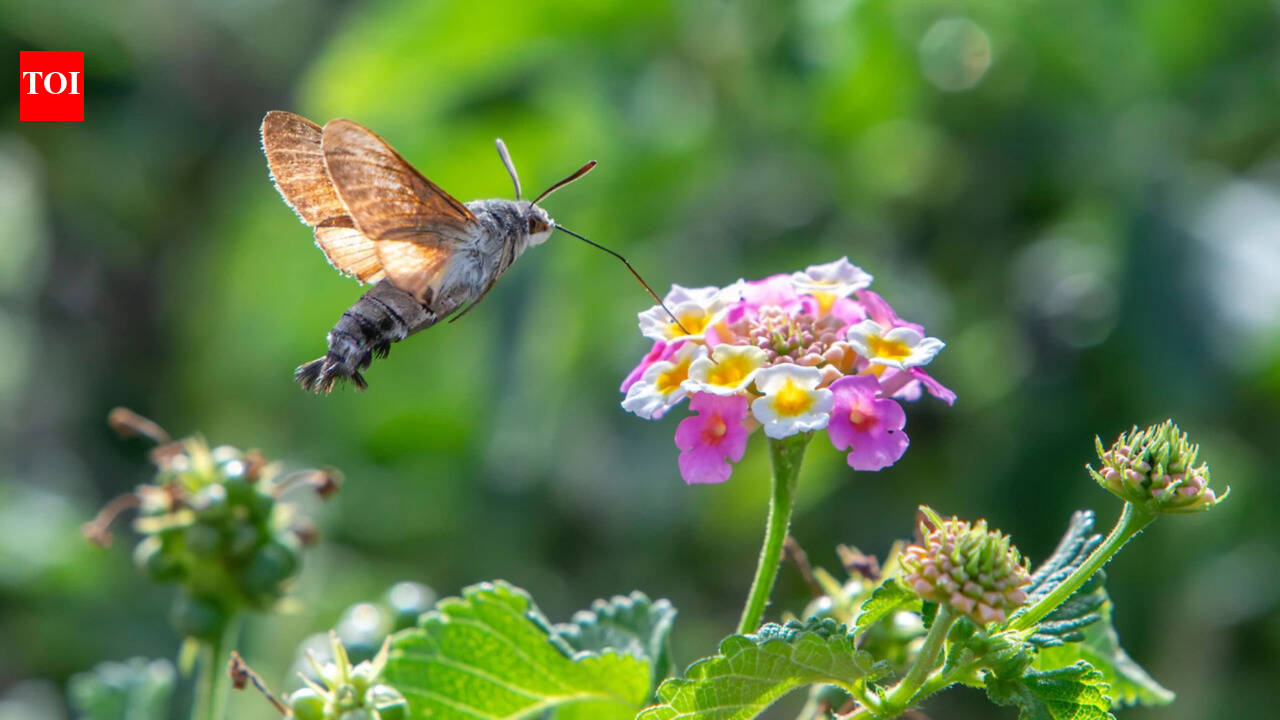
Hummingbird hawkmoths may have their own version of being left-handed or right-handed, using one preferred eye and one side of their long feeding tube together to search flowers for nectar.The discovery, made by a team of biologists at the University of Konstanz, shows how creatures with small brains save mental energy when making precise physical movements.In a study titled Conservation of a lateralized visuomotor axis in hawkmoth proboscis probing, published in the Proceedings of the National Academy of Sciences (PNAS), researchers Lochlan Walsh and Anna Stöckl tracked how these day-active insects check food sources while hovering in mid-air.Humans regularly favour one hand for writing or one foot for kicking a ball, a physical preference known as lateralization. Animals ranging from birds to octopuses show similar preferences with their arms, legs, or antennae. The Konstanz team wanted to test if this preference also applies to single organs located in the middle of the body, like a moth’s long feeding tube, called a proboscis.
Tracking feeding tube movements in detail
To test their idea, the scientists placed hummingbird hawkmoths near artificial flowers. High-speed cameras and computer tracking software recorded the insects’ exact movements relative to the middle of their bodies.The recordings showed that individual moths consistently swung their proboscis towards either the left or right side of their body while searching for nectar. The strength of this side preference varied between insects, matching the differences seen in human handedness.Importantly, this side preference appeared immediately during the moths’ very first try on the flowers, rather than developing later through practice.“This suggests that proboscis lateralization is an innate trait and that it plays an important role in guiding the moths’ flower-inspection behavior,” says Stöckl.
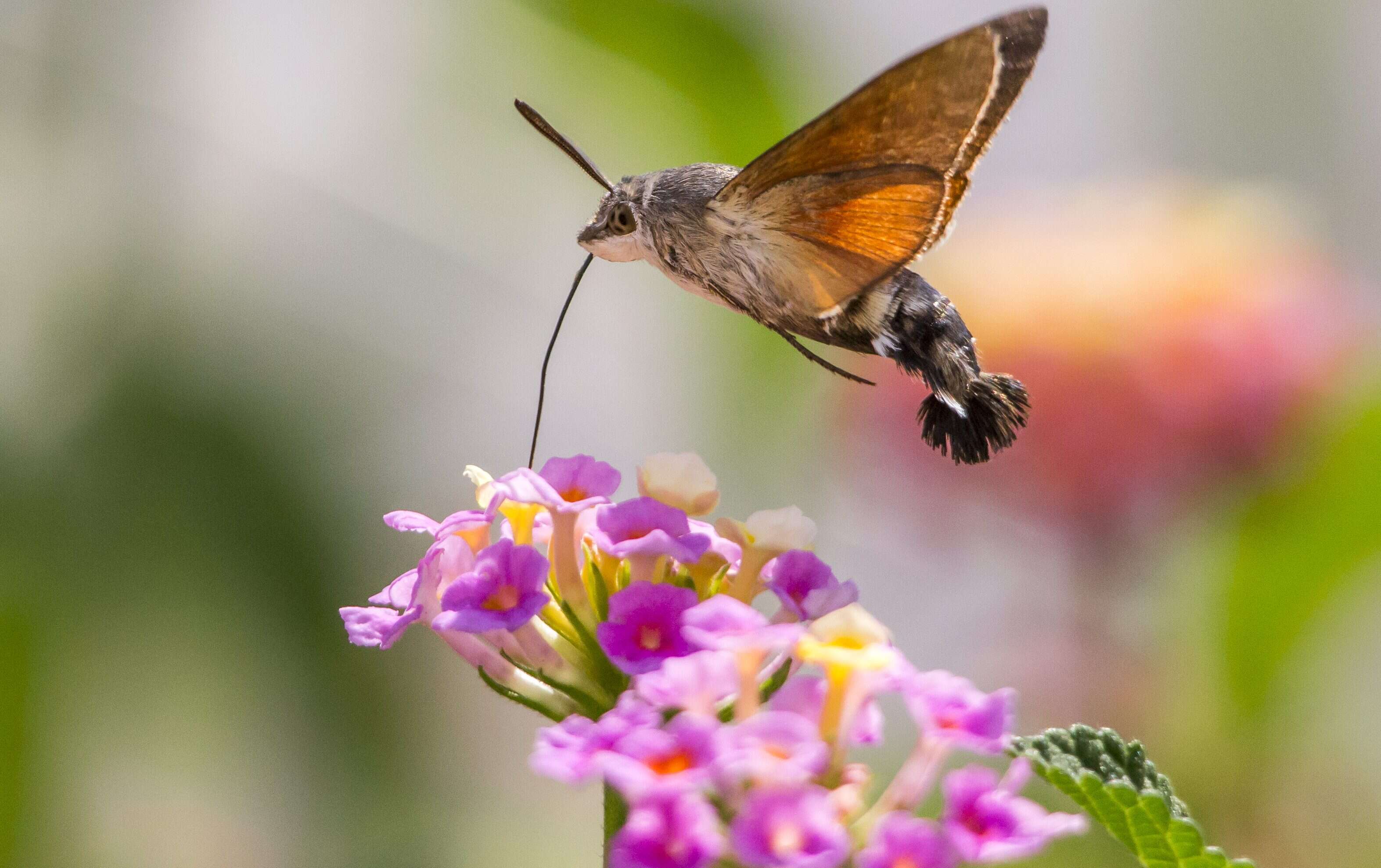
The confusingly enormous hummingbird hawk-moth that looks set to become a regular fixture in British gardens
Matching vision with touch
By creating computer models of what the insects see, the researchers found that each moth matched its favoured proboscis side with a dominant eye. Whichever side the proboscis leaned towards, the matching eye kept a direct view of the part of the flower being touched.“Insects have quite small brains. Aligning the proboscis with the visual field of the dominant eye can save valuable processing capacity when controlling behavior. Rather than constantly recalculating a movement from every possible angle, the animal can rely on a familiar side of its body to guide its actions,” Walsh explains.This internal alignment became even clearer when researchers covered part of a moth’s main eye. Larger animals usually adapt to partial sight loss by moving their limbs into the view of their open eye. The hawkmoths took a different approach.“Humans or birds would adapt in such a situation by moving their limb into the visual field of the unobstructed eye. Hummingbird hawkmoths, by contrast, adjust their body position on the flower so that they can view it with the uncovered portion of the dominant eye and preserve their original eye-proboscis strategy,” Walsh says.
Processing shortcuts in simple nervous systems
The findings show how physical adaptations can solve hard movement tasks without needing a larger, energy-heavy brain.“Instead, animals can rely on efficient shortcuts built into the relationship between the body, the senses and movement,” Stöckl explains.By pairing a main eye with a preferred feeding side, the insect creates a fixed visual-motor system that simplifies flight and feeding adjustments while flying.“Each moth solves the challenge of flower inspection through the side preferences of its own body. Our study therefore suggests that lateralization may be one of nature’s ways of simplifying difficult tasks—whether that task is reaching for a coffee cup or using the proboscis to search for nectar while hovering in front of a flower.”
Visual feedback and flight mechanics
Beyond their natural side preferences, hummingbird hawkmoths rely on live visual feedback to direct their feeding tube. While humans use their eyes to guide their fingers toward a door handle, these daytime insects use constant sight to track and fine-tune their proboscis movements while searching for nectar inside flowers.When scientists covered a moth’s eyes so it could not see its own proboscis, the insect could still touch the flower using physical contact. However, without sight, the moth stopped checking the clear shape patterns on the petals, making its search for nectar much slower.The species Macroglossum stellatarum faces a unique movement challenge because its proboscis is roughly the same length as its entire body. High-speed camera footage showed that the proboscis itself can only move forwards and backwards by about 1.5 centimetres, with very little side-to-side movement.To line up its proboscis with a target, the moth makes main position changes by steering its whole body in mid-air. It uses the tiny movements of the proboscis purely to probe the flower’s surface. This mix of whole-body flight adjustments, precise proboscis control, and side-specific eye targeting helps the insect feed efficiently while hovering.



