


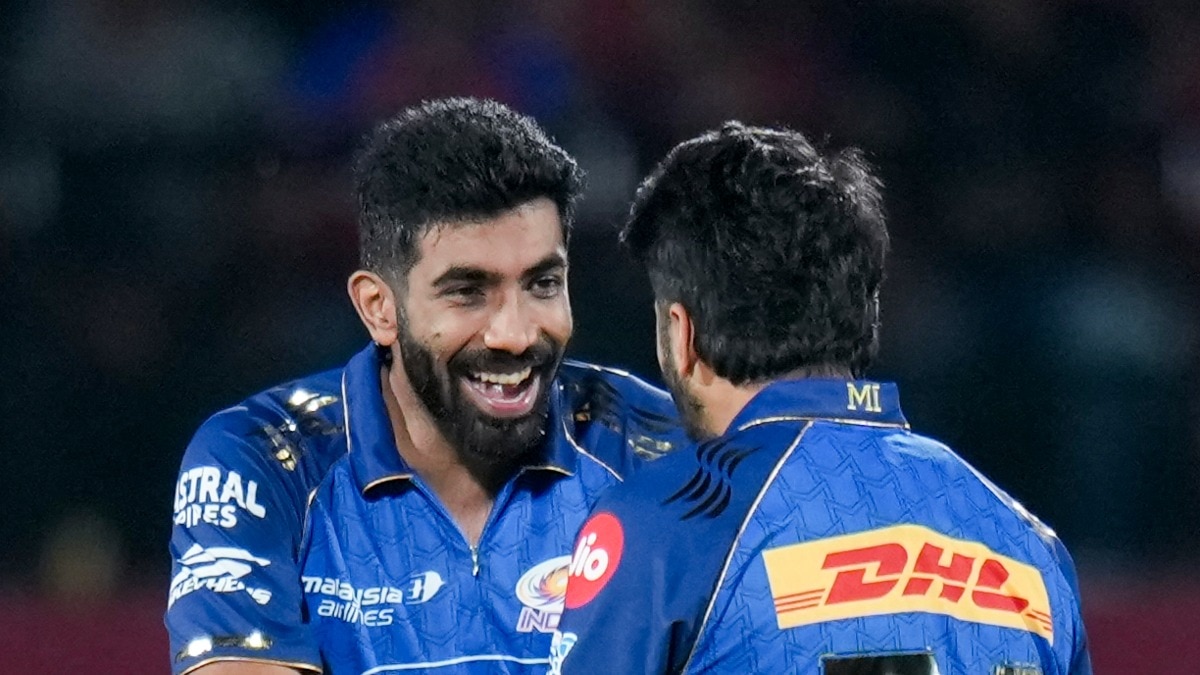
So, is there a scope for bowling captains in the IPL, especially in the Impact Player era, where the margin of error is thinner than the last strip of snow on the Dhauladhars in late summer?
Most people would tell you no. Everything about modern T20 cricket — the willow thickness, the boundary ropes hauled in, the bats that weigh nothing and hit everything, the Impact Player rule that brings in a fresh batter to tilt the scales just when the bowlers need a break — conspires to make the bowler feel like a man fighting a flood with a mop. PBKS vs MI: HIGHLIGHTS | SCORECARD
And yet, on Thursday evening under a darkening Dharamsala sky, with the mountains watching and Mumbai Indians playing out the dead rubber of their season, Jasprit Bumrah picked up a captain’s armband for the first time in his IPL career and made a compelling, perhaps irresistible case for himself.
He did not take a wicket. He did not need to.
THE ROAD NOT TAKEN
Let us start with the circumstance, because it matters. Hardik Pandya, still nursing his back, was unavailable. Suryakumar Yadav, the stand-in captain, was away for personal reasons. Mumbai Indians found themselves with their third captain of the season. At the toss, Bumrah admitted with characteristic candour that he had not quite expected to become a Test captain before becoming an IPL captain. Let that breathe for a moment.
Because there is a larger, more uncomfortable question buried inside that admission. When Mumbai Indians decided to move on from Rohit Sharma as captain after the 2023 season, they had a readymade solution, standing right there, angling in from around the wicket, looking at the field, reading conditions the way most people read a menu — at a glance, instinctively, correctly. They went with Hardik Pandya instead. Three seasons later, the post-mortem writes itself. And on a Thursday night in Dharamsala, they handed the armband to the man they had perhaps always needed.
The IPL cut a broadcast package on Bumrah’s captaincy on Thursday. Not his yorkers. Not his wrist position. His captaincy. That, in itself, is something.
WAR ON TWO FRONTS
The numbers, if you want them, are not kind to bowling captains in the Impact Player era. Since 2023, only Pat Cummins — with a positive win-loss ratio of 18-16 — has kept his head above water. The era has tilted so far in the batters’ favour that asking a specialist bowler to captain is, in some eyes, asking him to fight a war on two fronts. He has his own overs to think about. His own rhythm. His own run-up, his own plans, his own doubts on a difficult surface.
But flip that argument over, and something else falls out. Yes, he is carrying an extra load. Yes, the armband adds weight. But a bowling captain is also the only captain who truly knows what it feels like to run in when the game is slipping, when the batter is swinging from the hip on every delivery, when the field feels like it has been set for someone else’s match. He is not managing bowlers from a distance. He is one of them.
READING THE MOUNTAIN
The pitch at the HPCA Stadium on Thursday was not the typical Dharamsala featherbed. Fresh, slightly dry, with variables that the mountain air tends to exaggerate — the ball moving a little, holding its line at times, skidding through at others. Bumrah read it at the toss and chose to bowl. He expected the surface to settle in the second half. He was right. But the more important decision was what he told his bowlers to do in the first half.
“Holding your length was key,” he said after the match.
“Whatever we saw in the previous game, and reading this game, that was the plan — and credit to all the bowlers. They kept their nerve.”
Length bowling. Cross seamers. The corridor of uncertainty. Nothing exotic, nothing flashy — just the discipline of hitting a hard length relentlessly on a surface that rewarded it. The kind of plan that sounds simple and is anything but, especially in an era where batters are primed to smash anything fractionally full and pull anything fractionally short.
Bumrah bowled himself in the powerplay — two overs, 19 runs, no wickets, but the tone set. The new ball was his, as it should always be for any captain with his skill, and he used it to establish the terms of engagement. Then he stepped back and did something rarer: he gave the ball away, stood at mid-off, and talked.
THE WHISPERS WORK
The first plan to bear fruit was Deepak Chahar’s. Coming around the wicket in the final over of the powerplay, he used the angle to bring the ball in sharply with the pitch — a length delivery that Priyansh Arya, in dangerous touch and looking to make the most of the field restrictions, simply could not keep out. The ball went through him and into the stumps. It was premeditated, precise, and it had Bumrah’s fingerprints all over it — a captain’s thought, executed by a bowler who understood it completely.
Bumrah, already stationed at mid-off, did not need to walk far to celebrate.
Shardul Thakur, recalled to the XI in place of Allah Ghazanfar, had been away from the playing eleven for a while. Comebacks in T20 cricket are rarely gentle. The format does not do sentiment. But Bumrah had been talking to Shardul before the match, and the conversations continued on the field — between overs, at mid-off, in those brief, charged seconds when a bowler walks back to his mark and the captain falls in step beside him.
“With Jassi, I have my comfort level with him,” Shardul said after the match. “We had a lot of discussions. He has never shied away from sharing ideas.”
Those ideas yielded four wickets. Shardul bowled cross-seamers into the pitch, making the ball skid and hold its line in a way that the Dharamsala surface quietly encouraged. He had Prabhsimran Singh miscue to deep third in the 12th over. Two balls later, a cross-seamer that straightened just enough beat Shreyas Iyer — who thought he had it covered — and pinged the off-stump. Iyer could not believe it. Shardul did not look surprised at all.
Then came the young ones — and this is where Bumrah’s captaincy revealed its most important dimension.
Raj Angad Bawa had had a difficult evening in Raipur a few days earlier against Royal Challengers Bengaluru. He was retained in the XI — a decision that could have gone either way — and he repaid the faith with a delivery that deserves to be replayed. A cross-seamer, pitched on a good length, that held its line and bowled Cooper Connolly through the gate for 21. Bumrah, who had spent much of the evening close to Bawa at mid-off, talking him through the conditions, beamed. It had the look of a well-laid trap, because it was.
A FRIEND IN NEED
Shardul explained what it is like to bowl in Dharamsala when the game keeps shifting — and, by extension, what it means to have a captain who understands every word of what you are going through.
“There were too many ups and downs in this game,” he said.
“In the powerplay, we started really well, but then in the backend, runs were flowing. In the middle overs, we pulled them back. But again, at the death, a few runs were scored. The same with our batting. The tempo was constantly changing. So as bowlers, it’s difficult to keep coming back and bowling good deliveries. If there is a shift in tempo, you are thinking — what are my shut-down options? Suddenly there’s a fall of two or three wickets, then you have to look for wickets. There were too many switches in the game. Bowlers had to switch their mindset quite a lot.”
There were too many switches. In that sentence lives the entire argument for why bowling captains — thinking bowling captains, bowlers who have stood in these shoes and felt the helplessness of a shifting tempo — are not a liability in the Impact Player era but a necessity. Because who else will tell you what to bowl when the game turns on its head for the fifth time in ten overs? Who else will see it happening before it happens, and walk across from mid-off to say: stay with your length, this pitch will do the rest?
Michael Clarke, watching from outside the boundary, put it with the economy of someone who has seen enough cricket to know when to stop talking: “Aggressive. Underrated. Bumrah is tactically very good, always looking for wickets. He has shown that tonight.”
Always looking for wickets. Even without taking one.
Punjab Kings were 147 for 7 after 17 overs. The lower order then plundered 53 off the final three, dragging them to 200. Bumrah conceded 12 in the last over, a touch expensive, but he would have known, long before the final ball was bowled, that 200 was still attainable.
Tilak Varma’s unbeaten 75 off 33 deliveries hogged the morning headlines, as it richly deserved to. But the Play of the Day belonged to a man who stood at mid-off for most of the evening, said the right things to the right people at the right moments, and trusted his bowlers to execute the plans.
A lot has been written this season about Bumrah’s bowling form — one bad run in a career full of exceptional ones. He has every right to one difficult season. But nothing was spoken about it on Thursday, not even with his name absent from the wickets column. When your captain bowls intelligently, sets the tone, reads the pitch, and then becomes a friend standing beside you as you run in — the wickets take care of themselves.
Mumbai Indians may have been playing for pride on Thursday. But in Jasprit Bumrah, they may have accidentally stumbled upon their future. The question is whether they are wise enough this time to see what was always standing right in front of them — not at fine leg, but at mid-off, armband on, whispering.
IPL 2026 | IPL Schedule | IPL Points Table | IPL Player Stats | Purple Cap | Orange Cap | IPL Videos | Cricket News | Live Score
– Ends



