


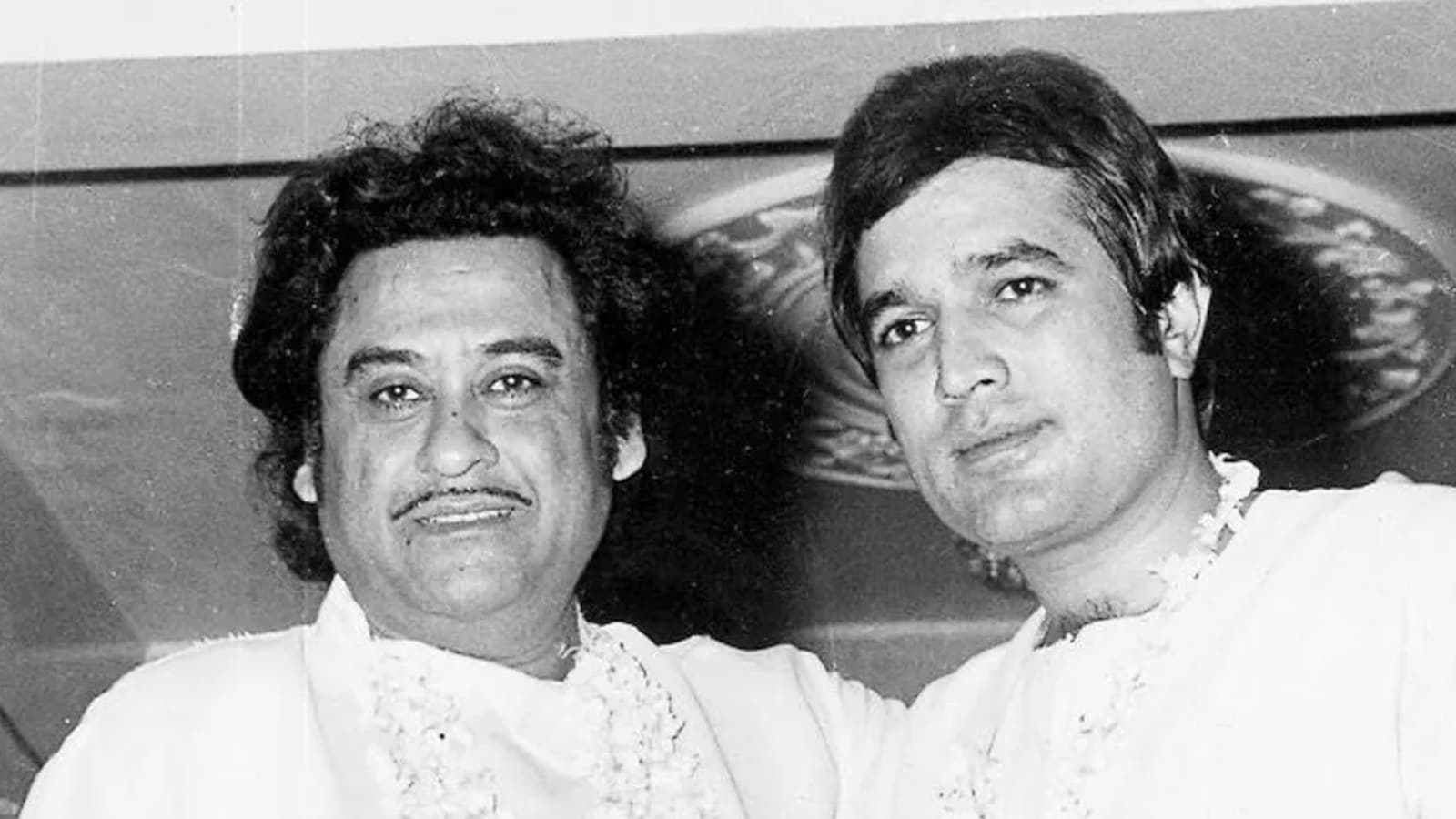
How things began to turn after 1965 – through a handful of songs, a winter night in Kolkata, and one Bengali melody – culminated in the 1969 coronation of the singing legend with Rajesh Khanna’s Aradhana that would last nearly two decades. Subhamoy Das traces one of the most extraordinary journeys in the history of Bollywood music on the 97th birth anniversary of Kishore Kumar.
There is a particular kind of nervousness that sits somewhere just below the sternum and refuses to go away. Kishore Kumar knew it intimately on the winter evening in 1967 when he stood backstage at the Rabindra Sarovar Stadium in Kolkata, waiting for his turn at a stage that Mohammad Rafi had already set on fire with a stunning rendition of Aaja Aaja Main Hoon Pyaar Tera.
“A vast, vast crowd,” Kishore Kumar would later recall in a radio conversation with Ameen Sayani. “Rafi Sahab, Hemant Da and other artists were presenting their songs one after another – wah, wah! I was waiting desperately, almost painfully, for my own turn to come. And in my heart, there was this fluttering nervousness. Who knows whether people will even like my singing? What sort of reaction will come from the audience?”
This is the story of how Kishore Kumar – known then mostly as a comic actor and an occasional voice for Dev Anand – became the undisputed king of Hindi film music. It is a story that is popularly thought to have begun with Aradhana (1969), from the overnight explosion of Mere Sapnon Ki Rani and Roop Tera Mastana. Because by the time Aradhana happened, the ground had already been laid, song by song, across four crucial years.
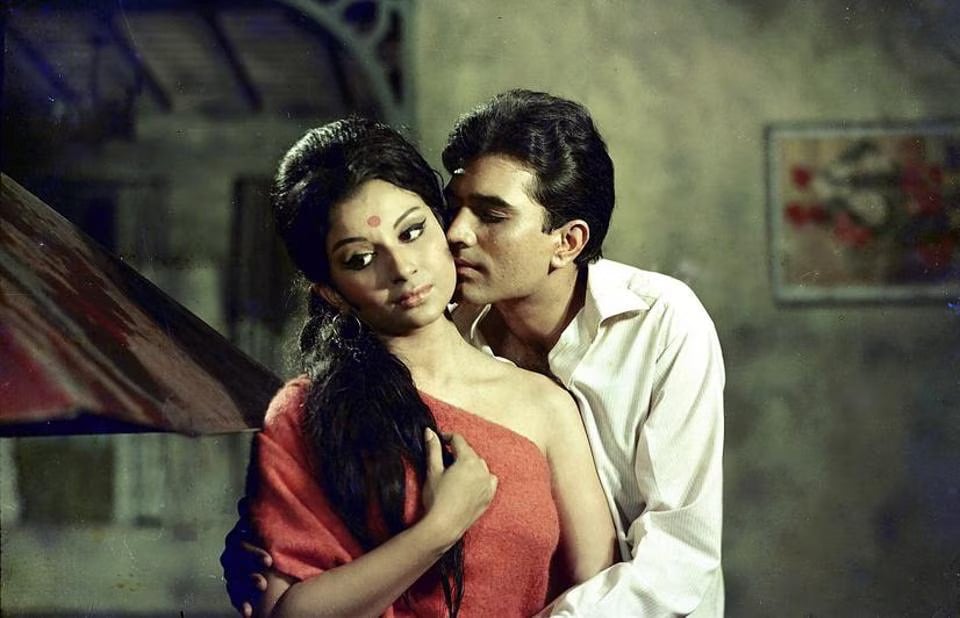
1965: The Return
The arc begins with Teen Deviyaan, in which Kishore Da resumed singing for Dev Anand after a long gap. In that era, the world knew him as a successful actor, a mast-maula entertainer who sang mostly for himself and occasionally for Dev Sahab. S.D. Burman and the Navketan camp, however, had always seen something deeper in him.
That something found its fullest early expression in Khwaab Ho Tum Ya Koi Haqeeqat. Kishore is not performing in that song – he is inhabiting the emotion. There is a softness in his voice, a quality of deep personal intimacy that travels without detour – straight into the listener’s heart. S.D. Burman had understood that Kishore Da was not confined to the comic register; he could make a romantic song feel like a private letter from someone who actually meant every word. That quality was going to become the most powerful instrument in Rajesh Khanna’s romantic screen persona.
Not to forget, that same year, Bhoot Bangla marked the beginning of another consequential relationship: Kishore Kumar sang two songs under the direction of the then-emerging R.D. Burman – early evidence of a creative partnership that would, in time, reshape Indian popular music.
1966-1968: Modernity, Star Appeal, The Complete Entertainer
Guide in 1966 revealed a new dimension: Kishore Kumar’s modernity. In Gaata Rahe Mera Dil, a song added as an after-thought, the singing carries a conversational warmth – a sense of someone humming from genuine feeling rather than formal performance. Young India heard it and claimed it instinctively as its own. S.D. Burman had arrived at a realization that would prove prescient: the new generation of a changing country was hungry for precisely this kind of voice.
Jewel Thief in 1967 then gave us star appeal with Yeh Dil Na Hota Bechaara – a song of infectious confidence, full of mischief and breezy swagger – not just skilled singing but an unmistakable personality, something that felt free, something a generation of young listeners was looking for in their popular culture. As luck would have it, senior Burman originally recorded Yeh Dil Na Hota Bechara in Rafi’s voice a year earlier for Baharen Phir Bhi Aayengi, which wasn’t finally used.
And Padosan in 1968 completed the picture. Mere Saamne Waali Khidki Mein felt precisely as though a real young man was humming out the most honest feeling of his heart. Then came Ek Chatur Naar – a showstopper pitting Kishore Da against Manna Dey, a colossus of classical singing – which demonstrated that he could pour acting directly into singing, his voice carrying physical humour, inexhaustible energy and an originality that simply cannot be manufactured. By the end of 1968, the public had not just noticed Kishore Kumar. They had claimed him.
The Night in Kolkata That Changed Everything
For all these individual triumphs, one event stands apart – a hinge on which the direction of Hindi film music publicly, audibly turned. And it happened before Aradhna was even released.
Backstage at Rabindra Sarovar Stadium that winter evening, Kishore Kumar did what he did with nervousness – he disappeared with it somewhere quiet. He was too wary of how the crowd would respond to his singing and whether they would accept him at all after Rafi had enthralled them with his hit songs. Here is how Kishore Kumar told the story himself:
“Turning all of this over in my mind, I quietly – stealing away from everyone’s eyes, slipping out unnoticed – went and sat alone near Dhakuria Lake… So, what happened? Sitting right there, I composed a song on the spot – and I decided then and there that I was going to sing it at the programme.
“It was a rather peculiar kind of song – I had made it in quite an unusual way. I thought – if I first warm the audience up a little, they will be happy. That song was: Aapnader sathe aamar ei prothom dekha. [“With you, this is my first meeting…”] And that song was so extraordinarily successful that the entire crowd began keeping beat, and singing and dancing along with me.” [He laughed.]
Then, when he struck the opening notes of his Bengali single Ek Din Pakhi Ure Jaabe – composed by R.D. Burman and written by Mukul Datta, released for Durga Puja that very year – the stadium erupted. Moments later something more striking happened: that vast crowd fell into profound silence, listening with total absorption, as though receiving something they hadn’t known they needed. The response, those who were there would say, felt like recognition – simultaneous acceptance of Kishore Kumar’s independent musical identity and of the emerging Kishore-Pancham partnership both at once. Ek Din Pakhi Ure Jaabe spread rapidly, soon becoming a talking point well beyond Bengal.
The Melody That Made a Difference
R.D. Burman could not leave that melody alone. He reworked it, reclothed it in Hindi, and presented it in 1969’s Pyaar Ka Mausam as Tum Bin Jaaon Kahaan – recording it with both Mohammad Rafi and Kishore Kumar. The same melody, the same words, two versions released simultaneously.
Both were accomplished. But what the public’s reception revealed was striking: a very large number of listeners found Kishore’s version more modern, more emotionally immediate, more personally affecting. The film had several popular Rafi songs. Yet the Kishore version lodged itself most stubbornly in listeners’ hearts. What was shifting was the listening landscape – a generation that wanted intimacy over grandeur, the sensation of being confided in rather than performed at. Kishore Kumar’s voice offered exactly that. And crucially, this shift had announced itself before Aradhana had released.
1969: The Year Everything Aligned
When Aradhana came, the question of why director Shakti Samanta chose Kishore was typically answered with a simple fact: Md. Rafi Sahab was away on a world tour, unavailable for a couple of months.” But Samanta’s fuller account – in a video interview – tells a more deliberate story, “We needed a song very urgently. Dada [Burman] wanted that song – and you know, these things are also a matter of destiny – he wanted Rafi Sahab to sing it. But Rafi was on a world tour and wasn’t going to be back in India for two months. So, I went to Dada and made a request: “Dada, Kishore has sung so many songs for you across so many different films, alongside Dev Anand – and this Rajesh Khanna is a new artist too. His voice hasn’t really been established yet in any particular direction. Why don’t we try with Kishore?” He thought about it and said – “All right, let’s call Kishore.” Kishore sang, two or three songs were recorded, and they came out beautifully. And even Dada felt – “No, you were right.” So, all of us came to feel that Kishore was simply the best fit for Rajesh Khanna.”
Rafi’s absence created the occasion, not the choice. Some researchers and biographers have recorded that Shakti Samanta was already personally impressed by Kishore’s rising popularity and his modern approach to singing well before production began. Teen Deviyaan, Bhoot Bangla, Guide, Jewel Thief, Padosan, Pyaar Ka Mausam – all of it had already proven, collectively, that Kishore Kumar was becoming the voice of the new generation. When the songs reached the public, the result was nothing short of an explosion.
Three songs – Mere Sapnon Ki Rani, Kora Kagaz Tha Yeh Man Mera, Roop Tera Mastana – became simultaneous national obsessions, with Roop Tera winning Kishore his first Filmfare Award (1970). Rajesh Khanna became Hindi cinema’s first superstar. And Kishore Kumar was installed, irrevocably, as the sovereign voice of an era that would last nearly two decades.
Aradhana did not create Kishore Kumar. It was the proclamation of a reign whose foundations had been quietly, stubbornly, and magnificently laid – in the solitude beside a Kolkata lake, in a stadium’s charged silence, in a Bengali melody that refused to stay within its own borders.
The name of that musical era was – and remains – Kishore Kumar.
_______________________________________
This article is part of an upcoming book on Kishore Kumar by the author.
ALSO READ | Battling Cancer, A Fractured Leg: How Rajesh Khanna Faced The Camera One Last Time



