


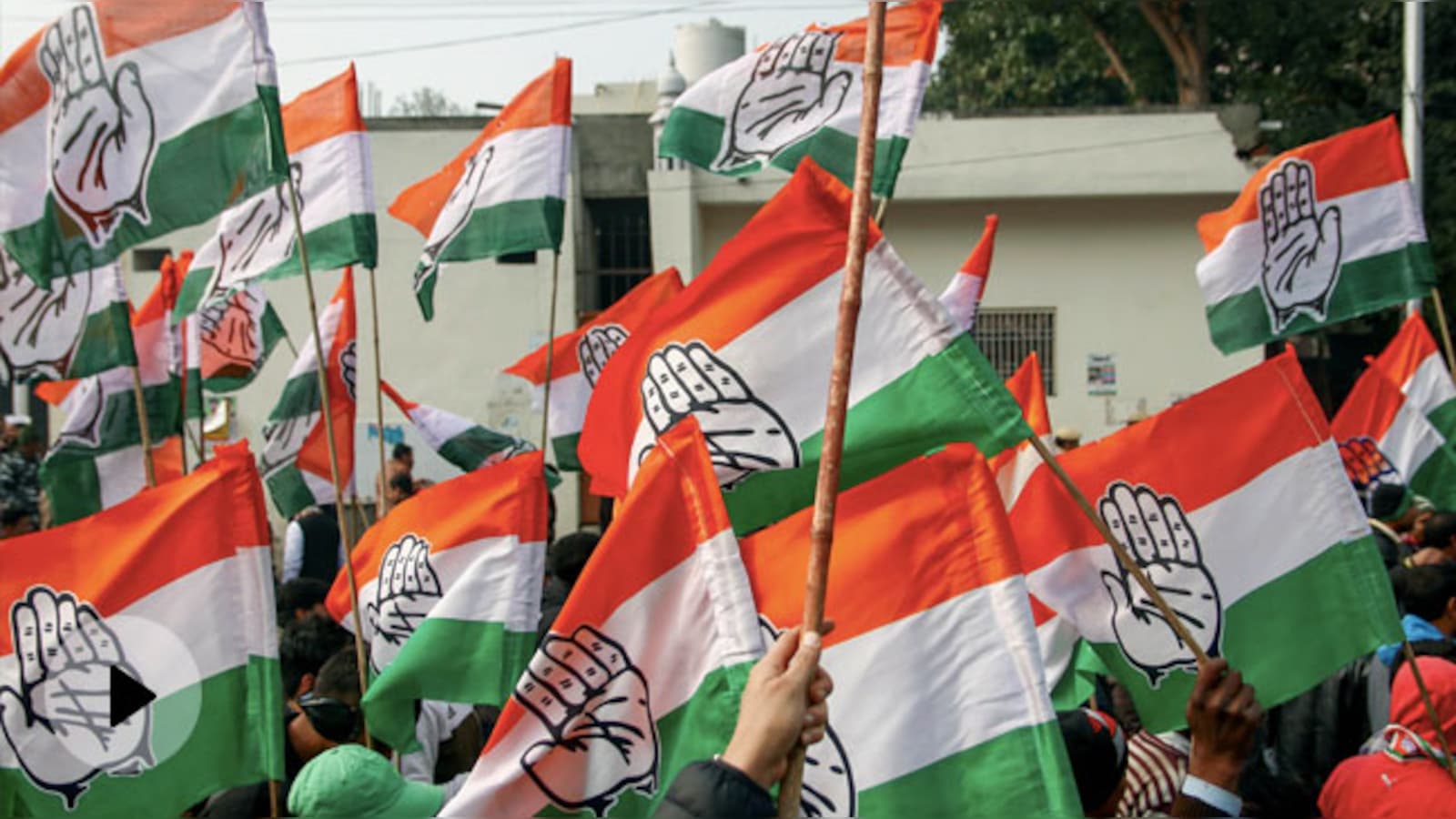
The Congress’ disappointing performance in Punjab’s municipal elections has once again brought its persistent factionalism to the forefront, with multiple senior leaders positioning themselves for key organisational and legislative roles ahead of the 2027 Assembly elections.
The ruling Aam Aadmi Party (AAP) swept the local body polls, winning 958 wards. The Congress managed to secure only 397 wards, reigniting concerns within the party over leadership, internal unity and electoral strategy.
The party’s sources say the results have intensified the ongoing power struggle within the Punjab Congress, where several leaders are projecting themselves before the high command for larger responsibilities.
The latest setback has revived questions over whether the party’s state leadership was able to effectively convert anti-incumbency sentiments against the Bhagwant Mann-led government into electoral gains.
Also read: Analysis: Punjab Civic Polls Signal Political Alignment Ahead Of 2027 Elections
Municipal Poll Results Trigger Fresh Leadership Questions
The municipal election outcome has sharpened internal debates over accountability and leadership within the Punjab Congress.
The sources indicate that several leaders have used the poll results to strengthen their respective claims before the party high command.
Questions have reportedly been raised over the organisational effectiveness of Punjab Congress chief Amarinder Singh Raja Warring, particularly after the party’s poor showing in Gidderbaha, his political stronghold, where the Congress won only two of the 19 wards while AAP secured victory in 17.
At the same time, leaders who delivered stronger performances in their respective areas are being viewed as emerging power centres within the party.
Former Chief Minister Charanjit Singh Channi’s camp points to Congress winning 10 of the 15 wards in Morinda Municipal Council, while senior leader Rana Gurjit Singh’s supporters cite the party’s victory in 31 of Kapurthala’s 50 wards as evidence of their organisational strength.
Meanwhile, sources close to Congress chief Amarinder Singh Raja Warring say the party high command has made it clear that there would not be any organisational change.
Also read: NDTV Exclusive: “BJP Will Win 1 Or 2 Seats In Punjab”: Bhagwant Mann’s Prediction In Writing
High Command’s Earlier Warning Against Groupism
The municipal poll outcome comes months after the Congress high command attempted to contain growing factionalism within the Punjab unit.
During a Political Affairs Committee meeting in New Delhi earlier this year, senior leaders, including Mallikarjun Kharge and Rahul Gandhi, reportedly expressed concern over public disagreements among Punjab leaders.
The meeting followed a public confrontation between Charanjit Singh Channi and Punjab Congress chief Raja Warring over issues related to organisational representation and leadership of Dalits vs the upper caste.
The leadership had also expressed displeasure over a letter jointly signed by around 35 Punjab Congress leaders seeking intervention from the high command, viewing it as an example of organised factional pressure.
The message from the central leadership was clear – internal disagreements should remain within party forums, and groupism would not be tolerated.
Multiple Claimants Emerge For Key Positions
Sources within the party say the struggle is no longer limited to the post of Punjab Congress president. Several leaders are also seeking greater influence in the organisational hierarchy and legislative setup.
Among the prominent Jat Sikh leaders being discussed for larger roles are:
- Leader of the Opposition Partap Singh Bajwa
- Sukhjinder Singh Randhawa
- Tript Rajinder Singh Bajwa
- Pargat Singh
- Sukhpal Singh Khaira
Supporters of Pargat Singh argue that his aggressive political style and organisational outreach make him a strong contender for future leadership responsibilities.
Sukhpal Singh Khaira’s camp highlights his vocal attacks on the AAP government both inside and outside the Assembly.
Meanwhile, supporters of Partap Singh Bajwa, Sukhjinder Singh Randhawa and Tript Rajinder Singh Bajwa emphasise their long-standing association with the Congress and organisational experience.
Caste Equations Central To Leadership Calculations
The party’s insiders say caste and social representation are expected to play a crucial role in any future restructuring.
Former Chief Minister Charanjit Singh Channi continues to project himself as the party’s strongest Dalit face, arguing for greater representation of Dalits within the organisation.
On the other hand, several Hindu leaders are also seen as contenders for larger responsibilities, including Vijay Inder Singla, Rana KP Singh and Bharat Bhushan Ashu.
The sources say any future leadership formula will likely attempt to balance Jat Sikh, Dalit and Hindu representation to avoid alienating key voter groups.
Speculation Over Leader Of Opposition Post
The position of Leader of Opposition has also become part of internal discussions.
While there is no indication of an immediate change, party insiders say that if Partap Singh Bajwa is assigned a larger organisational or electoral role, several names are being discussed as possible successors.
Those who are lobbying themselves are:
- Tript Rajinder Singh Bajwa
- Pargat Singh
- Rana Gurjit Singh
- Aruna Chaudhary
- Sukhwinder Singh Kotli
Sources say the final decision would depend on political, regional and caste considerations.
High Command Conducting Ground Assessment
According to Congress sources, the party leadership is also relying on independent feedback and assessment mechanisms to evaluate the popularity and organisational strength of Punjab leaders.
The exercise is aimed at understanding which leaders enjoy grassroots support and whether changes in the leadership structure can help reduce factionalism ahead of the 2027 Assembly elections.
Rahul Gandhi’s Message: Fall In Line
The growing infighting had prompted Rahul Gandhi to issue a public warning during a rally in Barnala earlier this year.
Emphasising teamwork over individual ambitions, Gandhi cautioned party leaders that personal rivalries could harm the Congress’s electoral prospects.
The remarks were widely interpreted as a message to Punjab leaders engaged in ongoing factional battles.
Haunted By The Lessons Of 2022
Congress leaders acknowledge that the scars of the 2022 Assembly election defeat remain fresh.
The bitter power struggle between the PPCC chief Navjot Singh Sidhu and Chief Minister Charanjit Singh Channi was widely blamed for weakening the party and benefiting political rivals.
Determined to avoid a repeat, the high command has adopted a cautious approach and is unlikely to project any chief ministerial face before the 2027 Assembly elections.
Also read: AAP Sweeps Punjab Civic Polls, Wins 862 Wards, Congress Distant Second
Factionalism Remains Congress’s Biggest Challenge
Although Punjab Congress in-charge Bhupesh Baghel has ruled out any immediate leadership change, the municipal election results have intensified internal conversations about accountability and future leadership.
With several senior leaders projecting themselves for bigger roles and multiple camps competing for influence, factionalism continues to be one of the biggest challenges facing the Punjab Congress.
For the high command, the task ahead will be to balance competing ambitions, accommodate social and regional equations, and ensure that internal rivalries do not overshadow the party’s preparations for the crucial 2027 Assembly battle.



 swept the local body polls, winning 958 wards. The Congress managed to secure only 397 wards, reigniting concerns within the party over leadership, internal unity and electoral strategy.)