


Gothenburg:
Prime Minister Narendra Modi’s first Sweden visit in eight years culminates in a landmark CEO roundtable, signalling a new chapter in India-Europe industrial partnership.
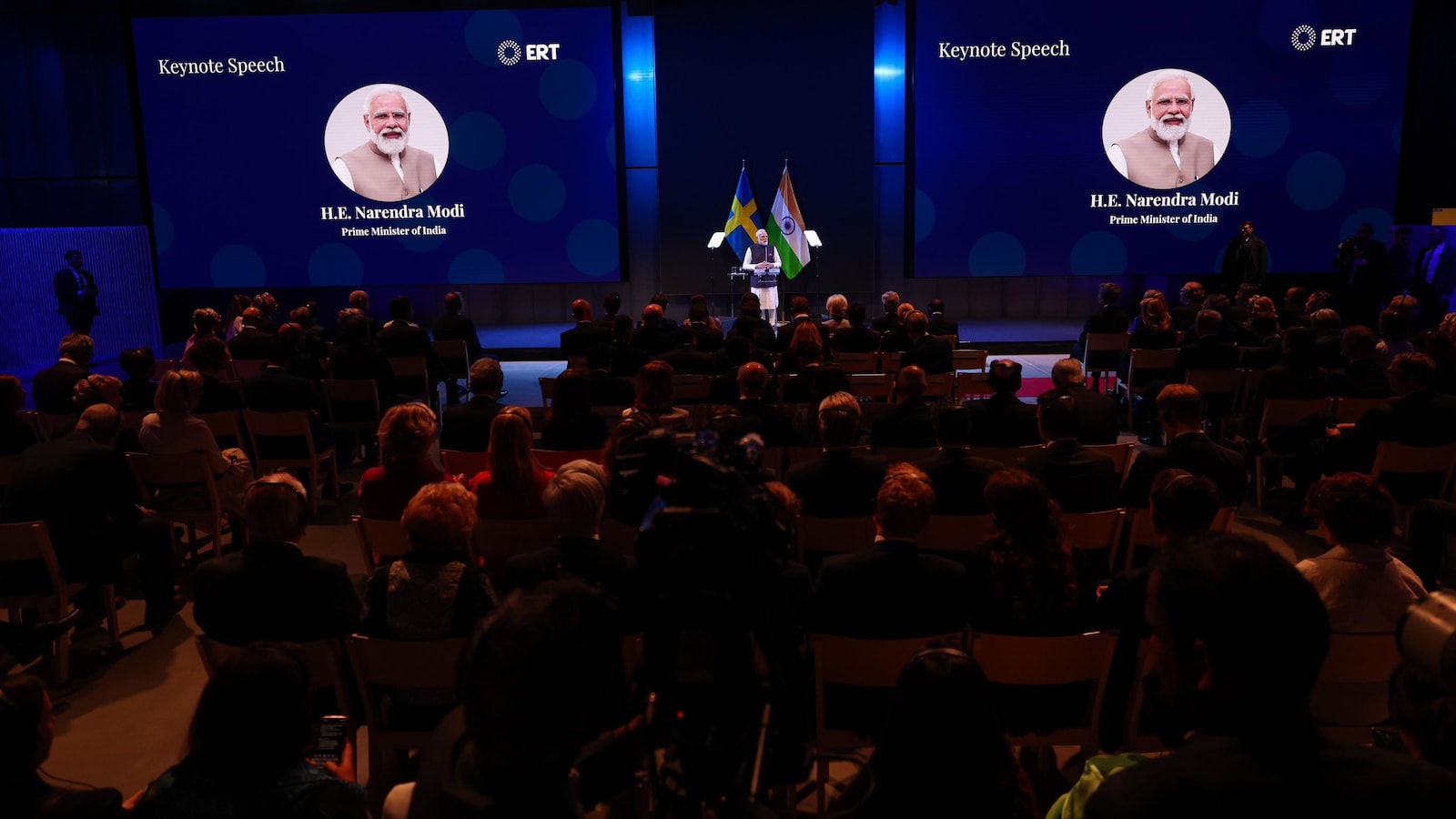
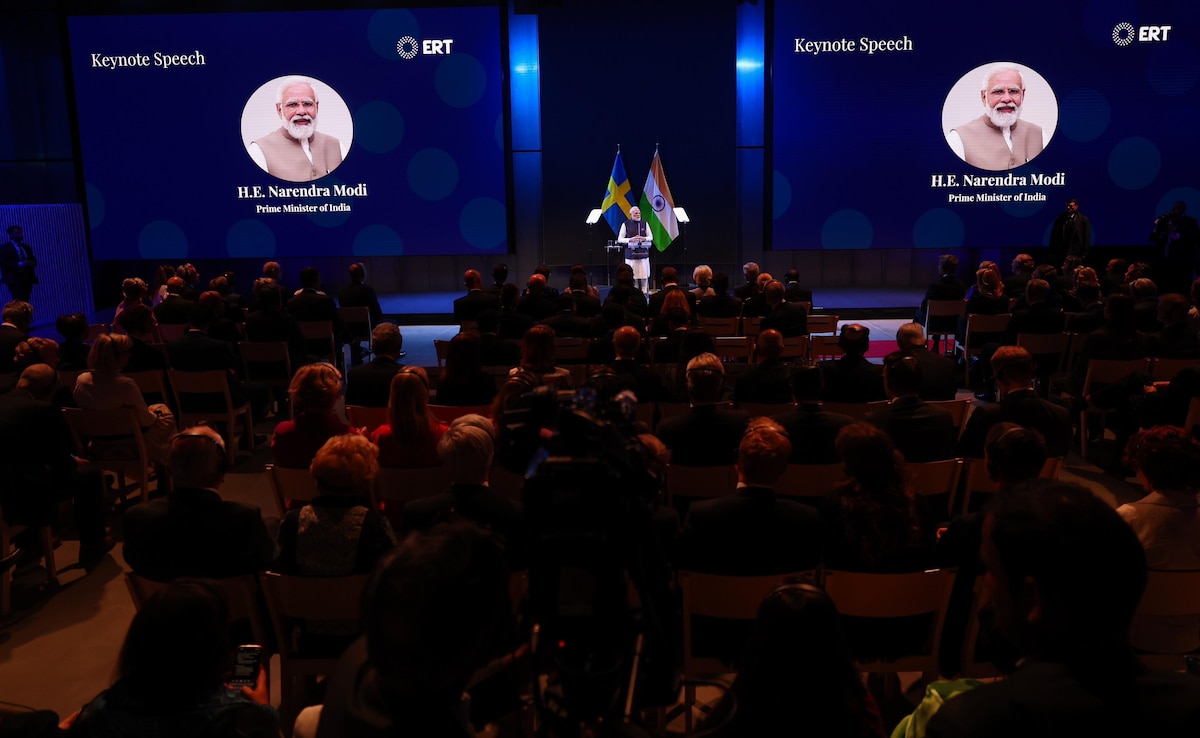
When Prime Minister Modi stepped into a high-profile roundtable in Gothenburg this week, he wasn’t addressing diplomats. He was speaking directly to Europe’s most powerful corporate decision-makers, and he came with a clear ask– bet on India, and bet big.
The event convened by the European Round Table for Industry (ERT), one of the continent’s most influential business forums, bringing together around 55 chief executives and chairmen of major European multinationals. Co-hosted with Swedish Prime Minister Ulf Kristersson and European Commission President Ursula von der Leyen, the Gothenburg session represented one of the most consequential business-diplomatic engagements between India and Europe in recent memory.
A Visit Eight Years In Making
PM Modi’s presence in Sweden carried symbolic weight beyond the boardroom. His last visit to the country was in April 2018, when he attended the inaugural India-Nordic Summit. The eight-year gap underscores just how much has changed — both in India’s economic standing and in Europe’s strategic calculus.
Sweden, which consistently ranks among Europe’s top performers on the European Innovation Scoreboard and invests over 3 per cent of its GDP in research and development, has in recent years taken one of Europe’s firmest positions on strategic de-risking from China. Having removed Chinese vendors from its telecom networks and tightened research-security norms, Stockholm increasingly views New Delhi not merely as an emerging market but as a consequential strategic partner in Asia. Bilateral trade in goods and services reached USD 7.75 billion in 2025, with over 280 Swedish companies already operating in India.
What PM Modi Told European CEOs
At the ERT roundtable, the Prime Minister laid out a structured five-sector framework for deeper India-Europe industrial collaboration, spanning telecom and digital infrastructure, artificial intelligence and semiconductors, green energy transition, infrastructure and mobility, and healthcare and life sciences. The assembled executives represented companies across all these domains — from Ericsson, Nokia and ASML, to AstraZeneca, Airbus, Volvo, Shell and ArcelorMittal.
PM Modi’s pitch was notably direct. He challenged every company in the room to make at least one new, concrete commitment to India within the next five years, promising government backing for each flagship project. “The Indian government will back every single one of them,” he said.
To institutionalise the relationship, he proposed an annual India-Europe CEO Roundtable, sector-specific working groups, and the creation of an ERT India Desk to support both existing and prospective investors.
A Partnership Built On Recent Breakthroughs
The Gothenburg meeting was not taking place in isolation. It followed a series of landmark developments in India-EU relations, most notably the conclusion of the long-awaited India-EU Free Trade Agreement — described by officials as the “Mother of all Deals” — alongside a new Security and Defence Partnership, a Mobility Agreement, and an active India-EU Trade and Technology Council.
On the bilateral front with Sweden specifically, the two countries signed a Statement of Intent for the Sweden-India Technology and AI Corridor (SITAC), covering cooperation in 6G, artificial intelligence, quantum computing and life sciences. The initiative has tangible momentum behind it — over 80 Swedish companies participated in the AI Impact Summit 2026, while LeadIT 3.0, co-launched by India and Sweden, now counts 50 members across 18 countries.
Defence ties are deepening too. Saab is constructing its first Carl-Gustaf manufacturing plant outside Sweden at Jhajjar in Haryana — India’s first fully foreign-direct-investment-driven defence manufacturing project. Sweden’s status as home to some of Europe’s largest critical mineral deposits also opens a natural axis of cooperation on supply-chain resilience for electric vehicles, semiconductors, and defence electronics.
The Bigger Stakes
PM Modi reminded his audience that India is now the world’s fastest-growing major economy, home to 1.4 billion people, the third-largest startup ecosystem globally, and a country that has spent over a decade restructuring its business environment through sweeping reforms — from GST and the Insolvency and Bankruptcy Code to production-linked incentive schemes and significant FDI liberalisation.
For Europe’s industrial leaders gathered in Gothenburg, the message was unmistakable: the window for early-mover advantage in India is open, and it will not stay open indefinitely.



