


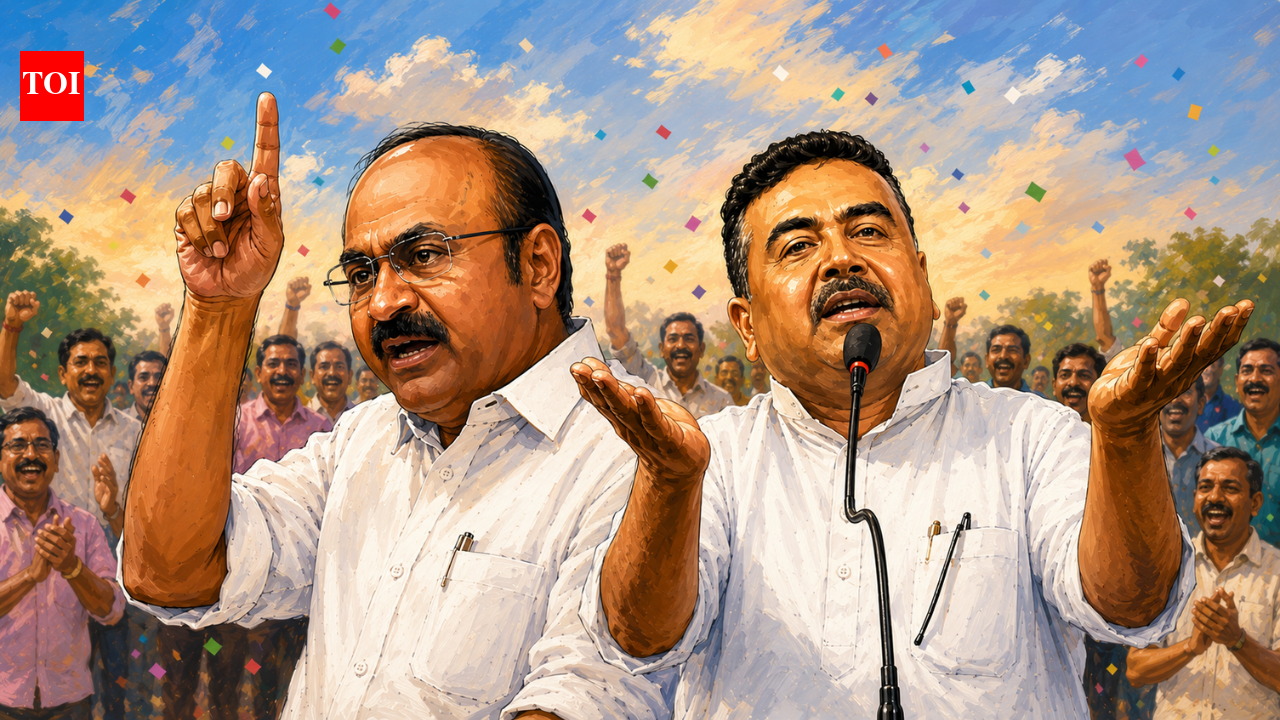
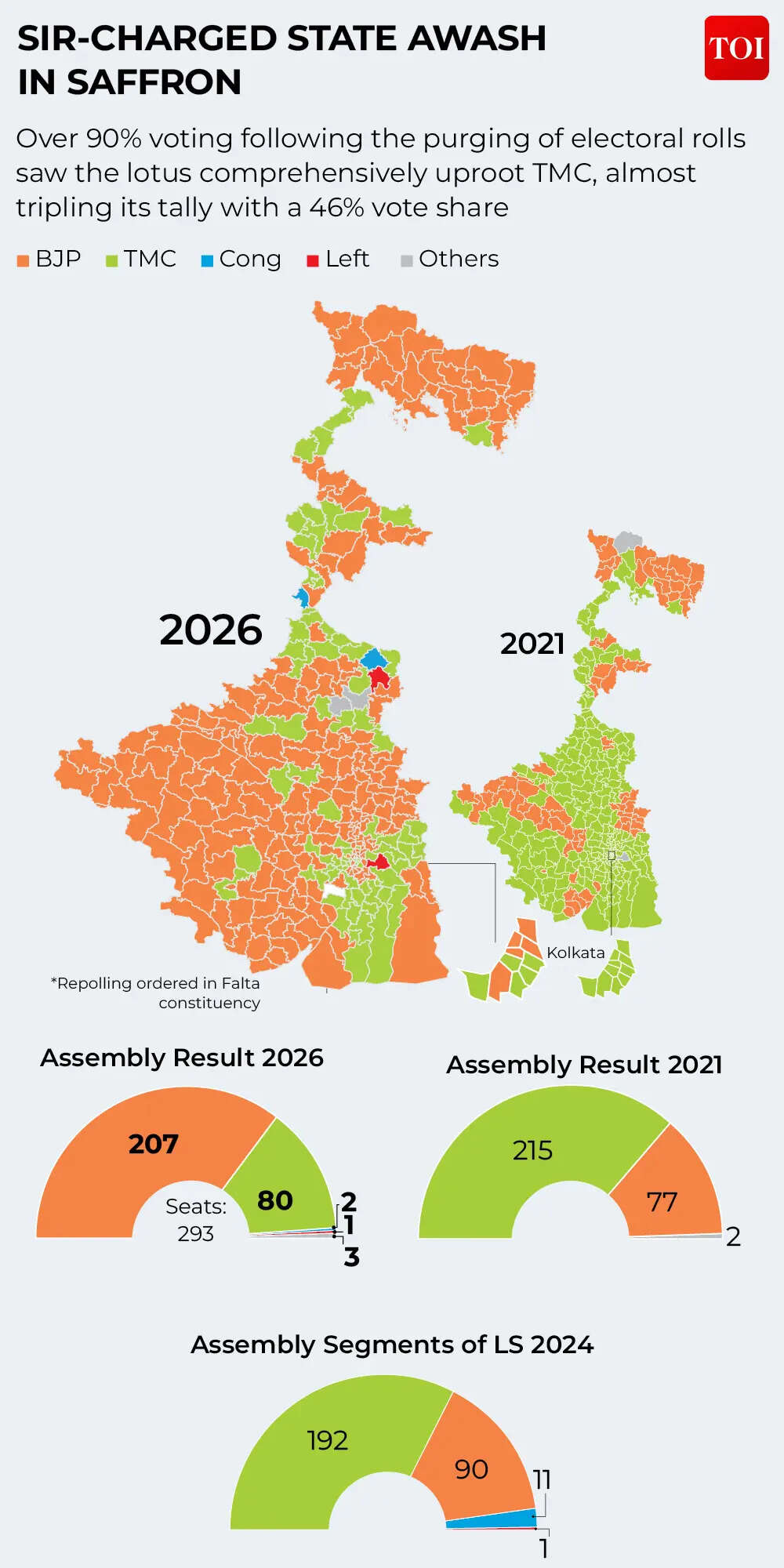
NEW DELHI: The Congress finally ended Kerala’s suspense on Wednesday. Ten days after the UDF’s historic mandate, VD Satheesan was named chief minister. For a party that had just won 63 seats, with the UDF alliance winning 102, the delay was not about numbers or coalition arithmetic. It was about the Congress being unable to get out of its own way.Across the country, in West Bengal, the BJP had done the same thing in roughly 48 hours. 207 seats, a state won for the first time in the party’s history, and Suvendu Adhikari was named CM before the celebrations had properly begun (or Mamata had resigned).
Similar scenes played out in Assam, where the saffron party secured a thumping mandate. There was never much doubt over the BJP’s choice for chief minister. Himanta Biswa Sarma, who has led the party to consecutive victories in the state, has also played a key role in expanding the BJP’s footprint across the North East was the obvious choice.Also read: How 2026 Assam win established ‘outsider’ Himanta as party’s next-gen leaderTwo parties achieved historic victories in the same election cycle, yet they took completely different approaches afterward. One moves as if it has done this before. The other moves like it is battling inner turmoil even after securing a historic mandate.One party treats victory as the start of control; the other often treats it as the start of negotiation.So, what does the BJP understand about winning that the Congress keeps having to relearn?
The BJP’s favourite trick
The BJP’s approach to choosing chief ministers since 2014 has followed a clear pattern. When the party wins a state, it often avoids picking the obvious frontrunner. Instead, it gives the top post to someone who may not be well known outside the state but has worked at the grassroots level or closely with the local leadership.The idea behind this strategy is simple. It prevents regional strongmen from becoming too powerful. It also ensures that the victory is seen as a mandate for the party and its central leadership, not for a local leader. At the same time, it sends a message to party workers that loyalty to the organisation matters more than personal ambition.The track record backs this up. When the BJP won Haryana in 2014, it went with Manohar Lal Khattar, a first-time MLA. When it replaced Vijay Rupani in Gujarat in 2021, Bhupendra Patel, another first-term MLA, got the job. In December 2023, after sweeping Rajasthan, Madhya Pradesh and Chhattisgarh, the BJP sent a clear message about its changing leadership model. Despite delivering major victories, veterans Vasundhara Raje, Shivraj Singh Chouhan and Raman Singh were all passed over for the top job. Instead, the party chose relatively low-profile leaders, Bhajan Lal Sharma, Mohan Yadav and Vishnu Deo Sai, signalling its preference for fresh faces over entrenched regional heavyweights. Add Tripura’s Biplab Deb, Uttarakhand’s Pushkar Singh Dhami, Manipur’s N Biren Singh and Tripura’s Manik Saha to the list. These were not household names outside their states. However, they were chosen to govern quietly under the BJP’s national banner while the central leadership held the real reins.The BJP does sometimes allow strong regional leaders to emerge. Yogi Adityanath in Uttar Pradesh is the clearest example; leaders like Devendra Fadnavis, who have worked in the RSS ecosystem for decades, were also rewarded with the top post. But that usually happens after the party is already firmly established there.
What Congress does instead
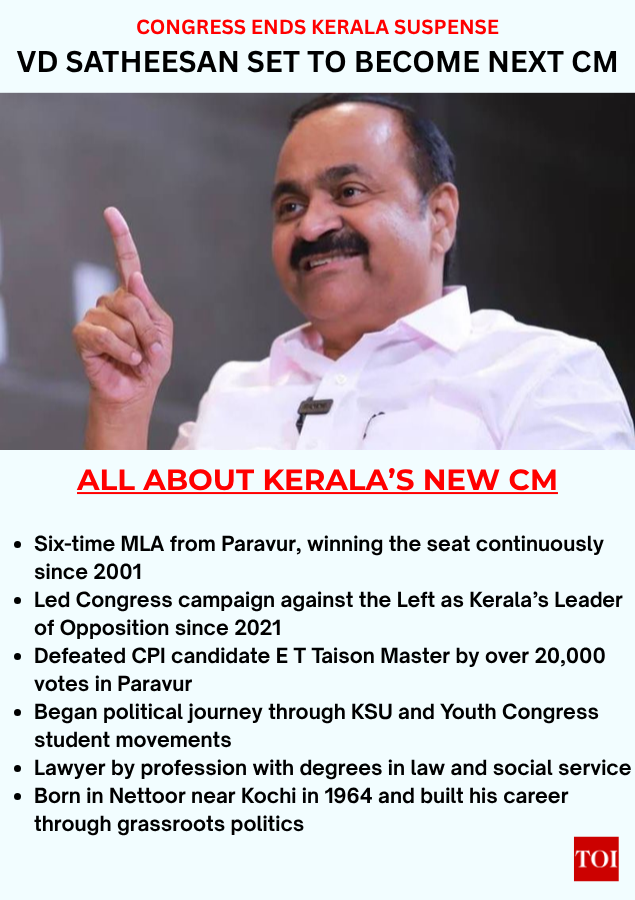
Before getting into why these Assam and Bengal cases differ from the party’s normal approach, it is worth looking at what the BJP’s tightly controlled chief minister selection process is designed to avoid: prolonged public power struggles after an electoral win.That contrast was visible after Karnataka in 2023, when the Indian National Congress spent days in an open tussle between Siddaramaiah and DK Shivakumar. Both leaders lobbied legislators, both made their case to Delhi, and the internal contest played out in full public view. Siddaramaiah eventually became chief minister, while Shivakumar was accommodated as deputy; however, their rivalry continues to make headlines even today.It was also not an isolated episode. After winning Madhya Pradesh, Rajasthan and Chhattisgarh in 2018, the Congress turned each victory into a drawn-out negotiation over leadership. In Madhya Pradesh, Kamal Nath and Jyotiraditya Scindia were locked in a bitter contest for control. In Rajasthan, the feud between Ashok Gehlot and Sachin Pilot lasted longer than the government itself, nearly bringing it down in 2020.Now, in May 2026, the same drama played out in Kerala. The Congress-led United Democratic Front won a huge victory, taking 102 seats in the 140-member assembly, with the Congress alone winning 63. But even after such a clear mandate, the party took ten days to announce V. D. Satheesan as the state’s new chief minister, while other states that went to the polls had already named their CMs. The contest had narrowed to three names: AICC general secretary KC Venugopal, leader of the opposition in the assembly VD Satheesan and senior leader Ramesh Chennithala. Intense lobbying, competing camps and differing views within the party reportedly prolonged the process, even as other states that went to the polls had already finalised their chief ministers. Meetings between Rahul Gandhi, Mallikarjun Kharge and senior Congress leaders continued deep into the week, while the prolonged uncertainty triggered memes, online mockery and growing frustration among party workers.When the announcement finally came, Satheesan had long appeared to be the obvious frontrunner.
Himanta first, then Suvendu
So why did the BJP break from its own playbook in both Assam and Bengal?The answer is simpler than it looks: it did not, really. The playbook was never about picking unknown faces. It was about picking people who would not overshadow the central leadership or build independent power centres. Himanta Biswa Sarma is the template. He joined the BJP from the Congress in 2015 and spent years building the party’s footprint across the northeast as convener of the North East Democratic Alliance. By the time the BJP won Assam in 2021, he was the clear frontrunner for the top spot. He was the reason the party had the numbers to win. The central leadership recognised that and acted accordingly.
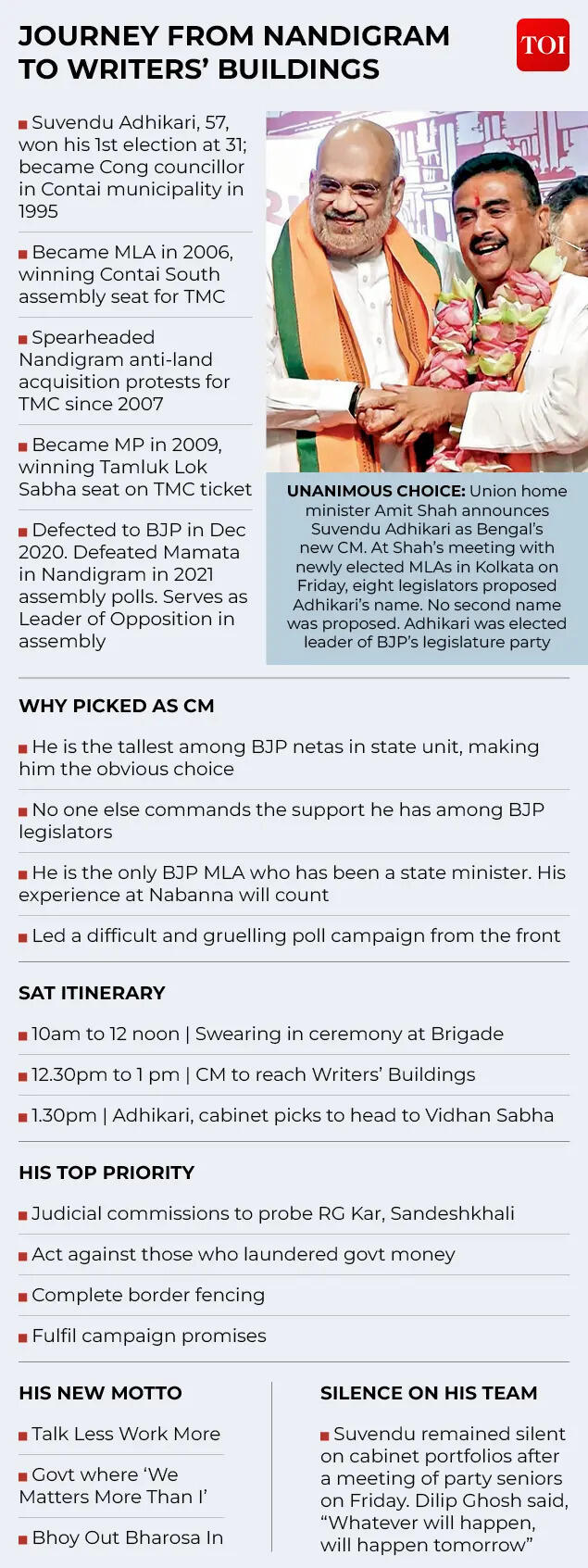
Suvendu Adhikari’s path to the Bengal CM post follows the same logic.Adhikari’s political career began in the Congress before he moved with his family to the TMC when Mamata Banerjee formed the party in 1998. He was at the heart of the Nandigram agitation in 2007, the movement that broke the Left Front’s grip on rural Bengal and made Mamata a genuine mass leader. He won the Tamluk Lok Sabha seat in 2009 and held it in 2014. In 2016, he shifted to state politics, won Nandigram and went into Mamata’s cabinet as Transport Minister, later also handling Irrigation and Water Resources. His break with the TMC in late 2020, driven in part by his discomfort with the growing role of Mamata’s nephew Abhishek Banerjee within the party, was the single biggest jolt the TMC received before the 2021 elections. He joined the BJP at a rally in Midnapore alongside Amit Shah in December 2020.Then came the defining moments. In 2021, he contested against Mamata Banerjee in Nandigram, her chosen constituency, and defeated her by 1,956 votes. Five years later, in 2026, he did it again, this time in Bhabanipur, Mamata’s traditional stronghold, beating her by over 15,000 votes. He also won Nandigram simultaneously.
The inside man advantage
What makes Adhikari’s appointment particularly significant is not just what he did to the TMC, but what he knows about it.He spent over two decades building the Trinamool Congress from the ground up. He knows how rural networks function, how district power structures are wired, and who the key operators are at the booth level across multiple districts.This matters enormously for what comes next. The BJP’s victory in Bengal is not the end of the story; it is the beginning of a consolidation challenge. The TMC’s grassroots organisation, built painstakingly over 15 years, did not disappear overnight when it lost the polls. The party workers, the district leaders, the local strongmen who ran things under the TMC, they are all still there, and many of them are now looking at which way the wind is blowing.
What’s next
In the end, the contrast between Bengal and Kerala was not really about Suvendu Adhikari or VD Satheesan. It was about what happens inside two parties the moment victory arrives.The BJP treats power like a system. Decisions are centralised, hierarchy is clear and uncertainty is minimised. Sometimes that means surprise chief ministers. Sometimes, as in Assam and Bengal, it means recognising when a leader has become too politically important to ignore. But either way, the party moves quickly, projects authority and ensures the focus stays on the organisation.The Congress still struggles with that instinct. Even after major victories, it often appears trapped in negotiation, balancing factions instead of controlling them. What should look like confidence instead begins to resemble hesitation. The BJP treats power as something to be seized and organised; the Congress still treats it as something to be negotiated and shared. One has a system. The other has a conversation.



